
-
by sayum
26 August 2026 1:49 PM







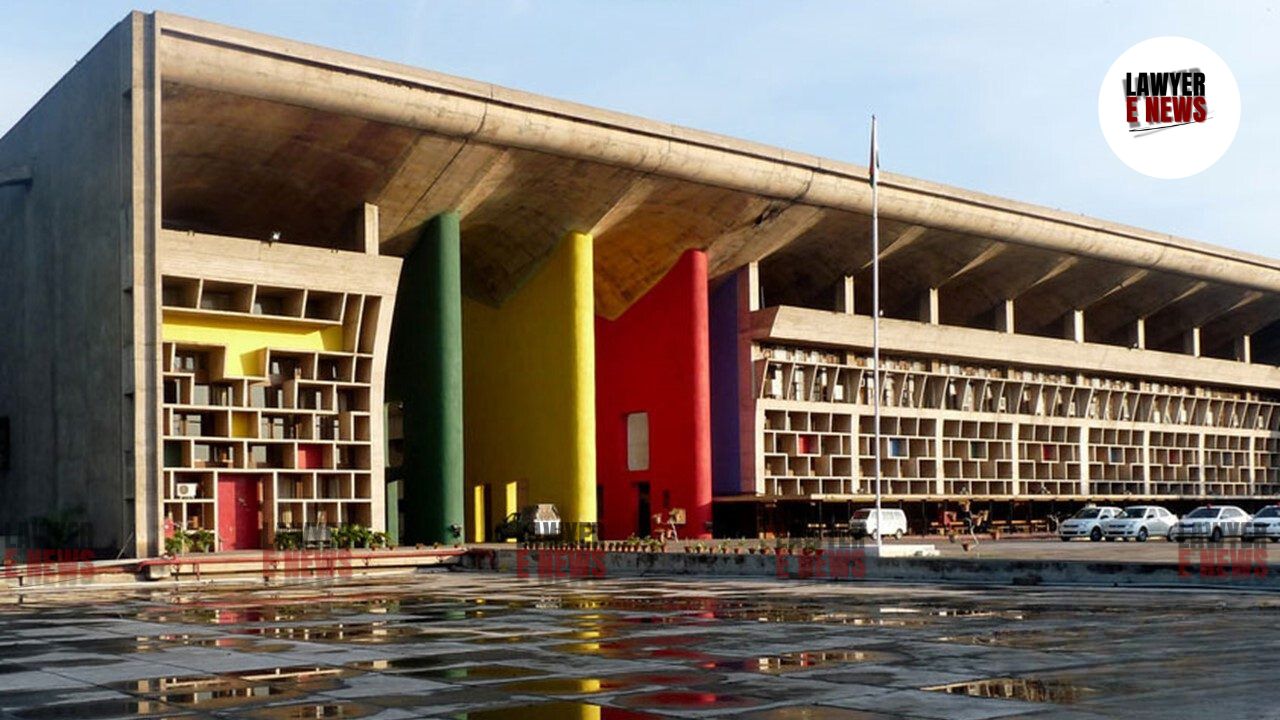
“When Contractual Employees Perform Same Work Of Equal Value As Regular Employees, They Are Entitled To Minimum Of Regular Pay Scale”, In a significant ruling reaffirming the constitutional doctrine of “equal pay for equal work”, the Punjab and Haryana High Court held that contractual Drivers and Conductors engaged by PUNBUS are entitled to wages at least at the minimum of the regular pay scale with Dearness Allowance when they perform identical duties as regular employees of Punjab Roadways.
High Court set aside the impugned orders rejecting the employees’ claim for pay parity and directed the State authorities to grant them minimum of the regular pay scale along with Dearness Allowance with effect from 01.04.2026.
Justice Harpreet Singh Brar, while allowing the writ petition, held that once functional parity between contractual and regular employees is established, denial of equal pay becomes arbitrary and violative of Articles 14 and 16 of the Constitution of India.
The Court further emphasised that the State, as a model employer, cannot continue to retain employees on contractual basis for more than a decade for work that is perennial in nature.
“Difference Between PUNBUS And Punjab Roadways Is Only In Nomenclature, Not In Functional Control”
The petitioners were working as Drivers and Conductors in Punjab State Bus Stand Management Company Limited (PUNBUS), a wholly owned Government company functioning under the Transport Department of the State of Punjab.
They were initially engaged as outsourced employees around 2010, and later in 2015 they were appointed on contract basis after undergoing a recruitment process involving written tests, driving or skill tests, verification of qualifications, licences and medical fitness.
Despite performing duties identical to regular Drivers and Conductors working in Punjab Roadways, the petitioners were paid a fixed consolidated salary significantly lower than the regular pay scale.
The petitioners argued that their working hours, routes operated, operational risks, passenger handling duties, ticketing responsibilities, supervisory control and disciplinary framework were identical to those of regular employees.
The respondents rejected their claim contending that PUNBUS and Punjab Roadways are separate establishments, that the petitioners were not working against sanctioned posts, and that their contractual terms governed their remuneration.
After examining the structure and functioning of the two entities, the High Court found that both operate within the same administrative framework under the Director State Transport, Punjab, who simultaneously functions as the Managing Director of PUNBUS.
The Court observed:
“Such a unified administrative framework undermines the contention that PUNBUS and Punjab Roadways are entirely separate establishments with independent management structures.”
The Court further noted that disciplinary fines imposed on PUNBUS employees were received by Punjab Roadways authorities, demonstrating common disciplinary control.
Accordingly, the Court held that the distinction between the two entities was merely formal and not functional.
“Absence Of Sanctioned Posts Cannot Be Used To Deny Equal Pay”
The State also argued that the petitioners were not appointed against sanctioned posts, and therefore they were not entitled to claim pay parity.
Rejecting this argument, the Court relied on the Supreme Court’s decision in Dhirendra Chamoli v. State of Uttar Pradesh (1986).
The High Court observed that the absence of sanctioned posts cannot be used as a device to exploit employees who are performing identical work.
The Court emphasised:
“It is not open to the Government to exploit its citizens by extracting work from them without providing adequate remuneration.”
Thus, the Court held that so long as employees perform the same duties and possess the same qualifications as regular employees, they must receive at least the minimum of the regular pay scale.
“Keeping Employees On Contract For Decades For Perennial Work Is Unfair Labour Practice”
The Court also took serious note of the fact that the petitioners had been continuously engaged for more than a decade, performing work that was permanent and integral to the functioning of the State transport system.
Justice Brar criticised the practice of keeping workers on contractual engagement for long periods and observed:
“The State, being a model employer, cannot be allowed to exploit its temporary employees when they have been consistently serving its instrumentality for a significant time period.”
The Court described the culture of prolonged ad-hoc and contractual employment for perennial work as exploitative and contrary to constitutional guarantees under Articles 14, 16 and 21.
Court Directs Pay Parity And Consideration For Regularisation
After examining the evidence and the legal framework governing the doctrine of equal pay, the Court concluded that the petitioners had successfully established functional parity with regular Drivers and Conductors of Punjab Roadways.
Accordingly, the High Court quashed the impugned speaking orders dated 02.07.2019 and 13.09.2024.
The Court directed the authorities to grant the petitioners the benefit of minimum of the regular pay scale along with Dearness Allowance at par with regular Drivers and Conductors of Punjab Roadways with effect from 01.04.2026.
Further, the Court directed the State to consider the petitioners for regularisation under the Punjab Ad hoc, Contractual, Daily Wage, Temporary, Work Charged and Outsourced Employees’ Welfare Act, 2016.
The Court clarified that employees who have rendered more than ten years of service must be considered for regularisation, and if no order is passed within the stipulated time, they shall be deemed to have been regularised.
Judgment To Benefit All Similarly Situated PUNBUS Employees
Significantly, the High Court declared that the present decision shall operate as a judgment in rem, meaning its benefits must extend to all similarly situated employees of PUNBUS, even if they have not approached the Court.
The Court observed that similarly placed employees should not be forced to litigate repeatedly for the same relief.
Date of Decision: 07 March 2026





