
-
by sayum
22 October 2026 4:10 PM







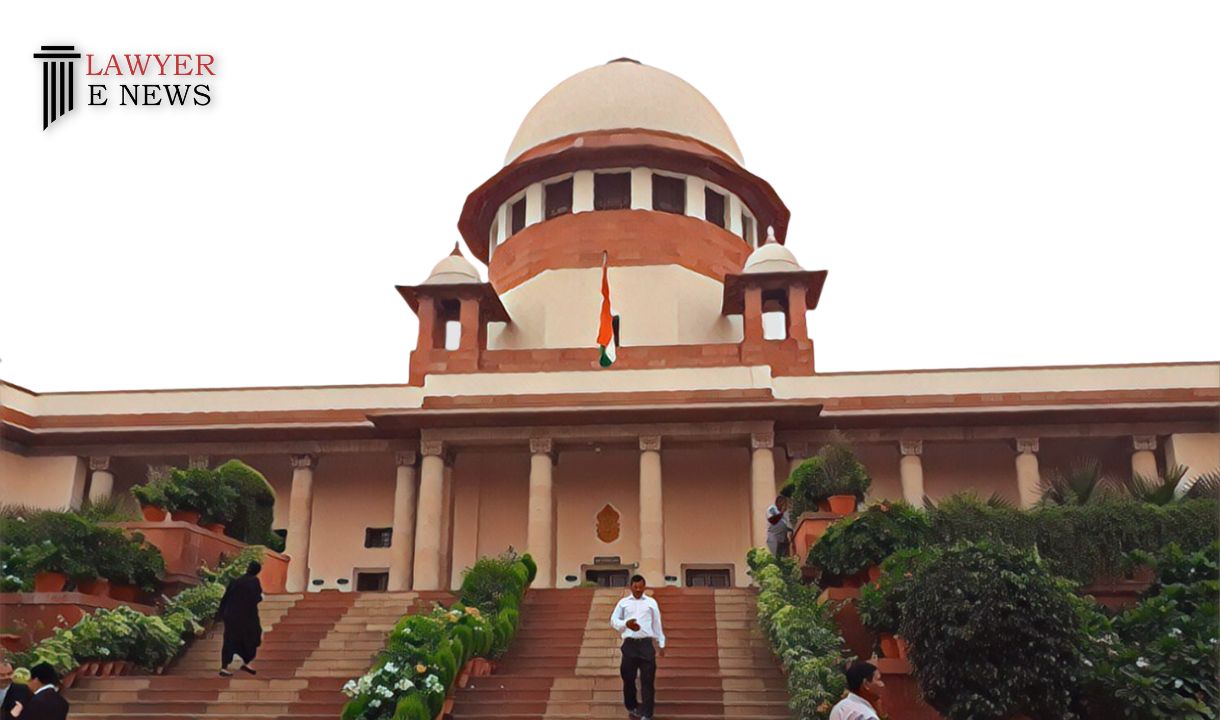
In a significant judgment, the Supreme Court of India, in Criminal Appeal No. 561 of 2012, delivered by Justices Abhay S. Oka and Sanjay Karol, remanded the case back for a proper inquiry. The appeal was filed by Dilip Kumar against Brajraj Shrivastava & Anr., with allegations of multiple offenses punishable under Sections 323, 342, 500, 504, 506, 295-A, 298, 427 of the Indian Penal Code, 1860.
The controversy arose when the learned Magistrate, without conducting a proper inquiry, dismissed the complaint under Section 203 of the Code of Criminal Procedure, 1973 (Cr.P.C.). The court found that the Magistrate neglected to record statements of witnesses mentioned in the complaint, contrary to the requirements of Section 202(1) of the Cr.P.C.
"The learned Magistrate has a discretion either to inquire into the case himself, or to direct a Police Officer to investigate and submit a report. In this case, he took recourse to the first option. A perusal of the complaint shows that eight witnesses were specifically named in the complaint. The learned Magistrate did not examine any of them." (Para 4)
Relying on precedents, the apex court stressed the necessity of considering the statements of the complainant and witnesses before dismissing a complaint under Section 203 of the Cr.P.C.
"After taking recourse to sub-Section (1) of Section 202 of the Cr.P.C., before dismissing a complaint by taking recourse to Section 203 of the Cr.P.C., the learned Magistrate has to consider the statements of the complainant and his witnesses." (Para 5)
The High Court's order remanding the complaint for a proper inquiry under Section 202(1) of the Cr.P.C. was upheld by the Supreme Court. The court also clarified that certain observations, including those regarding the absence of sanction under Section 197 of the Cr.P.C., were tentative and would have no bearing on the ultimate conclusion of the learned Magistrate.
"The observations made in the impugned order, including the observations on requirement of sanction under Section 197 of the Cr.P.C., will have to be held as tentative observations, which will have no bearing on the ultimate conclusion to be drawn by the learned Magistrate." (Para 6)
With this ruling, the Supreme Court highlighted the importance of a thorough and proper inquiry before dismissing a complaint, ensuring that justice is served and the interests of the parties involved are adequately safeguarded. The case has been remitted to the learned Magistrate for the required inquiry under Section 202(1) of the Cr.P.C.
Date of Decision: 26th July 2023
DILIP KUMAR vs BRAJRAJ SHRIVASTAVA & ANR.