-
by sayum
25 August 2026 9:55 AM







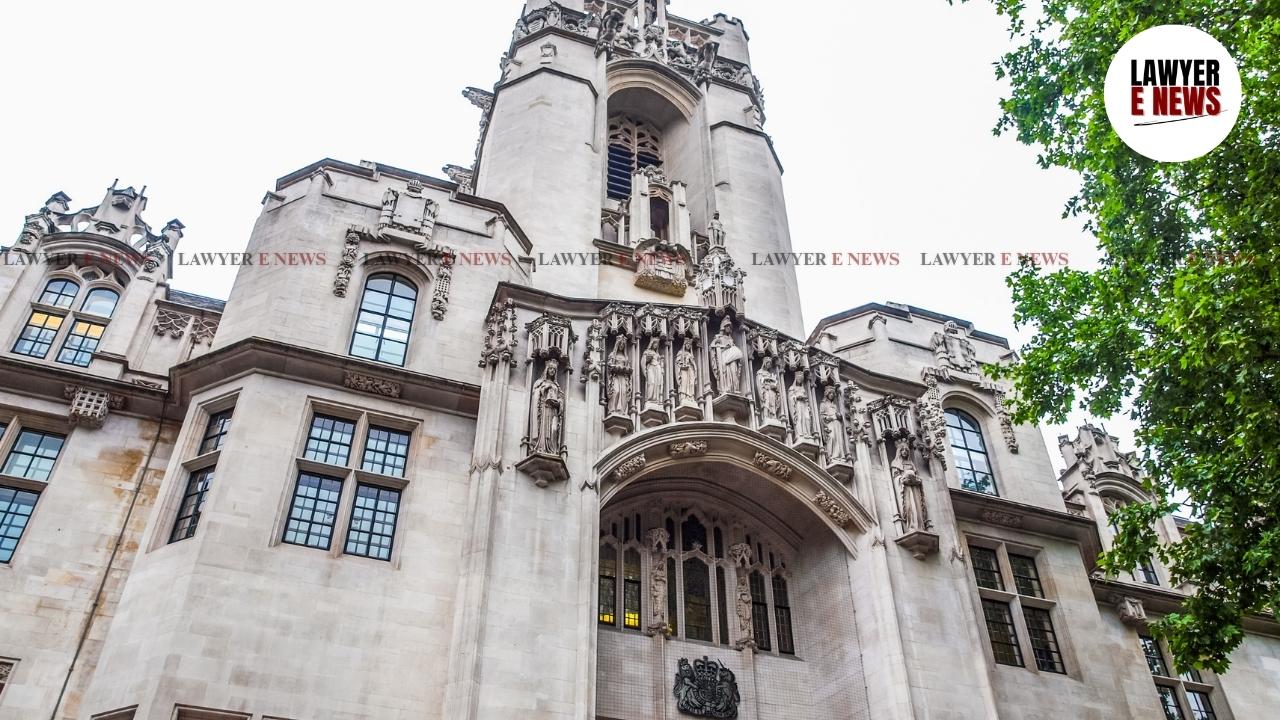
"Objective Purpose of Expenditure Determines Its Nature," Rules Lady Simler
The UK Supreme Court has affirmed the decision of HM Revenue and Customs (HMRC) disallowing Centrica Overseas Holdings Limited's (COHL) deduction of professional advisory fees as revenue expenses. The landmark ruling clarifies the criteria for distinguishing between capital and revenue expenditures under section 1219 of the Corporation Tax Act 2009, emphasizing the need for an objective analysis of the expenditure's purpose.
COHL, an intermediate holding company in the Centrica Plc group, acquired the share capital of Oxxio BV, a Dutch holding company, in 2005. Faced with sustained losses from the Oxxio business, Centrica Plc resolved to sell it in 2009. The transaction was protracted, culminating in the sale of certain Oxxio assets in 2011. Between 2009 and 2011, COHL incurred professional fees from Deutsche Bank, PwC, and De Brauw Blackstone Westbroek, totaling approximately £2.5 million. These fees were claimed as revenue expenses under section 1219 of the 2009 Act in COHL's tax return for the period ending 31 December 2011.
HMRC disallowed the claim, arguing that the fees constituted capital expenditure, which section 1219(3)(a) expressly excludes from deductible management expenses. The First-tier Tribunal (FTT) and Upper Tribunal (UT) offered differing views on whether the fees were capital or revenue in nature, with the Court of Appeal ultimately siding with HMRC. COHL then appealed to the Supreme Court.
The Supreme Court's judgment, delivered by Lady Simler, reiterated the principles for distinguishing capital from revenue expenditure. The court emphasized that the classification depends on the objective purpose of the expenditure. Citing established case law, the court noted that money spent on acquiring or disposing of a capital asset typically constitutes capital expenditure.
The court examined the nature of COHL's business and the specific purpose of the disputed professional fees. It found that the fees were incurred to facilitate the disposal of the Oxxio business, a clear capital asset. The engagements with Deutsche Bank, PwC, and De Brauw were explicitly for advising on strategic alternatives and facilitating the sale of Oxxio's assets, not for the ongoing management of COHL's investments.
Lady Simler stated, "The clear objective purpose of the Disputed Expenditure was to assist in bringing about the disposal of an identifiable capital asset, namely the Oxxio business. Money expended to achieve a disposal of a capital asset is properly regarded as being of a capital nature."
The Supreme Court's decision reinforces the principle that the nature of professional fees incurred by investment companies must be assessed based on the objective purpose of the expenditure. This ruling clarifies that expenses aimed at facilitating the sale of a capital asset are capital in nature, regardless of the business's general activities or the recurrence of such expenditures.
The Supreme Court's judgment in Centrica Overseas Holdings Ltd v Commissioners for His Majesty's Revenue and Customs solidifies the legal framework for determining the nature of management expenses for tax purposes. By upholding HMRC's decision, the court has set a precedent that underscores the importance of the objective analysis of expenditure, providing clarity for future cases involving similar issues.
Case Title: Centrica Overseas Holdings Ltd v Commissioners for His Majesty's Revenue and Customs
Date of Decision: 16 July 2024