-
by sayum
03 August 2026 10:58 AM







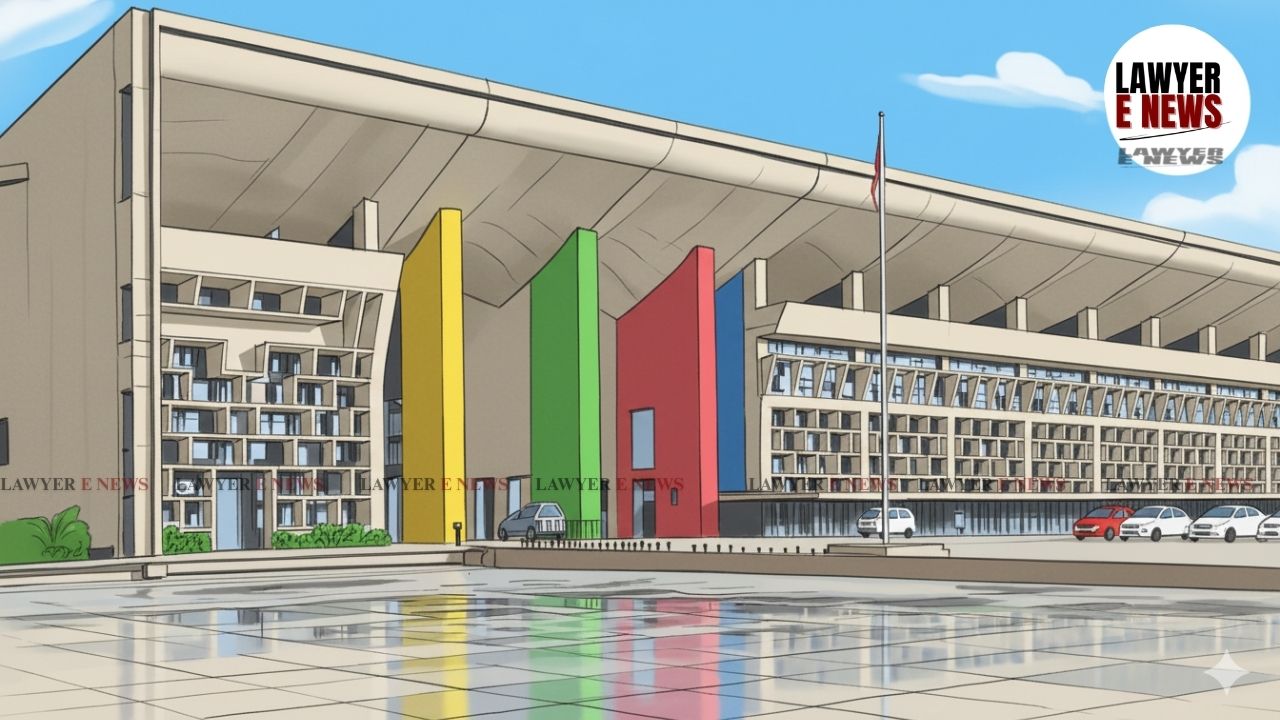
"Any party purchasing a property which is a subject matter of litigation, during the pendency of the litigation, is bound by the judgment that may be ultimately rendered between the parties and the same is binding on the subsequent purchasers as well, who may not be a party to the litigation." Punjab and Haryana High Court, in a significant ruling dated July 17, 2026, held that a property sale executed during the pendency of litigation is directly hit by the rule of lis pendens under Section 52 of the Transfer of Property Act, 1882.
A single-judge bench of Justice Harsh Bunger observed that subsequent purchasers step into the shoes of their vendors and are absolutely bound by the final outcome of the prior litigation, while also clarifying that a court decree cannot be ignored or challenged in collateral proceedings without a formal application to set it aside.
The plaintiffs filed a civil suit seeking a declaration of ownership and possession over agricultural land based on registered sale deeds executed by their vendor, Amarjit Singh, between late 1984 and early 1985. However, the original owner, Gurbachan Singh, had already instituted a prior civil suit in 1983 against Amarjit Singh and another defendant, challenging an earlier power of attorney and a subsequent sale. In that 1983 suit, a civil court had passed an injunction restraining the alienation of the land, which eventually culminated in a compromise decree declaring Gurbachan Singh as the absolute owner. The First Appellate Court dismissed the plaintiffs' subsequent suit for ownership, prompting the present regular second appeal before the High Court.
The primary question before the court was whether the plaintiffs were entitled to a decree of ownership when the sale deeds in their favor were executed during the pendency of a prior civil suit concerning the identical property. The court was also called upon to determine whether it is permissible for a party to treat a prior judicial decree as collusive and void in a collateral proceeding without formally getting it set aside by a competent court.
Rule Of Lis Pendens Under Section 52 TPA
The court noted that the vendor executed the sale deeds in favor of the plaintiffs during the active pendency of the 1983 civil suit, and crucially, in direct violation of a 1983 injunction order restraining the alienation of the suit land. Justice Bunger observed that Section 52 of the Transfer of Property Act, 1882, does not absolutely bar dealing with property subject to litigation, but it operates to strictly limit the rights of the purchaser. The bench highlighted that it renders any sale of the suit property during the pendency of the suit as subservient to the rights of the litigating parties.
"Any party purchasing a property which is a subject matter of litigation, during the pendency of the litigation, is bound by the judgment that may be ultimately rendered between the parties and the same is binding on the subsequent purchasers as well, who may not be a party to the litigation."
Compromise Decrees Bind Subsequent Purchasers
Addressing the plaintiffs' contention that the 1985 decree in the prior suit was a collusive decree and thus not binding upon them, the High Court concurred with the First Appellate Court's factual and legal findings. The bench emphasized that a decree passed upon a compromise is just as binding on the parties and their successors as a decree founded on contested merits. Since the compromise decree left no right in the suit land for the plaintiffs' vendor, the court reasoned that the plaintiffs themselves could not acquire any valid legal title.
Decrees Cannot Be Ignored In Collateral Proceedings
The court extensively discussed whether a litigant could merely ignore a previous court decree by labeling it null and void in a subsequent, separate suit. Relying on a catena of Supreme Court judgments, including Meghmala v. G. Narasimha Reddy and M. Meenakshi v. Metadin Agarwal, the bench unequivocally answered this question in the negative. The court observed that the plaintiffs failed to lay any formal challenge or amend their pleadings to explicitly seek the setting aside of the 1985 compromise decree, despite the details of the decree being clearly brought on record in the written statement.
"The essence of the decision is that even if a decree or an order is non-est or void in the estimation of a party, the party who is entertaining such a feeling should approach the appropriate forum in appropriate proceedings and get it set aside..."
Finality Of Judicial Proceedings
Reinforcing the principle of final judicial finality, the High Court referred to the Supreme Court's decision in Union of India v. Major S.P. Sharma. The bench reiterated that allowing collateral challenges to competent court decisions would breed confusion and chaos. The court stressed that an order cannot simply be declared void in collateral proceedings, and unless a court of competent jurisdiction sets aside the disputed decree, it cannot be said to be non-est and must be treated as perfectly valid.
The High Court concluded that there was no illegality or perversity in the First Appellate Court's decision to dismiss the plaintiffs' suit for declaration, as they failed to formally challenge the earlier decree that extinguished their vendor's title. Consequently, the regular second appeal was dismissed, and all pending applications were ordered to stand closed.
Date of Decision: 17 July 2026