-
by sayum
03 August 2026 10:58 AM







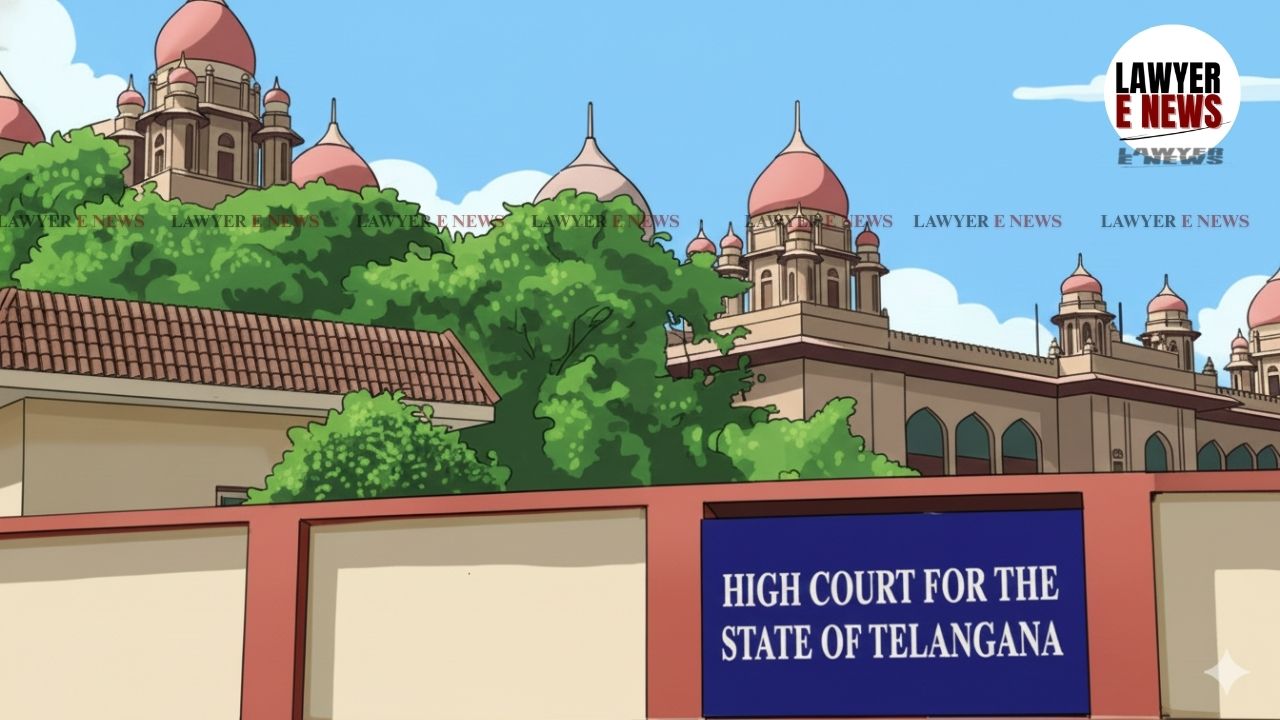
"Merely because the petitioners belong to Scheduled Castes and Scheduled Tribes, they cannot be denied consideration against unreserved vacancies when they otherwise stand senior in the feeder cadre." Telangana High Court, in a significant ruling, held that Scheduled Caste (SC) and Scheduled Tribe (ST) employees promoted via accelerated reservation retain their consequential seniority for subsequent promotions, even if the higher posts are unreserved.
A bench comprising Justice Battu Devanand and Justice Subhendu Samanta observed that the 85th Constitutional Amendment effectively nullified the judicially evolved "Catch-Up Rule", cementing consequential seniority as an incident of reservation in promotions.
The dispute originated within the South Central Railway, Vijayawada Division, concerning the promotion and seniority of Loco Pilots. SC/ST candidates had received accelerated promotions to the cadres of Loco Pilot (Goods) and Loco Pilot (Passenger) based on the communal roster. However, unreserved candidates who were originally senior in the initial feeder cadre challenged this consequential seniority before the Central Administrative Tribunal (CAT), Hyderabad. The Tribunal quashed the seniority lists and directed the Railways to redraw them without granting consequential seniority to the SC/ST employees, prompting the present writ petitions before the High Court.
The primary question before the court was whether the grant of accelerated promotion and consequential seniority to SC/ST category candidates in the lower cadres was valid in law. The court was also called upon to determine whether the subsequent promotion to the unreserved post of Loco Pilot (Mail) constituted a fresh, independent selection or merely a continuation of the seniority established in the feeder cadres.
Catch-Up Rule Nullified By 85th Amendment
The court embarked on a detailed analysis of the constitutional evolution of Article 16(4A). It noted that the "Catch-Up Rule", earlier established by the Supreme Court in the cases of Union of India v. Virpal Singh Chauhan and Ajit Singh v. State of Punjab, dictated that reserved candidates receiving accelerated promotions would not automatically gain consequential seniority over general candidates who were promoted later.
However, the High Court emphasized that the Parliament enacted the 85th Constitutional Amendment specifically to alter this position. By explicitly introducing the words "with consequential seniority" into Article 16(4A), the legislature removed the very legal foundation upon which the Catch-Up Rule rested. The bench affirmed that once the underlying basis of a judicial determination is constitutionally altered, the principle ceases to govern the field.
"Consequent upon the 85th amendment... the earlier judicially evolved principle of 'catch up' rule... lost their operative force and it cannot continue to override the express constitutional mandate."
Continuous Promotional Hierarchy
The unreserved candidates had heavily relied on the argument that the promotion to Loco Pilot (Mail) was an independent cadre exercise. They contended that reservation benefits could not perpetually cascade into higher, unreserved posts to the detriment of general candidates. The bench rejected this premise, holding that the post of Loco Pilot (Mail) did not constitute a distinct standalone exercise but formed part of a continuous hierarchical channel.
The court observed that once seniority had validly crystallized in the feeder cadre of Loco Pilot (Passenger) after due compliance with constitutional requirements, it could not be reopened at every successive promotional stage. Because the twenty-three vacancies in the Loco Pilot (Mail) cadre were filled on the basis of inter-se seniority and suitability, the prior consequential seniority of the petitioners naturally carried forward.
"Promotions to the post of Loco Pilot (Mail) constituted a continuation of the existing promotional hierarchy and were governed by the inter se seniority prevailing in the cadre of Loco Pilot (Passenger)."
Reserved Candidates Entitled To Unreserved Posts
Addressing the core grievance regarding the 23 unreserved vacancies, the court held that SC/ST candidates are well within their rights to compete for open-merit slots based on their established feeder-cadre seniority. The bench clarified that occupying an unreserved post through seniority does not amount to an illegal elongation of reservation benefits.
Relying on the landmark Supreme Court decisions in Indra Sawhney v. Union of India and R.K. Sabharwal v. State of Punjab, the bench reiterated that candidates belonging to reserved categories who are selected on their own merit cannot be counted against the reserved quota.
"The law is well settled that a candidate belonging to a reserved category is not disentitled from competing for or occupying an unreserved post merely because he belongs to a reserved class."
Compliance With Nagaraj And Jarnail Singh Directives
The bench also dismissed the respondents' contention that the Railways failed to collect quantifiable data before granting the initial promotions. The court examined the administrative records and found that the authorities had indeed assessed the inadequacy of representation of SC/ST employees, observed the 50% ceiling limit, and evaluated administrative efficiency under Article 335.
Because the Railways had strictly followed the post-based roster system and fulfilled the constitutional safeguards laid down by the Supreme Court in M. Nagaraj v. Union of India and Jarnail Singh v. Lachhmi Narain Gupta, the consequential seniority conferred upon the petitioners was entirely sustainable in law.
Ultimately, the High Court allowed the writ petitions and set aside the orders passed by the Central Administrative Tribunal. The bench concluded that the promotions of the SC/ST employees to the post of Loco Pilot (Mail) against unreserved vacancies were completely valid, as they were grounded in the lawful seniority and suitability the employees had previously attained in the feeder cadres.
Date of Decision: 17 July 2026