-
by sayum
03 August 2026 9:38 AM







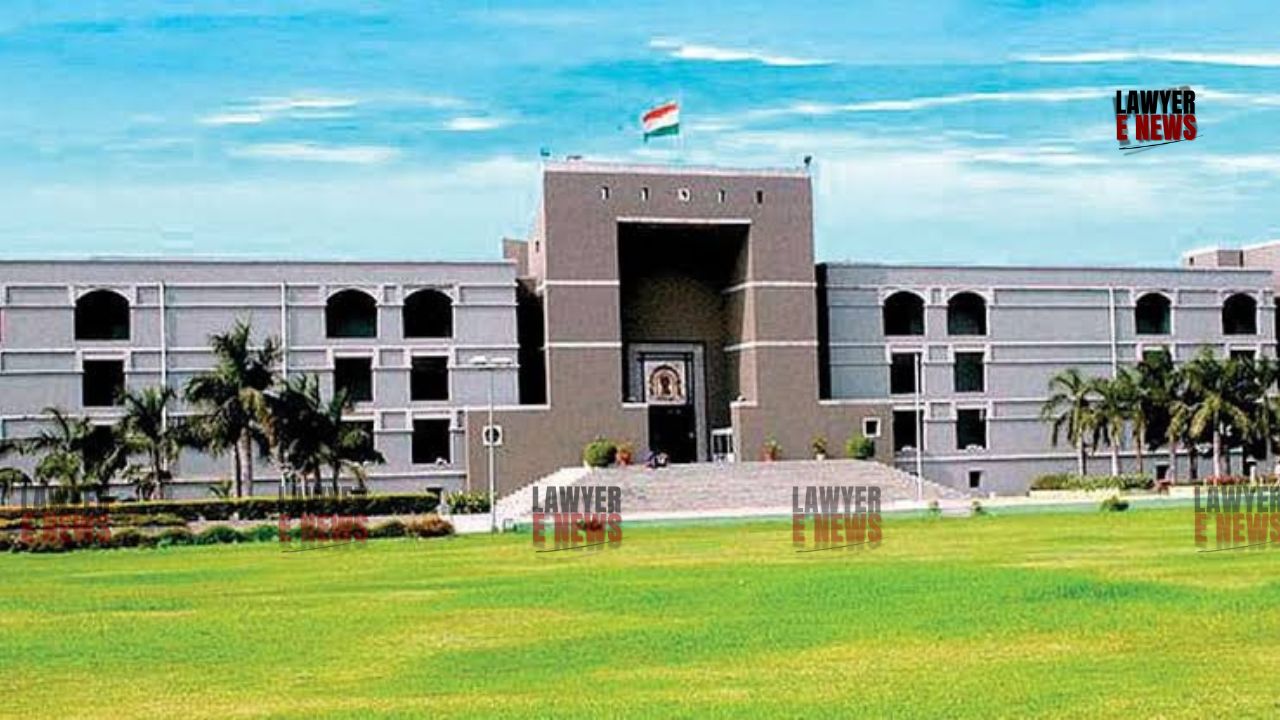
"The inquiry requires to be undertaken by Ahmedabad Small Causes Court in execution proceeding is summary in nature and it cannot be adjudged like a trial of any civil suit." Gujarat High Court, in a significant ruling, held that an executing court is not mandated to conduct a full-fledged trial involving oral evidence to decide third-party objections.
A bench of Justice Maulik J. Shelat observed that under the specific rules governing the Small Causes Court, such inquiries are summary in nature and can be disposed of based on affidavits and documentary evidence.
The case arose from a long-standing eviction dispute initiated in 1975, where the original decree of eviction was confirmed by the High Court in 2003. When the landlords sought execution, the petitioners filed objections claiming that one of the co-owners had executed a fresh rent agreement and sale documents in 2004, thereby creating a new tenancy that superseded the eviction decree.
Primary Legal Issues Before The Court
The primary question before the court was whether the executing court committed a jurisdictional error by rejecting objections without framing formal issues or allowing oral evidence. The court also had to determine if a fresh tenancy created by a single co-owner could bind other decree-holders and frustrate an existing eviction decree.
Nature Of Inquiry Under Order 21 Rule 97 CPC
The court examined the procedural requirements for adjudicating resistance to the execution of a decree. It noted that while Order 21 Rule 101 of the CPC requires all questions of right, title, and interest to be decided by the executing court rather than a separate suit, this does not automatically necessitate a trial-like procedure.
Ahmedabad Small Cause Court Rules Permit Summary Procedure
The Court placed heavy reliance on "The Ahmedabad Small Cause Court Rules, 1961," which modify certain provisions of the CPC for local application. Specifically, the Court pointed out that an addition to Rule 97 of Order 21 under these local rules explicitly states that applications may be disposed of by affidavit.
Executing Court Conducts Summary Inquiry, Not Full Trial
Justice Shelat clarified that there is a distinct legal difference between an "inquiry" and a "trial." The bench observed that unless the court deems it appropriate or a specific request is made and justified, the inquiry into execution obstructions remains summary. Failure to frame formal issues does not vitiate the order if the parties were given an opportunity to substantiate their claims through documents.
One Co-Owner Cannot Bind Others To Defeat Decree
The Court dealt sternly with the petitioners' claim of a "fresh tenancy" created in 2004. It was undisputed that the suit property had multiple co-owners, yet the objectors chose to enter into agreements with only one of them. The Court held that such an agreement cannot bind other decree-holders or prevent them from executing the eviction order.
Unregistered Documents Inadmissible To Show Title
While scrutinizing the documents produced by the objectors, including an unregistered sale deed and an unregistered power of attorney "coupled with interest," the Court noted they were prepared on nominal stamp papers. As per Section 17 of the Registration Act, 1908, such documents require compulsory registration to transfer any interest in immovable property and are otherwise inadmissible as evidence.
Out-Of-Court Satisfaction Must Be Recorded By Court
The bench reiterated the settled position of law regarding the satisfaction of decrees outside of court proceedings. Citing the Supreme Court's decision in Lakshmi Narayan vs. S.S. Pandian, the High Court noted that any alleged compromise or satisfaction recorded outside the execution proceedings does not amount to a valid discharge of the decree unless officially recorded by the Court.
Fresh Tenancy Under Rent Act Not Possible Post-2001
The Court further observed that even if a fresh tenancy was purportedly created in 2004, it would not be governed by the Gujarat Rent Act, 1947, as the operation of the Act had been suspended for such premises by the State since 2001. Furthermore, the alleged agreement was for a period of 11 months, which had long since expired, leaving the objectors with no legal right to remain in possession.
The High Court concluded that the concurrent findings of the lower courts did not suffer from any perversity or jurisdictional error. It held that the objectors failed to demonstrate any legal right, title, or interest through admissible documents. The revision application was subsequently rejected, and the executing court was directed to dispose of the petition at the earliest.
Date of Decision: 13 July 2026