-
by sayum
25 August 2026 11:12 PM







"It appears to us that the Plaintiffs may have been desirous of purchasing the suit property and even took steps towards it; however, their subsequent inconsistent conduct countervails the grant of an exceptional and equitable remedy such as specific performance under the unamended Specific Relief Act, 1963." Supreme Court of India, in a significant ruling dated July 31, 2026, set aside a High Court judgment that decreed specific performance of an Agreement to Sell, upholding the Trial Court's decision to deny specific performance.
A bench of Justices Prashant Kumar Mishra and N.V. Anjaria observed that the plaintiffs' inconsistent conduct, failure to demonstrate continuous readiness and willingness, and lack of "clean hands" disentitled them from the equitable relief of specific performance under the Specific Relief Act, 1963.
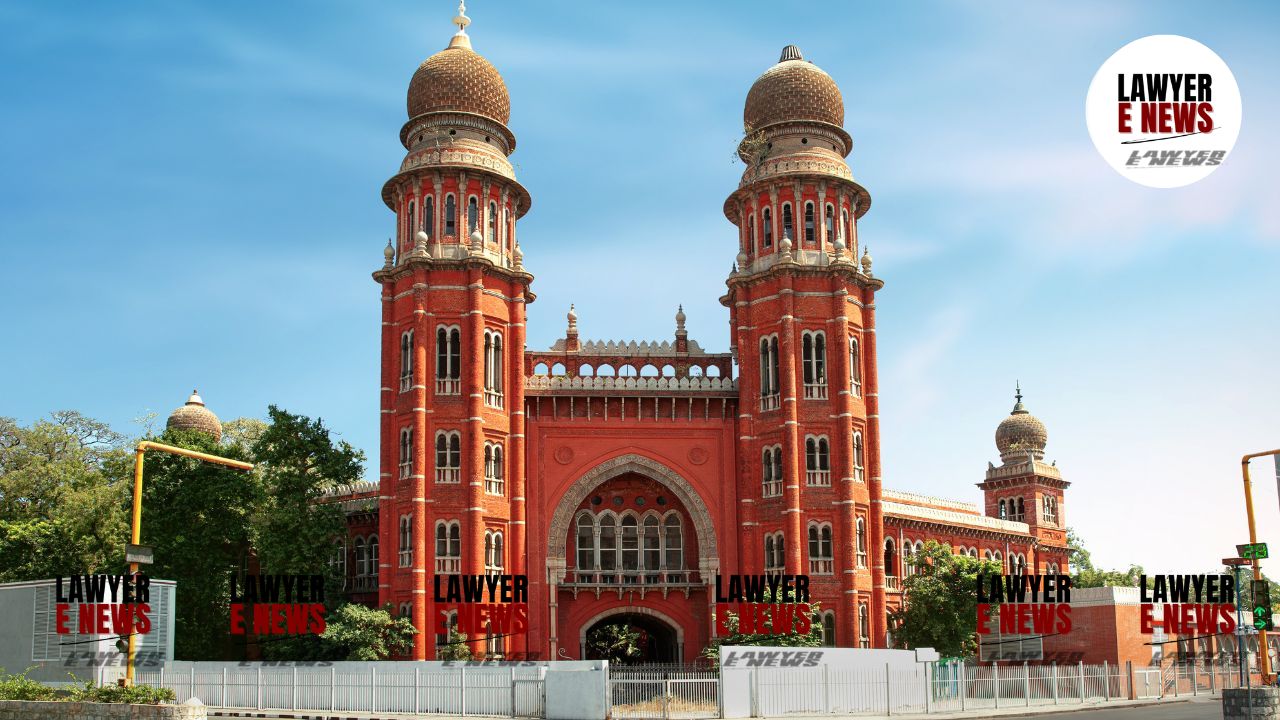
The dispute arose from an Agreement to Sell dated April 1, 2004, where Defendant No. 1 (appellant) agreed to sell a property in Udhagamandalam to Plaintiff No. 1 (respondent) for ₹2.25 Crores. Plaintiff No. 2, husband of Plaintiff No. 1, also held a General Power of Attorney from Defendant No. 1. The agreement stipulated time as the essence of the contract, contingent on setting aside an ex-parte decree in a partition suit within 60 days. The Trial Court denied specific performance but ordered a refund of ₹85 lakhs paid as advance, with interest, creating a charge on the property, citing the plaintiffs' lack of clean hands. The Madras High Court, however, reversed this, decreeing specific performance, which led to the present appeals before the Supreme Court.
The primary questions before the Supreme Court were whether the High Court was justified in setting aside the Trial Court's refusal of specific performance, particularly concerning the plaintiffs' readiness and willingness, their conduct, and the maintainability of the suit without a declaration of the Agreement to Sell's validity.
On Supporting a Decree Without Cross-Objections
The Supreme Court affirmed the High Court's view, based on S. Nazeer Ahmed v. State Bank of Mysore and Ors., that a respondent supporting a decree may impugn an adverse finding without filing cross-objections under Order XLI Rule 22 CPC, provided no additional relief is sought. Defendant No. 1 was thus entitled to challenge the High Court's finding on readiness and willingness.
Maintainability of Suit Without Declaratory Relief
The Court addressed the argument that the suit for specific performance was not maintainable without seeking a declaration that the termination of the Agreement to Sell was invalid. Relying on Annamalai vs. Vasanthi and Others, which reconciled previous conflicting decisions, the Court held that where a contract does not confer a unilateral right to terminate or such right is waived, a unilateral termination amounts to a repudiation. In such cases, the aggrieved party can treat the contract as subsisting and sue for specific performance without seeking declaratory relief.
Unilateral Termination as Repudiation
Given that the Agreement to Sell did not grant Defendant No. 1 any contractual right to unilaterally terminate, the Court found it to be a case of repudiation. Therefore, the plaintiffs were entitled to treat the termination as ineffective and sue for specific performance without a declaratory decree. The Court also noted that the Trial Court had already adjudicated on the validity of the termination, thus removing any objection regarding suit maintainability.
Erroneous Finding on Readiness and Willingness
The Court meticulously examined the High Court's finding on the plaintiffs' readiness and willingness, concluding it was erroneous. The Trial Court had correctly found that the plaintiffs lacked funds at the time of filing the suit and had not continuously kept the required funds ready. The High Court's reliance on a demand draft produced only at the appellate stage was insufficient to prove continuous readiness.
Demand Draft at Appellate Stage Insufficient
The Court highlighted that two cheques issued by the plaintiffs for part-payment had been dishonoured due to insufficient funds, demonstrating an initial lack of financial means. Furthermore, a Memorandum of Understanding (MoU) cited by the plaintiffs to show fund arrangements was not mentioned in earlier pleadings or Plaintiff No. 2's reply, and crucially, did not show direct transfer of funds to the plaintiffs' account.
Continuous Readiness is Paramount for Specific Performance
Citing N.P. Thirugnanam (Dead) by LRs. vs. Dr. R. Jagan Mohan Rao and Others and Janardan Das and Others vs. Durga Prasad Agarwalla and Others, the Supreme Court reiterated that continuous readiness and willingness from the date of agreement until the decree is a condition precedent for granting specific performance, requiring proof of available funds and consistent conduct.
Plaintiffs' Lack of "Clean Hands"
The Supreme Court strongly disagreed with the High Court's characterization of Plaintiff No. 2's criminal complaint (seeking recovery of ₹85 lakhs and alleging fraud against Defendant No. 1) as a "benign counterblast." The Court noted that Plaintiff No. 2 explicitly asked the police to recover the money, which is inconsistent with seeking specific performance of the contract.
Plaintiff No. 1's Silence & Inconsistent Stands
Plaintiff No. 1, the actual vendee, neither disowned her husband's conduct nor testified in court, which the Court deemed significant. The plaintiffs were observed to be "blowing hot and cold," treating themselves as a composite unit when convenient but disavowing Plaintiff No. 2's actions otherwise. This inconsistent conduct undermined their claim for equitable relief.
Inconsistent Positions on Assignment of Rights
Defendant No. 1's objection regarding the plaintiffs' inconsistent stands on the assignment of rights to Defendant No. 5 was also found to have merit. The plaintiffs had previously asserted that rights under the Agreement to Sell were assigned to Defendant No. 5. Yet, in the present suit, they claimed no such assignment, maintaining Plaintiff No. 1's exclusive entitlement to specific performance, which the Court found irreconcilable.
Power of Attorney Misuse and "Puppet Plaintiff" Finding
The Court noted that Plaintiff No. 2, acting under the Power of Attorney, entered into a sub-agreement to sell the suit property to Defendant No. 5 for a lower consideration before his wife's title was complete. The Sub-Court in a separate suit (OS No. 75 of 2005) had critically observed that Defendant No. 5 was acting "hand in hand" with Plaintiff No. 2 and was merely a "tool" or "puppet plaintiff." This conduct further demonstrated the plaintiffs' lack of bona fides.
Equitable Relief and Hardship to Defendant
Referencing Major Gen. Darshan Singh (D) By LRs & Anr. vs. Brij Bhushan Chaudhary (D) By LRs and Muddam Raju Yadav vs. B. Raja Shanker (D) Through LRs & Ors., the Court reiterated that specific performance is a discretionary and equitable relief, requiring the plaintiff to approach the court with clean hands. Any doubt regarding the plaintiff's bona fides or withholding of material facts could lead to denial of this relief.
Lapse of Time and Changed Circumstances
The Court also considered the significant lapse of over two decades since the Agreement to Sell was concluded. Citing Mrs. Saradamani Kandappan vs. Mrs. S. Rajalakshmi & Ors. and Nanjappan vs. Ramasamy & Anr., it held that such a long delay militates against granting specific performance. Furthermore, the advanced age of Defendant No. 1 and the demise of Plaintiff No. 2 changed the circumstances, making it inequitable to compel the transfer of the property.
Hardship to Defendant as a Factor
The Court held that compelling the transfer would cause undue hardship to Defendant No. 1, which is a recognized factor in exercising discretion under Section 20 of the Specific Relief Act, as per Kamal Kumar vs. Premlata Joshi & Ors. Justice, in this case, required restoring the parties to their position before the transaction.
The Supreme Court allowed the appeals, setting aside the High Court's judgment and decree. It restored the judgment and decree passed by the Trial Court, which had directed a refund of ₹85,00,000 with interest and created a charge on the suit property. The plaintiffs were permitted to withdraw the amount previously deposited with accrued interest.
Date of Decision: July 31, 2026