Recovery Of Excess Payment Made By Mistake Is Permissible When Employee Furnished An Undertaking To Refund: Supreme Court Anticipatory Bail Application Under Sec 482 BNSS Is Maintainable Even If No Formal Order Of Arrest Is Passed By CGST Authorities: Allahabad High Court Consensual Physical Relationship Following Three-Year Courtship Does Not Amount To Rape If Marriage Promise Fails: Supreme Court Criminalization Of Civil Disputes | Courts Must Not Engage In Speculative Reasoning While Dealing With Quashing Petitions Under Section 482 CrPC: Supreme Court Mere Recovery Of Tainted Money In The Absence Of Proof Of Demand Is Insufficient To Sustain Conviction Under Section 7 And 13 PC Act: Supreme Court High Court Cannot Quash NDPS Proceedings Merely Relying On Jurisprudence Regarding Evidentiary Value Of Confessional Statements: Supreme Court Extra-Judicial Confession Made While In Police Custody Is Inadmissible In Evidence: Supreme Court Taxing Authorities Must Levy Tax Based On The Form Of Goods At The Time Of Sale, Not On Potential End Use: Supreme Court Punjab & Haryana High Court Orders CBI Probe Into State Corruption Scams After Punjab Police Fails To Act On ED’s Section 66(2) PMLA Referral Section 482 CrPC | FIR Based On Consensual Relationship Gone Sour Cannot Be Sustained To Coerce Marriage: Supreme Court CISF Personnel Soliciting Bribes For Employment Is Guilty Of 'Gross Misconduct' Under Section 18 CISF Act: Andhra Pradesh High Court PIL | State Cannot Use Demolition Powers To Silence Whistleblowers Or Deflect Accountability: Punjab & Haryana High Court Criminal Proceedings Against In-Laws Without Specific Allegations Of Overt Acts Constitute Abuse Of Process: Supreme Court Order 22 Rule 9 CPC | Admission In An Abated Suit Does Not Constitute Estoppel Against Landlord In A Fresh Eviction Proceeding: Calcutta High Court Arbitral Award Cannot Be Set Aside For Non-Adjudication Of Claims Specifically Abandoned By Parties: Delhi High Court Mere Long Possession Is Not Adverse Possession; Defendant Must Prove Hostile Animus To Deny Title Of True Owner: Himachal Pradesh High Court Reopening Of Assessment Under Sec 148A(d) Income Tax Act Cannot Be Based On 'Change Of Opinion' Without Fresh Tangible Material: Gujarat High Court Municipal Authorities Must Initiate Formal Proceedings And Grant Opportunity Of Hearing Before Sealing Premises:  Jharkhand High Court Court Cannot Compel Third-Party To Undergo DNA Test Unless Necessary For Just Adjudication: Madhya Pradesh High Court Trial Court Cannot Defer Bail Application Merely Because A Transfer Petition Is Pending In High Court: Punjab & Haryana High Court Section 108 BNS | Mere Taunts Or Harassment Regarding Not Bearing A Male Child Do Not Constitute Abetment To Suicide: Rajasthan High Court Daily-Wage Employees Treated As Permanent Under 1988 Government Resolution Entitled To Annual Increment Benefits: Supreme Court

Supreme Court Ensures Equal Pension Rights for Judges: Includes High Court Service for Pension of Former District Judge

07 May 2024 8:19 AM

By: Admin


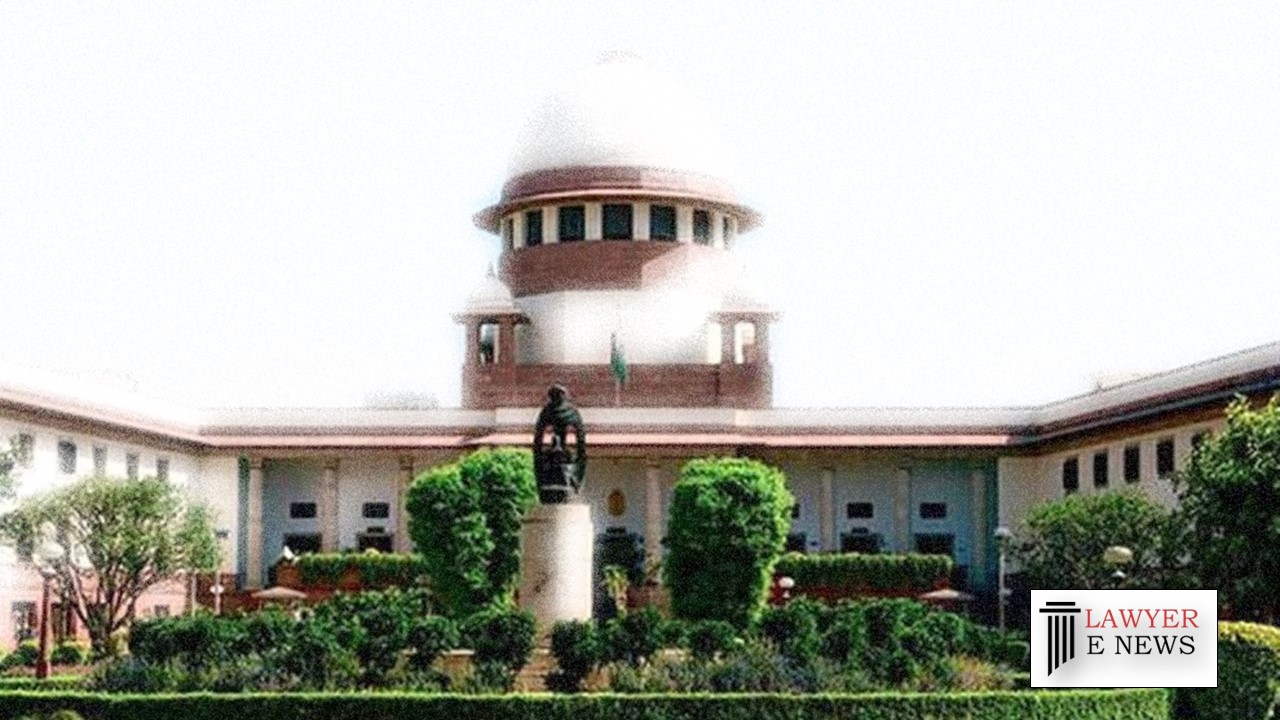
In a significant decision enhancing the rights of judiciary members, the Supreme Court, comprising Justices Dr. Dhananjaya Y Chandrachud, J B Pardiwala, and Manoj Misra, ruled on 15th March 2024 in the case Union of India vs Justice (Retd) Raj Rahul Garg (Raj Rani Jain). The judgment addressed a pivotal issue in the pension computation of a High Court Judge, Justice Garg, who previously served as a District Judge, delving into the inclusion of her entire service duration and last drawn salary in pension calculations.

Legal Point: The core legal question revolved around whether the service period of a former District Judge, later appointed as a High Court Judge, should be included in the computation of pensionary benefits under the High Court Judges (Salaries and Conditions of Service) Act, 1954.

Facts and Issues: Justice Garg, appointed as a Judicial Magistrate in 1981, ascended to a District Judge in 2010 and retired in 2014. She was subsequently appointed as a High Court Judge, serving until 2016. The Union of India contested her pension computation, considering the gap between her services as a break, thereby excluding her High Court tenure for pension purposes.

The Supreme Court's detailed analysis touched on several pivotal points:

Article 217 and 221 Interpretation: The Court examined these constitutional provisions concerning the appointment of High Court Judges and their entitlement to salaries, allowances, and pensions.

Interpretation of Pensionable Service: The judgment interpreted Sections 14 and 15 of the Act, focusing on whether the service period as a High Court Judge should be included alongside the service as a District Judge for pension calculations, despite a service break.

Principle of Non-Discrimination: The Court highlighted the importance of non-discriminatory treatment in pension calculation, emphasizing that Judges, irrespective of their elevation origin, should be accorded equal treatment.

Decision: The Court held that Justice Garg's service as a High Court Judge should be combined with her tenure as a District Judge for pension computation, and this should be based on her last drawn salary as a High Court Judge. The break in service was ruled not to adversely impact the pension computation. The Court underscored the principle of non-discrimination, ensuring parity between Judges elevated from the district judiciary and the bar.

Date of Decision: 15th March 2024

Union of India, Ministry of Law & Justice vs Justice (Retd) Raj Rahul Garg (Raj Rani Jain) and Others

 

Latest Legal News