-
by sayum
25 August 2026 9:55 AM







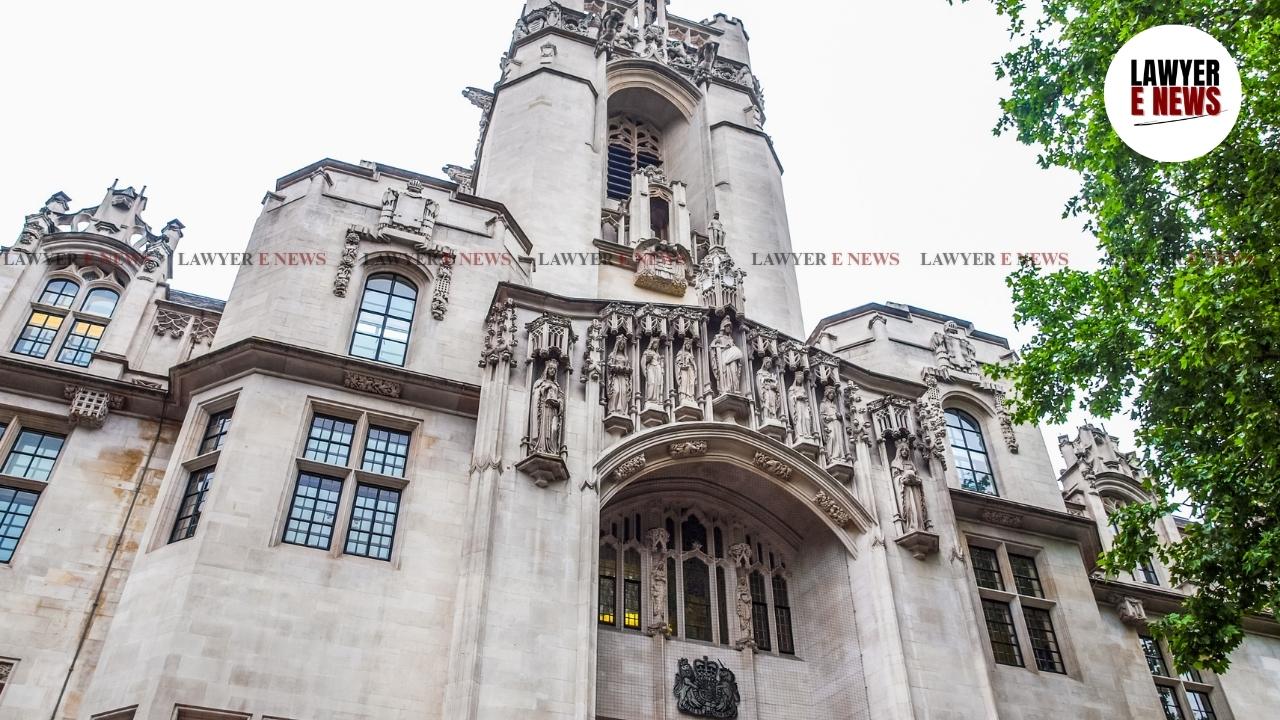
"Collateral Warranties Are Not Construction Contracts" In a significant ruling on July 9, 2024, the UK Supreme Court determined that collateral warranties do not fall under the definition of "construction contracts" as per the Housing Grants, Construction and Regeneration Act 1996 (the "1996 Act"). The decision in Abbey Healthcare (Mill Hill) Ltd v Augusta 2008 LLP provides much-needed clarity on the applicability of statutory adjudication to collateral warranties in the construction industry.
The appellant, Augusta 2008 LLP (formerly Simply Construct (UK) LLP, "Simply"), was engaged by Sapphire Building Services Ltd ("Sapphire") to design and build a care home. Abbey Healthcare (Mill Hill) Ltd ("Abbey") was the tenant of the property. Disputes arose over alleged fire safety defects discovered in the property, leading to multiple adjudications and subsequent legal battles over the enforceability of adjudicators' decisions under the collateral warranty provided by Simply to Abbey.
The Supreme Court scrutinized whether collateral warranties can be classified as construction contracts under section 104(1) of the 1996 Act, which provides for statutory adjudication. The court emphasized that the key consideration is whether such warranties constitute agreements "for the carrying out of construction operations."
The court determined that collateral warranties typically serve to afford a right of action concerning defectively performed construction work, rather than being agreements with the primary purpose of carrying out construction operations. Therefore, they do not inherently fall within the ambit of section 104(1).
The Supreme Court underscored the importance of adhering to the natural and ordinary meaning of "for" in the context of section 104(1), which indicates the purpose of the agreement. The court reasoned that the object or purpose of a collateral warranty is not the carrying out of construction operations but rather to provide a secondary assurance about the performance of the primary construction contract.
On examining the specific wording of the Abbey Collateral Warranty, the court found that the promise by Simply to Abbey, even if involving future performance, was derivative of the obligations under the primary building contract with Sapphire. As such, it did not independently constitute an agreement for the carrying out of construction operations.
Justice Hamblen stated, "A collateral warranty will not be an agreement 'for' the carrying out of construction operations if it merely promises to perform obligations owed to someone else under the building contract. There needs to be a separate or distinct obligation to carry out construction operations for the beneficiary."
The Supreme Court's decision in this landmark case underscores the distinction between primary construction contracts and collateral warranties within the context of the 1996 Act. By ruling that collateral warranties are not construction contracts, the judgment provides clarity on the limits of statutory adjudication, potentially reshaping the landscape of dispute resolution in the construction industry. Parties involved in construction projects can now better understand their rights and obligations concerning collateral warranties, ensuring a more precise application of the 1996 Act.
Date of Decision: July 9, 2024
Abbey Healthcare (Mill Hill) Ltd (Respondent) v Augusta 2008 LLP (formerly Simply Construct (UK) LLP) (Appellant)