-
by sayum
27 August 2026 3:32 PM







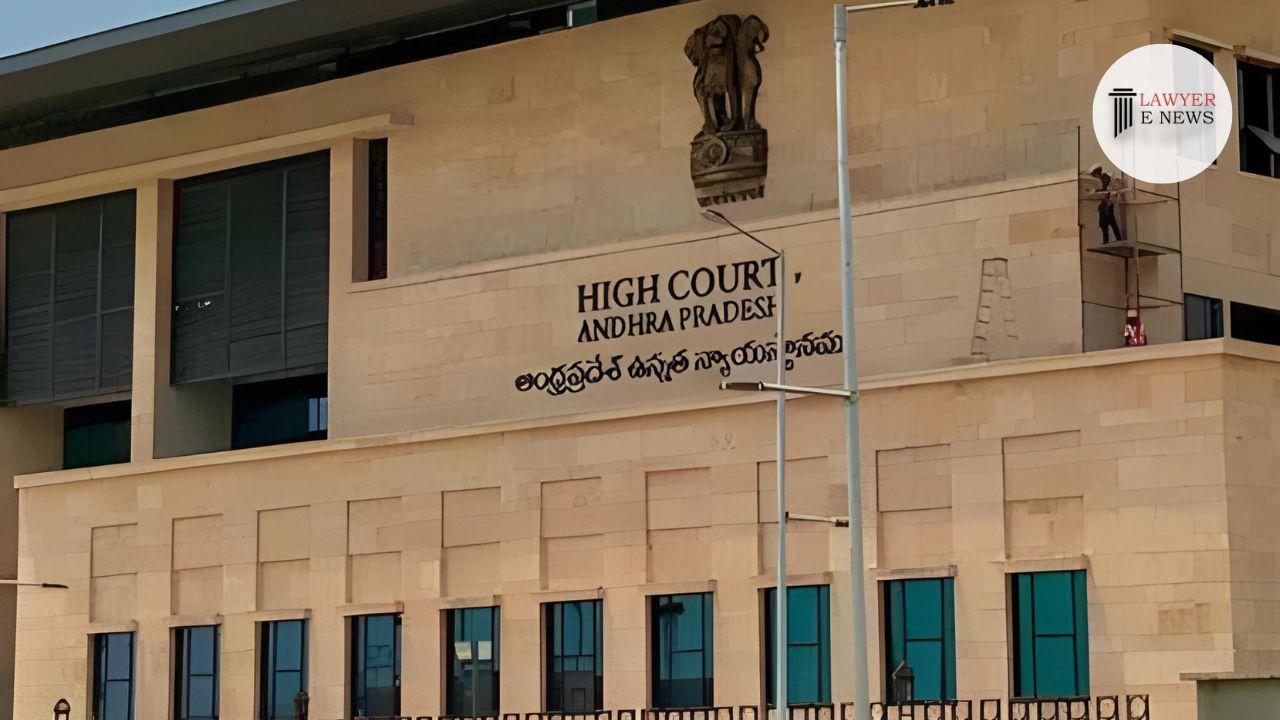
"Guidance which is provided by the Central Government... is a material consideration but not the only material consideration... the role of the State and the Central Government was only advisory in nature and the Electricity Regulatory Commissions had full autonomy," Andhra Pradesh High Court, in a significant ruling, held that while clarifications issued by the Ministry of Power (MoP) regarding Renewable Power Purchase Obligation (RPO) are not strictly binding on State Electricity Regulatory Commissions, they constitute "material considerations" that must be factored into the framing of regulations.
A bench of Chief Justice Dhiraj Singh Thakur and Justice Ravi Cheemalapati observed that Regulatory Commissions possess statutory autonomy but are nonetheless mandated to be "guided" by central policy and directives.
The petitioner, Sarada Metals and Alloys Ltd., operates an 80 MW Captive Power Plant (CPP) in Vizianagaram and challenged the vires of Regulation 3.3 of the APERC RPO Regulations, 2017 and 2022. The company contended that its RPO liability should be capped at 5% as per a Ministry of Power clarification dated October 1, 2019, which applied to CPPs commissioned before April 2016. APERC had rejected this contention, asserting that central clarifications could not displace existing state regulations or bind the Commission's independent regulatory powers.
The primary question before the court was whether the Ministry of Power’s clarifications on RPO capping possess binding statutory force over State Regulatory Commissions. The court was also called upon to determine whether the failure of APERC to incorporate these central directives rendered the 2017 and 2022 RPO Regulations ultra vires the Electricity Act, 2003.
Statutory Framework and the Role of Central Policy
The Court began by examining Section 86(4) of the Electricity Act, 2003, which mandates that State Commissions "shall be guided" by the National Electricity Policy and Tariff Policy. The bench noted that while Section 86(1)(e) empowers State Commissions to promote renewable energy and specify purchase obligations, this power must be exercised within the broader framework of national objectives.
"The power to frame regulations is legislative in nature... the delegate of the legislature is therefore under a mandate to bring about a fair and equitable balance between competing considerations."
Interpretation of the Phrase "Shall Be Guided"
Relying on Supreme Court precedents in Reliance Infrastructure Ltd. v. State of Maharashtra and Tata Power Co. Ltd. Transmission v. MERC, the High Court analyzed the legal weight of the term "shall be guided." The Court observed that this phrase comprises two elements—the mandatory nature of "shall" and the advisory nature of "guidance"—implying that while a factor must be considered, it is not the sole determinant.
"NTP [National Tariff Policy] is one of the many guidelines that the Commission must necessarily consider while regulating tariff. The State and the Central Government only have an advisory role in the regulation."
Autonomy of State Commissions vs. Central Directives
The bench clarified that the Electricity Act seeks to distance governments from the determination of tariffs and provide states with flexibility. However, it emphasized that autonomy does not equate to total insulation from material factors issued by the Central Government. The Ministry of Power’s power to prescribe a long-term growth trajectory for RPO inherently includes the authority to regulate or cap that trajectory for specific categories of plants.
"The guidance which is provided by the Central Government... is a material consideration but not the only material consideration... the Electricity Regulatory Commissions had full autonomy and power in framing regulations."
Validity of the 2017 and 2022 Regulations
Regarding the 2017 Regulations, the Court found the challenge to be belated, noting that the regulations had already worked themselves out and the petitioner had not approached the Court in a timely manner. However, for the 2022 Regulations, the Court held that APERC was "obliged" to at least consider the MoP’s 2019 clarifications as material factors during the drafting process.
"Even when the notification dated 01.02.2019, and the subsequent clarifications had no binding effect on the APERC, yet it could be considered to be a material factor, which ought to have been considered."
Failure to Demonstrate Material Consideration
The Court noted that the APERC failed to show that the 2019 clarifications were actually considered when the 2022 Regulations were framed. The bench held that while the Commission might ultimately decide not to adopt the capping for valid reasons, it cannot bypass the procedural obligation to treat such central guidance as a relevant factor in its decision-making process.
"It was nowhere reflected that the clarifications... were at all considered for purposes of deciding whether an appropriate amendment to the Regulations of 2017 or 2022 were warranted."
Final Directions and Relief
The Court disposed of the petition by directing APERC to reconsider the MoP clarification dated October 1, 2019, specifically in relation to the 2022 Regulations. The Commission must decide whether an amendment is necessary to extend relief to the petitioner. Pending this consideration, the Court granted interim protection, ordering that no coercive action be taken against the petitioner for recovery of amounts exceeding the 5% cap for the relevant period under the 2022 regime.
The High Court affirmed that while State Electricity Regulatory Commissions enjoy autonomy, they must treat Central Government directives as material considerations. The ruling balances the independence of state regulators with the necessity of aligning with national electricity policies. The petitioner remains bound to satisfy demands under the 2017 Regulations but has been granted a window for reconsideration regarding current liabilities.
Date of Decision: 22 April 2026