-
by sayum
19 August 2026 1:58 PM







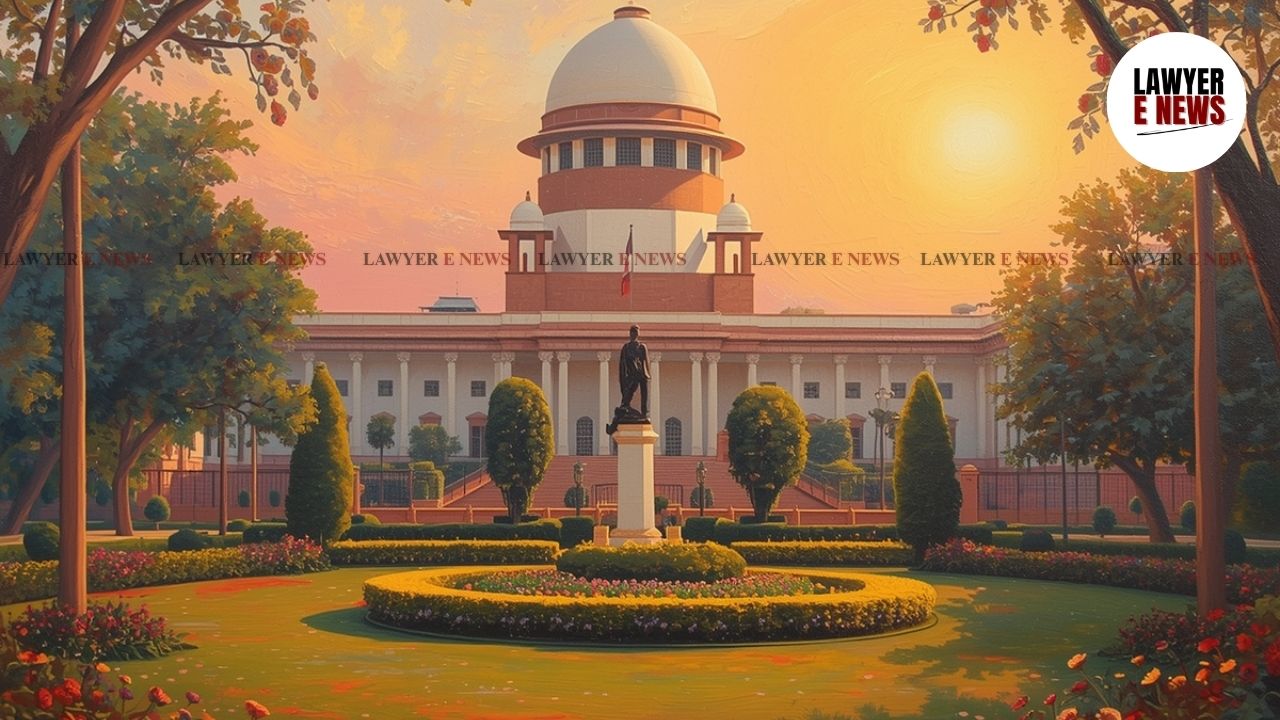
"Interference with a two-decade-old Government Order, after retirement of the writ petitioner, was wholly unwarranted and would unsettle all promotions in the Corporation," Supreme Court, in a significant judgment dated May 4, 2026, held that long-settled seniority positions and promotions cannot be unsettled after decades, especially at the instance of parties who have retired or "fence-sitters" who failed to challenge the proceedings in time.
A bench of Justice Ahsanuddin Amanullah and Justice R. Mahadevan observed that judicial interference into a twenty-year-old Government Order (G.O.) relating to notional promotion was unsustainable when the administrative actions were in strict conformity with the State's merger policy.
The case originated from a dispute between T. Gnanavel, initially appointed as a Fitter in 1988, and R. Sasipriya, a Town Planning Inspector. Following the merger of the Engineering and Town Planning Departments in 1996, Gnanavel was granted notional promotion as an Assistant Engineer effective from 1997 via G.O. (D) No. 19 in 2005. This G.O. was challenged by Sasipriya, leading to a Division Bench ruling of the Madras High Court that set aside the promotion and ordered a fresh scrutiny of files.
The primary question before the court was whether the Division Bench was justified in setting aside G.O. (D) No. 19 dated January 18, 2005, after nearly two decades. The court was also called upon to determine the validity of inter-se seniority between employees of merged departments and the maintainability of claims raised by "fence-sitters" who impleaded themselves only at the appellate stage.
Court Explains Validity Of Notional Promotion Under Merger Policy
The Supreme Court noted that the Government of Tamil Nadu had framed the Tamil Nadu Municipal Corporations Service Rules, 1996, to merge the Engineering and Town Planning Departments. Under G.O. Ms. No. 237, the State had issued specific instructions that Assistant Engineers transferred from the Town Planning Department must be placed below those already in the Engineering and Water Supply Department.
The Bench observed that Gnanavel belonged to the Engineering Department while Sasipriya belonged to the Town Planning Department. Therefore, the placement of Gnanavel above Sasipriya in the seniority list was in strict conformity with the 1996 Rules and instructions. The Court emphasized that this parent Government Order of 1996 was never challenged by any party to the litigation.
"The aforesaid instructions make it clear that Assistant Engineers transferred from the Town Planning Department were to be placed below the Assistant Engineers of the Engineering and Water Supply Department."
Division Bench Ignored Vital Subsequent Developments And Committee Findings
The Court criticized the High Court's Division Bench for failing to notice that a Three-Member Committee had already scrutinized the promotions in question. This committee, formed following previous contempt proceedings, had concluded that there were no irregularities, malpractices, or favoritism in Gnanavel’s promotion. These findings had already been accepted by the High Court in 2020.
The Bench remarked that the Division Bench appeared to have been "swayed by certain assertions" without a meaningful engagement with the factual record. It noted that both the appellant and the respondent had already reached the rank of Executive Engineer by 2016, and the original writ petitioner had retired in 2023, leaving no surviving contest.
"If the relaxations and promotions were found valid in the year 2019, they could not suddenly be held invalid in the year 2024 in relation to the appellant."
Fence-Sitters Barred From Raising Stale Seniority Claims
Addressing the impleading application of one K. Saravanakumar, who sought parity with the appellant for the first time before the Supreme Court, the Bench applied the doctrine of laches. It held that individuals who watch proceedings from the sidelines without participating—referred to as "fence-sitters"—cannot be allowed to agitate stale claims once the rights of third parties have crystallized.
The Court placed reliance on the precedent in Shiba Shankar Mohapatra v. State of Orissa (2010), reiterating that a court exercising public law jurisdiction does not encourage the agitation of old claims in matters of seniority. It further noted that the impleading applicant was facing disciplinary proceedings, which would have disqualified him from promotion regardless of the seniority dispute.
"It is settled law that fence-sitters cannot be permitted to raise a dispute relating to seniority and consequential promotion or challenge the validity of an order after the matter has concluded."
Final Directions And Restoration Of G.O. (D) No. 19
The Supreme Court concluded that the High Court’s interference would have a "chilling effect" by unsettling all promotions made in the Corporation over the last twenty years. The Bench set aside the Division Bench judgment and restored G.O. (D) No. 19, thereby confirming Gnanavel’s seniority and subsequent promotions to Assistant Executive Engineer and Executive Engineer.
The Court further directed that the appellant is entitled to all further promotions from the date he became eligible. The impleading applications were dismissed as the applicants failed to demonstrate any enforceable legal right or timely action in pursuing their claims.
The ruling reinforces the principle of finality in administrative and service matters. By protecting a two-decade-old seniority position, the Supreme Court has signaled that judicial review must be exercised with caution to prevent the destabilization of settled service cadres. The judgment serves as a stern warning to "fence-sitters" that delay and laches remain a formidable bar to seeking discretionary relief in service law.
Date of Decision: 04 May 2026