-
by sayum
27 August 2026 3:32 PM







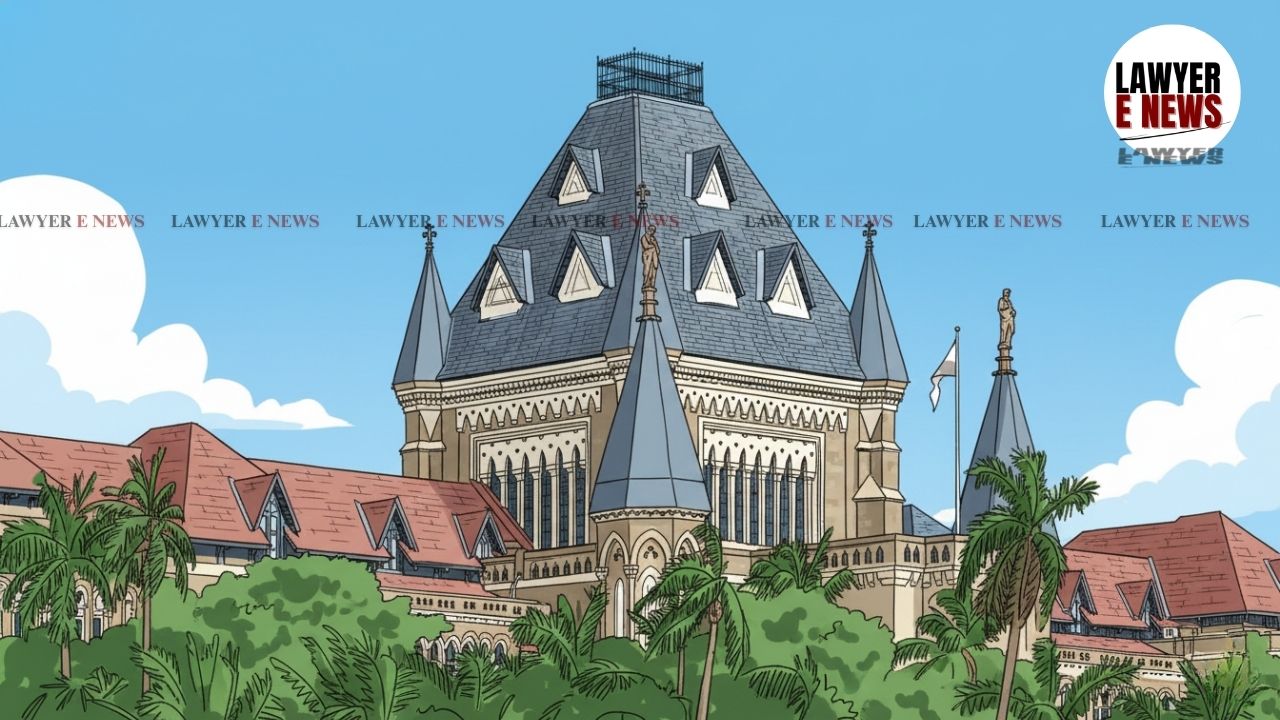
"Concerned Officers who gave such permissions are responsible and the cause of these rampant illegalities in the State. It is imperative for the Officers of the BMC to check as to whether the structure is authorized before granting any such repair permission " Bombay High Court, in a significant ruling, has strongly censured officers of the Brihanmumbai Municipal Corporation (BMC) for granting repair permissions to unauthorized structures without verifying their underlying legality.
A division bench of Justice A.S. Gadkari and Justice Kamal Khata observed that such administrative lapses are the root cause of "rampant illegalities" in the State. The Court emphasized that an officer's failure to perform their statutory duty cannot be used as a shield by a wrongdoer to protect an illegal construction from demolition.
The Petitioners, including Siesta Industrial & Trading Corporation, challenged seven demolition notices issued under Section 351 of the MMC Act and subsequent speaking orders regarding an industrial shed in Kurla, Mumbai. They contended that the structure, comprising a ground and mezzanine floor, was a "tolerated structure" existing prior to the datum line of April 1, 1962. The BMC, however, maintained that the records showed no such structure on the plot prior to the cut-off date and that the existing shed was unauthorized.
The primary question before the Court was whether the Petitioners had produced sufficient evidence to prove that the industrial shed existed prior to the April 1, 1962 datum line. The Court was also called upon to determine whether subsequent repair permissions granted by the BMC could regularize or prove the legality of a structure that was otherwise unauthorized.
Tikka Sheets And Assessment Records Do Not Prove Legality
The Court noted that the Tikka Sheets relied upon by the Petitioners actually supported the BMC's case rather than the Petitioners'. Upon examination, the bench found that the plot was indicated only by a dotted boundary line, signifying an empty plot, rather than hatched lines which would represent a structure. The Court observed that there were no documents on record to established the specific dimensions or the very existence of the structure prior to the datum line.
The bench further rejected the contention that the mere production of an assessment invoice or receipt proves the legality of a building. The Court noted that the assessment sheet produced did not record that both the land and the building were assessed. It held that an assessment record, especially one stating that taxes were levied without reference to property details, cannot be treated as conclusive evidence of a structure's legality.
Officers Censured For Granting Repair Permissions To Illegal Structures
A major portion of the judgment focused on the conduct of BMC officers who granted repair permissions, including permission to construct a mezzanine floor, without verifying if the original structure was authorized. The Court expressed sharp criticism of this practice, noting that such permissions carry a presumption of existence but cannot establish legality without independent corroborating documents.
"The concerned Officers who gave such permissions are responsible and the cause of these rampant illegalities in the State. It is imperative for the Officers of the BMC to check as to whether the structure is authorized before granting any such repair permission," the bench observed. The Court held that granting relief to the Petitioners on the basis of such permissions would only encourage the public perception that illegalities can be regularized through subsequent administrative approvals.
Administrative Failure Cannot Benefit The Wrongdoer
The Court held that the failure of BMC officials to perform their statutory obligations does not grant any right to the owner of an unauthorized structure. It observed that the object of the MMC Act—to ensure planned development—would be rendered "nugatory and otiose" if illegalities were confirmed or ratified by subsequent repair permissions. The bench emphasized that the law must not rescue those who flout its rigors.
"The failure per se cannot inure to the benefit of the wrongdoer. A permission to repair a structure, given subsequent to the datum line, cannot prove either its existence prior to datum line or it being authorised," the Court held. The bench remarked that such administrative inefficiency and laxity cannot be used as a shield to defend actions taken against unauthorized constructions.
Unauthorized Construction Poses Threat To Planned Development
Relying on Supreme Court precedents including Shanti Sports Club v. Union of India and Rajendra Kumar Barjatya v. U.P. Avas Evam Vikas Parishad, the Court reiterated that "illegality is incurable." It noted that unauthorized structures pose a threat to the life of occupants, affect public resources like electricity and water, and derail planned urban projects.
The bench held that courts must adopt a strict approach and should not engage in "judicial regularisation" of buildings erected without requisite permissions. It emphasized that regularization schemes should be exceptional and not a routine exercise. The Court concluded that the Petitioners' structure was "palpably illegal" and deserved no protection.
Procedural Fairness In Speaking Orders
The Court also addressed the Petitioners' argument that the speaking orders traveled beyond the scope of the show-cause notices. Referring to the Supreme Court's decision in UMC Technologies Private Limited v. Food Corporation of India, the bench found that the impugned orders were well-reasoned and had duly considered all documents. The Court held that the orders were neither perverse nor lacking in reasons, and the noticees were given a reasonable opportunity to be heard.
The Writ Petition was dismissed, and the Court refused to extend the ad-interim relief that had been in place since 2023. The bench noted that because the structure was palpably illegal, it would not entertain a request for a stay to approach the Supreme Court. The Court concluded that letting such structures remain would undermine the rule of law and the deterrent effect of municipal regulations.
Date of Decision: 29 April 2026