-
by sayum
19 August 2026 1:58 PM







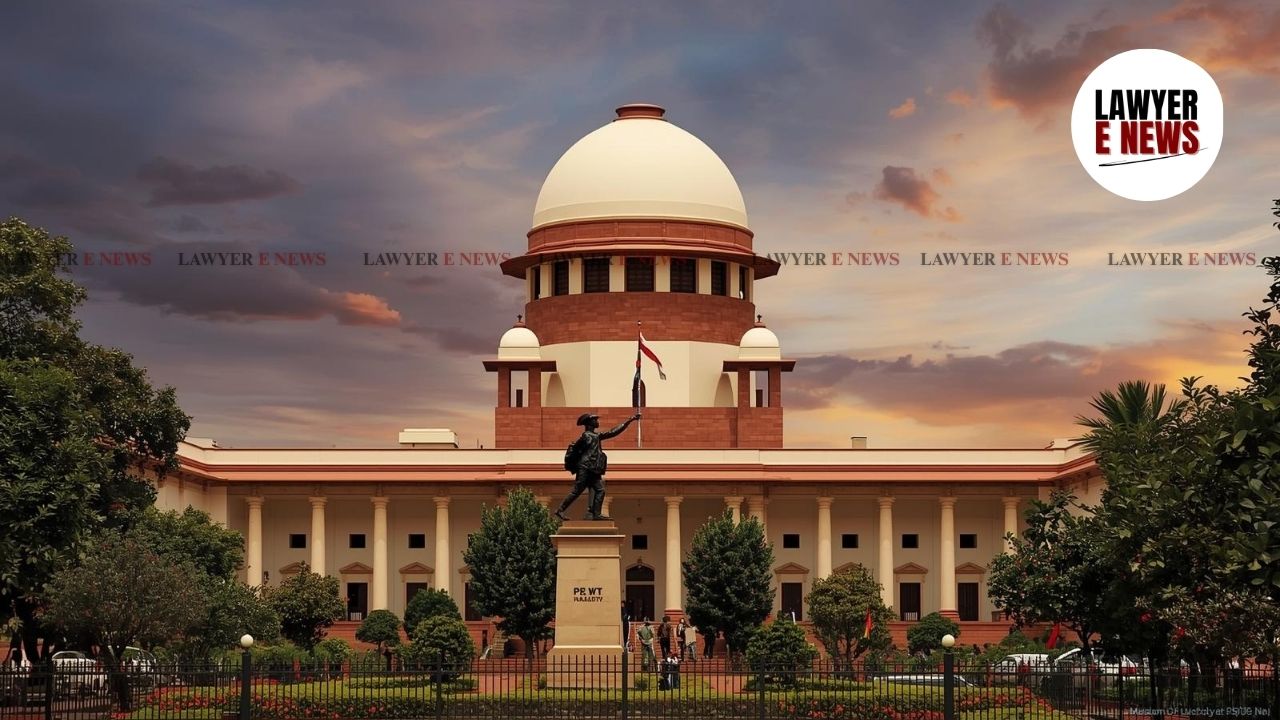
"Practice of ex parte orders and the imposition of damages amounting to crores of rupees, have proven to be a counterproductive force in the broader mission of environmental safeguarding," Supreme Court, in a significant ruling dated April 20, 2026, set aside an order of the National Green Tribunal (NGT) which had confirmed the imposition of environmental compensation worth nearly ₹4 crore on a manufacturing plant without affording it a proper hearing.
A bench of Justice Pamidighantam Sri Narasimha and Justice Alok Aradhe observed that the Tribunal must ensure procedural integrity and maintain a harmonious balance between justice and due process. The Court emphasized that unilateral decision-making by the NGT often leads to the unraveling of environmental protection efforts when such orders are eventually stayed by higher courts.
The matter originated from a private complaint alleging that the appellant’s iron and steel plant in Jharkhand was causing extensive air and water pollution. Following an inspection by a Joint Committee, the Jharkhand State Pollution Control Board initially proposed a compensation of ₹3,95,71,875 for violations spanning 938 days. While the appellant sought reconsideration of this amount, the NGT disposed of the original application by upholding the multi-crore penalty, leading to the present appeal.
The primary question before the court was whether the NGT could legally decide the question of environmental compensation when the issue was not specifically framed before it in the ongoing proceedings. The court also examined whether the Tribunal was justified in bypassing the appellant's statutory right of appeal against the Pollution Control Board’s order. Finally, the bench considered whether the summary disposal of the case violated the principles of natural justice.
NGT Failed To Afford Proper Opportunity Of Hearing
The Supreme Court noted that the question of environmental compensation was not specifically in issue before the Tribunal during the proceedings. The bench found that the appellant was not given an appropriate opportunity to be heard on the merits of the compensation amount before the final orders were passed. The Court observed that such a procedural lapse is fatal to the validity of the order.
"From the perusal of the impugned order it is evident that neither the question of environmental compensation was in issue before the Tribunal in the ongoing proceedings, nor the appellant was given an appropriate opportunity of being heard on this issue before final orders were passed," the Court held.
Tribunal Erroneously Bypassed Statutory Appeal Remedy
The bench took strong exception to the Tribunal's assumption that it could decide the matter finally because any further appeal would eventually reach the Supreme Court. Under the Air Act and Water Act, an appeal against the Board's order lies specifically under Section 16(c) and 16(f). By deciding the matter summarily, the NGT effectively deprived the appellant of its statutory right to contest the Board's findings.
Court Deprecates Practice Of Unilateral Decision Making
The Court reiterated its stance against the NGT’s tendency to pass ex parte orders or decisions without full participation of the affected parties. It noted that the mission of environmental protection is not served by imposing heavy damages in a procedural vacuum. Such orders, the Court noted, are frequently stayed, resulting in a waste of judicial time and effort for all stakeholders involved.
"The National Green Tribunal's recurrent engagement in unilateral decision making, provisioning ex post facto review hearing and routinely dismissing it has regrettably become a prevailing norm. In its zealous quest for justice, the Tribunal must tread carefully to avoid the oversight of propriety," the bench observed, quoting the Veena Gupta precedent.
Procedural Integrity Essential For Environmental Protection
The Court emphasized that for the NGT to remain a "beacon of environmental protection," it must ensure its actions resonate with due process. It held that well-intentioned endeavors are "simply washed away" when procedural integrity is compromised. The bench underscored that the "Polluter Pays Principle" must be applied through a fair and transparent legal process rather than through summary impositions.
"It is imperative for the Tribunal to infuse a renewed sense of procedural integrity, ensuring that its actions resonate with a harmonious balance between justice and due process," the judgment stated.
The Supreme Court allowed the appeal and set aside the NGT’s order dated October 9, 2023. The Original Application has been restored to its file, and the appellant has been granted the liberty to file additional affidavits and documents. The Tribunal is now directed to hear all parties afresh and dispose of the matter in accordance with the law, while the interim stay on the compensation remains in force.
Date of Decision: 20 April 2026