-
by sayum
23 August 2026 2:56 PM







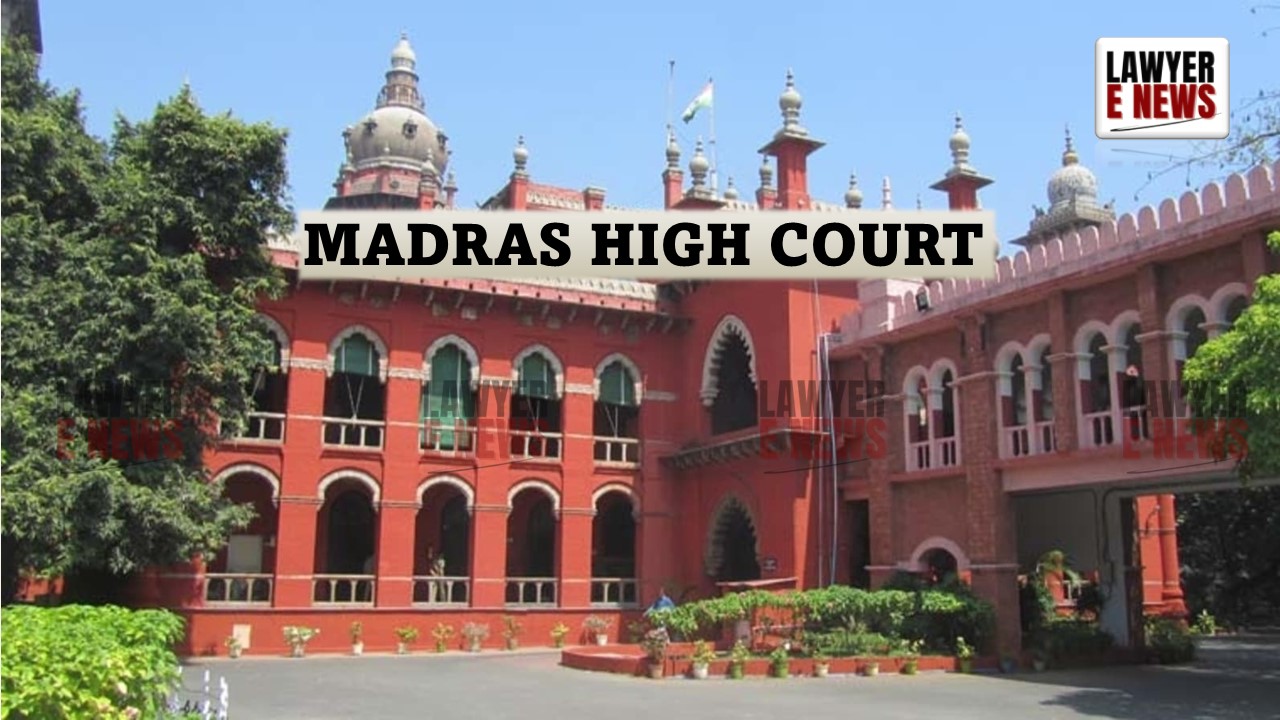
“Mere Seizure Doesn’t Justify Denial of Vehicle to Lawful Owner – Custodial Damage Is a Violation of Natural Justice”, Madras High Court (Madurai Bench), in a significant ruling concerning the rights of vehicle owners under seizure, allowed a criminal revision petition in Ganapathi v. State of Tamil Nadu & Others [CRL.R.C.(MD) No. 1290 of 2025]. Justice Shamim Ahmed held that the Trial Court's refusal to release the seized vehicle was unsustainable, especially when the petitioner’s ownership was undisputed, and the prolonged custody of the vehicle risked its deterioration, resulting in economic hardship.
The case concerned the seizure of a lorry (Reg. No. TN-55-CB-3522) allegedly used for illegal transportation of gravel sand, booked under Section 303(2) of the Bharatiya Nyaya Sanhita, 2023, and Sections 21(1) & 21(2) of the Mines and Minerals (Development and Regulation) Act, 1957. The vehicle’s owner, Ganapathi, approached the High Court after the Trial Court refused to return the vehicle despite the absence of dispute over his ownership.
The High Court, while setting aside the impugned order dated 28.08.2025 of the Judicial Magistrate, Thirumayam, observed that "keeping a vehicle in open yard custody without adjudication not only amounts to dereliction of statutory obligation but also infringes the fundamental rights of the owner under Articles 19 and 21."
"No Purpose Served By Rusting Vehicles in Open Yards" — Section 497 BNSS Must Be Invoked in Spirit
The Court emphasized the correct application of Section 497 of the Bharatiya Nagarik Suraksha Sanhita (BNSS), 2023, which empowers Magistrates to ensure that seized property is preserved properly and not exposed to decay or damage. Referring to the object and scheme of Section 497, Justice Ahmed observed: “The power conferred under Section 497 BNSS must be exercised with a judicious mind and without unnecessary delay. Keeping seized vehicles in open yards serves no legal purpose and causes economic ruin for the rightful owner.”
The Court referred extensively to the landmark decision of the Supreme Court in Sunderbhai Ambalal Desai v. State of Gujarat, AIR 2003 SC 638, wherein it was held that:
“Whatever be the situation, it is of no use to keep such seized vehicles at the police stations for a long period… articles are not to be kept for a long time at the police station, in any case, for not more than fifteen days to one month.” [Para 21, Sunderbhai]
Justice Ahmed stressed that the lower court failed to give due consideration to this binding precedent and observed:
“In the present case, the Trial Court failed to apply its mind to the practical and constitutional implications of denying custody of a vehicle that is undisputedly the property of the petitioner and is his means of livelihood.”
Article 21 – Right to Livelihood and Protection Against Arbitrary Seizure Recognized
The Court invoked the broader constitutional context by holding that arbitrary denial of interim custody of the vehicle, especially where livelihood is concerned, constitutes a violation of Article 21 (right to life and livelihood). It observed:
“The petitioner is facing economic jeopardy, and his family is on the verge of starvation. The vehicle is his primary source of income. Continued seizure without proper justification violates not only statutory rights but also constitutional protections under Articles 19 and 21.”
The Bench also remarked that procedural rigidity cannot be allowed to cause economic annihilation, especially when there is no rival claim of ownership, and the petitioner has offered all assurances to produce the vehicle as and when required.
Pendency of Confiscation Proceedings Not a Bar to Supardari, Holds Court
Citing a series of consistent High Court rulings, including Nand v. State of U.P., 1996 Lawsuit (All) 423, and Jai Prakash v. State of U.P., 1992 AWC 1744, the Court reiterated that: “The mere pendency of confiscation proceedings or suspicion of misuse cannot, by itself, be a valid ground to deprive the rightful owner of interim custody.”
Justice Ahmed noted that the vehicle had already been detained for more than three months, and the Trial Court had mechanically refused relief without even considering the damage caused to the vehicle due to exposure in the open yard.
Court Orders Immediate Release with Safeguards
Allowing the Criminal Revision Petition, the High Court quashed the impugned Trial Court order and directed immediate release of the vehicle to the petitioner. However, to balance the interests of justice, it imposed the following conditions:
The petitioner must furnish a bank guarantee of ₹1,00,000.
A personal bond must be executed to ensure production of the vehicle as and when required.
The petitioner shall not alter or modify the vehicle until trial is concluded.
Justice Ahmed directed the Judicial Magistrate, Thirumayam, to ensure compliance without delay and held that keeping the vehicle any further in custody would amount to denial of access to property without due process.
This judgment sets a strong precedent reaffirming that seizure of property—particularly vehicles—must not translate into arbitrary and indefinite deprivation. The Court’s clear direction on judicial use of Sections 497 and 503 of BNSS, its reliance on constitutional mandates under Article 21, and its strict adherence to Supreme Court precedent in Sunderbhai makes it an important development in the law governing return of property in criminal matters.
Date of Decision: 11.11.2025