Lex Non Cogit Ad Impossibilia – Law Does Not Compel Performance of Impossibility: Orissa High Court Quashes Rejection of Contractor's Claim for Price Escalation Due to Quarry Closure Uniformity in Compensation Must Prevail: Once Market Value Fixed by Common Judgment, It Can't Be Reopened or Reduced: Madras High Court Section 223 BNSS | Notice to Accused Only After Complainant's Oath: Gauhati High Court Clarifies New BNSS Mandate Nationality Alone Cannot Deny Bail: Karnataka High Court Grants Bail to Bangladeshi National Accused of Forged Passport and Aadhaar Creation Sole Eyewitness Not of “Sterling Quality”, Medical Evidence Contradicts Ocular Version: Kerala High Court Acquits Accused in 2015 Thodupuzha Murder Case Failure to Prove Victim's Age and Delay in FIR Fatal to Prosecution Under POCSO Act: Madras High Court Acquits Director Cannot Be Prosecuted Without Making Company an Accused: Calcutta High Court Failure to Explain Possession of Looted Items Strengthens Inference of Guilt: Calcutta High Court Upholds Life Sentence in Double Murder Dacoity Case Once Common Object to Commit Murder is Established, Individual Role Becomes Irrelevant: Allahabad High Court Plea of Non-Service Cannot Override Statutory Limitation When Dealer Sleeps Over Rights: Andhra Pradesh High Court Writ Against VAT Appellate Rejection Mutation Proceedings Not the Forum to Undo a Civil Court Decree: Bombay High Court Slams Revenue Authorities for Deleting Mutation Despite Registered Consent Decree Interpretation of Contract Is For The Arbitrator To Decide Unless No Fair-Minded Person Could Accept That View: Delhi High Court Identification Must Be Beyond Doubt, Not Beyond Hope: Delhi High Court Acquits Man Convicted for Attempt to Murder Owner-Driver Accused in NDPS Case Can’t Seek Vehicle Custody Till Trial: MP High Court Declines Supurdnama Plea Discretionary Powers Cannot Be Invoked to Cure Litigant’s Lapses: Andhra Pradesh High Court Refuses Reopening of Evidence After 3-Year Delay

Section 223 BNSS | Notice to Accused Only After Complainant's Oath: Gauhati High Court Clarifies New BNSS Mandate

07 February 2026 6:39 AM

By: Admin


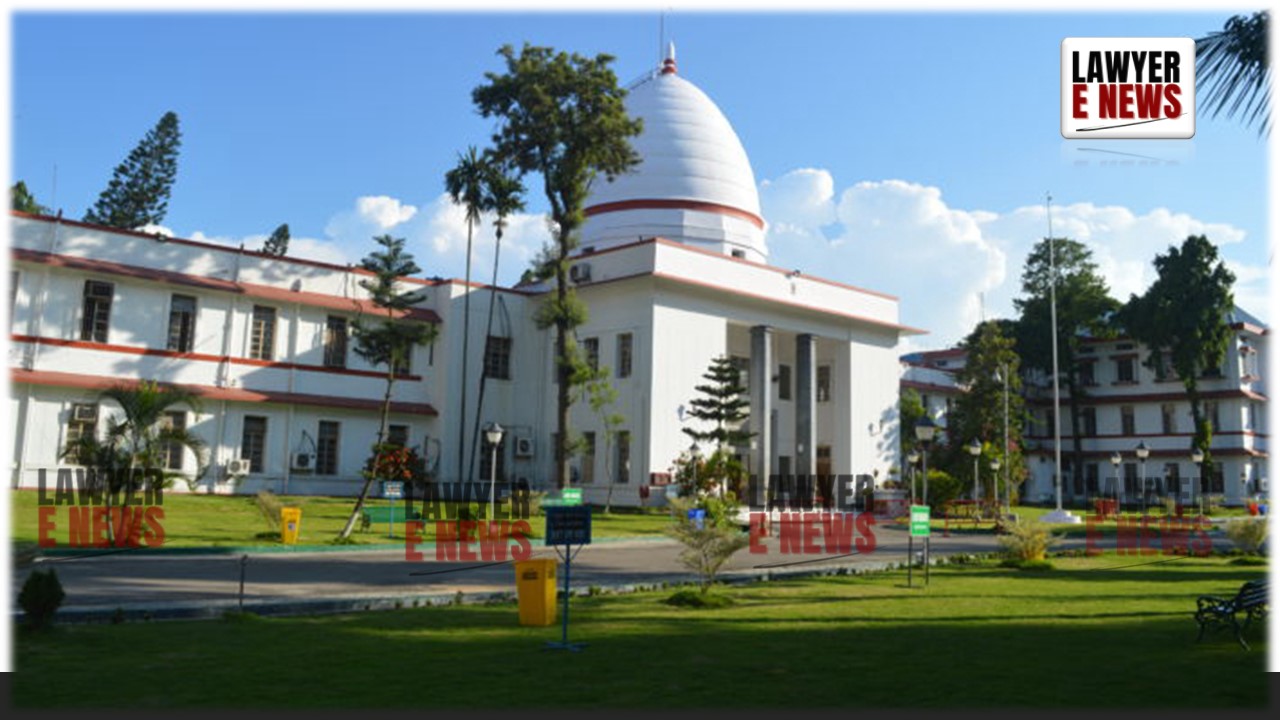
“Magistrate cannot take cognizance of an offence without first examining the complainant and giving the accused an opportunity of hearing” —  In a significant pronouncement Gauhati High Court struck down orders of a Judicial Magistrate that prematurely summoned the accused in complaint proceedings without following the statutory steps mandated under Section 223(1) of the Bharatiya Nagarik Suraksha Sanhita, 2023 (BNSS).

Justice Anjan Moni Kalita held that “issuance of notice to the accused prior to examination of the complainant and the witnesses, if any, is not what is mandated under Section 223(1) of BNSS, 2023”, thereby quashing the impugned orders issued by the Judicial Magistrate First Class, Morigaon.

“BNSS Mandates Opportunity of Hearing, But Only After Complainant's Examination”: Court Rejects Mechanical Summoning

The Court categorically observed that "no cognizance of an offence shall be taken by the Magistrate without giving the accused an opportunity of being heard", but that opportunity must come only after the complainant has been examined under oath, and not at the very outset.

“The possible object of such provision is to afford the accused an opportunity to point out potential false implications, amongst others and thereby, to avoid unwarranted harassment,” noted the Court, while interpreting the shift brought in by Section 223 BNSS.

Justice Kalita emphasized that the process of examining the complainant and witnesses must precede any notice to the accused, adding that “in the event the Magistrate decides to dismiss the complaint after such examination, prior issuance of notice to the accused would be a futile exercise, uncalled for.”

Land Dispute Escalates into Criminal Allegations Amidst Civil Litigation

The legal battle arose from a long-running property dispute involving members of the same extended family residing in Jhargaon, Assam. The petitioners, Bhupendra Choudhury and his son Biswajit, claimed peaceful possession of VGR land since 1964. Tensions reportedly escalated when Arun Choudhury—related to the petitioners—allegedly attempted to encroach on the land in December 2024.

A civil suit—Title Suit No. 16/2025—was already pending before the Civil Judge (Junior Division), Morigaon. However, the matter took a criminal turn when Arun Choudhury and one Adhir Das filed two separate complaints against the petitioners, leading to the registration of C.R. Case No. 144/2025 and C.R. Case No. 143/2025 respectively.

The petitioners, alleging procedural illegality, approached the High Court seeking quashing of the Magistrate’s orders dated 21.02.2025 which had directed issuance of notices to them without any preliminary examination of the complainants on oath.

“Taking Cognizance Requires Judicial Mind — Not Mechanical Action”: Court Sets Procedural Benchmarks Under BNSS

Quoting the landmark decision in R.R. Chari vs. State of U.P. (AIR 1951 SC 207), the High Court reiterated that “taking cognizance occurs as soon as a Magistrate as such applies his mind to the suspected commission of the offence” — thereby underlining that mere presentation of a complaint is not enough.

The Court remarked that “a proper assessment of the complaint as well as other materials, oral or documentary, needs to be done by application of judicial mind”, and only after this preliminary inquiry, can the process of issuing notice and hearing the accused commence.

Rejecting the defence argument that such notices are valid under prior Cr.P.C. practices, the Court held:

“A Magistrate cannot take cognizance without complying with the safeguards newly introduced by Section 223 of BNSS, 2023.”

It further noted that the object behind requiring the accused to be heard at the pre-cognizance stage is to prevent frivolous or false prosecutions and safeguard individual liberty.

High Court Upholds Interpretation of Multiple High Courts on BNSS

The Gauhati High Court also aligned itself with recent judgments from across the country, relying on:

  • Basanagouda R. Patil vs. Shivananda S. Patil, 2024 SCC OnLine Kar 96

  • Subi Antony vs. JFCM-III, 2025 SCC OnLine Ker 532

  • Rakesh Kumar Chaturvedi vs. State of U.P., 2025 SCC OnLine All 4884

  • Sashidhar Jagdishan vs. State of Maharashtra, 2025 SCC OnLine Bom 2928

  • Raj Kumari Das vs. State of Assam, Gauhati HC, 30.10.2025

The Court expressly noted that the rationale adopted by these High Courts was "agreeable", and refused to accept contrary interpretations that diluted the procedural integrity envisioned by the BNSS.

Remand Back to Magistrate for Fresh Compliance Under BNSS

Finding that the impugned orders were issued “without the examination of the complainants and their witnesses, if any, on oath, which is in violation of the mandates of Section 223(1)”, the High Court quashed the notices issued in both complaint cases.

Accordingly, the order dated 21.02.2025 passed in CR Case No. 143/2025 and CR Case No. 144/2025 are set aside and quashed,” held Justice Kalita.

The matters were remanded back to the Court of JMFC, Morigaon, with a clear direction to proceed only after examining the complainants and witnesses on oath and then to decide whether to issue notice and proceed further in accordance with Section 223(1) and Section 226 of BNSS.

The petitioners were also granted the liberty to raise the civil nature of the dispute before the Magistrate, further reinforcing the boundaries between civil and criminal litigation.

Judgment Reinforces BNSS as a Citizen-Centric Reform: Due Process Is Now Mandatory Even Before Cognizance

This ruling emerges as one of the most definitive interpretations of BNSS’s Section 223, signaling that accused persons can no longer be summoned mechanically based on untested complaints.

By insisting on sworn preliminary scrutiny of allegations, the Gauhati High Court has reaffirmed that judicial mind must precede judicial process — a principle that lies at the heart of both justice and liberty.

As the Court concluded, “Before taking cognizance of an offence, the Magistrate/Court must issue a notice to the accused in the complaint, but only after examination of the complainant and witnesses, if any, on oath.”

Date of Decision: 15th December 2025

Latest Legal News