-
by sayum
25 August 2026 9:55 AM








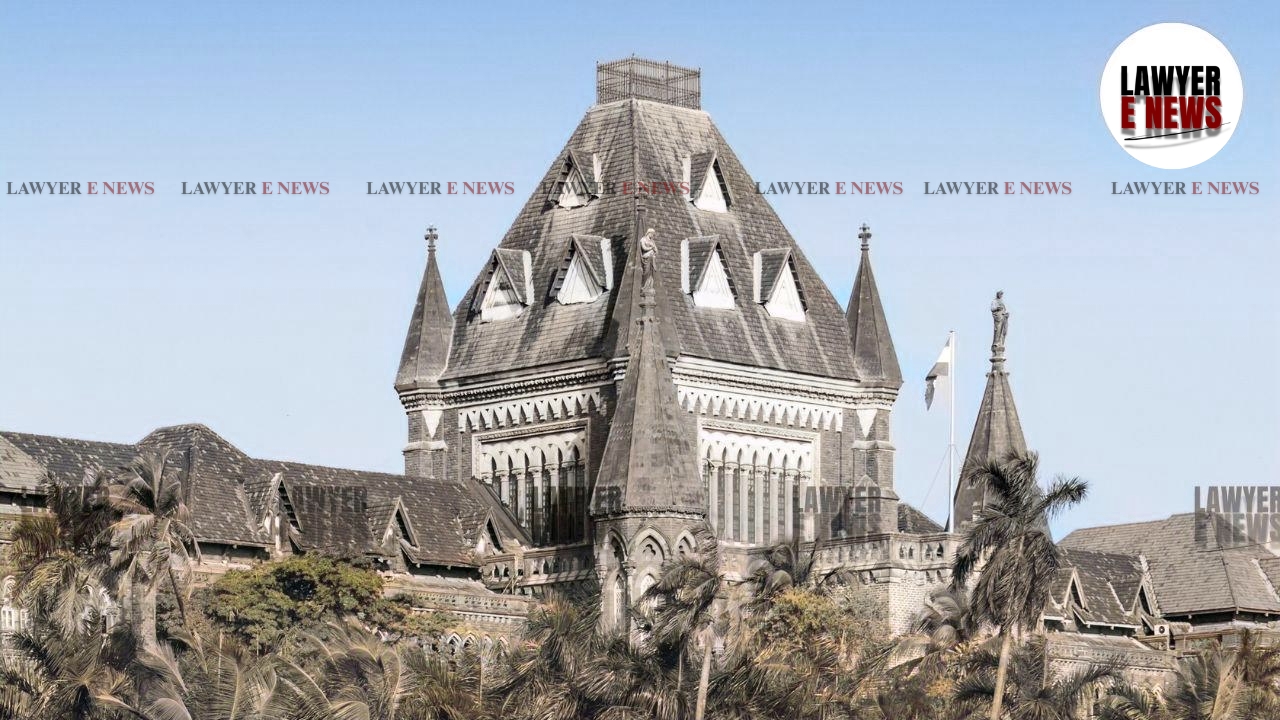
“Revenue Authorities Cannot Sit in Appeal Over a High Court Decree” – In a significant ruling with wide ramifications for land revenue administration and property rights, the Bombay High Court quashed three orders passed by revenue authorities which had deleted a mutation entry despite a registered Consent Decree in the petitioner’s favour.
Justice Kamal Khata emphatically held that mutation proceedings are administrative and fiscal in nature, and revenue officers have no jurisdiction to adjudicate title, succession, or the validity of civil court decrees. The Court reiterated that unless such a decree is set aside by a competent civil court, revenue authorities are bound to give effect to it in the revenue records.
“The revenue authorities have ventured into adjudicating issues of title, succession, and the validity of a civil Court Decree — matters wholly beyond their statutory competence. Such an error goes to the root of the matter and warrants interference under Article 226,” the Court ruled.
“A Registered Consent Decree is Binding on All Subordinate Authorities” – Revenue Officers Cannot Reopen Issues Already Settled
The case revolved around land in Bandra (West), Mumbai, which the petitioner, Meena A. Rizvi, claimed to have purchased under an Agreement for Sale dated 17 November 1979, which culminated in a Consent Decree passed by the Bombay High Court on 5 November 1985 in a suit for specific performance.
The Decree, though passed in 1985, was registered only in 2007 after resolution of stamp duty issues. Based on this registered Decree, the petitioner’s name was mutated in the Property Register Card by the City Survey Officer, Bandra.
However, this entry (Mutation Entry No. 2248) was challenged by Respondent No.5, claiming to be a lessee on the property, and subsequently deleted by the Superintendent of Land Records (14 May 2009), upheld in appeal (29 March 2010) and revision (30 November 2011).
Justice Khata took strong exception to this sequence of events:
“The impugned orders reveal that the revenue authorities travelled far beyond their limited jurisdiction by examining the Petitioner's title, the validity of testamentary succession, the authority of the vendors, and the legality of the registration of the Consent Decree. Such an exercise is plainly impermissible.”
“A Decree Holder Cannot Be Asked to Re-Litigate Ownership Already Recognized by a Court”
The Court rejected the argument that the petitioner’s vendors lacked title due to absence of probate or letters of administration, noting that these were issues that may arise in civil litigation — but cannot justify refusal of mutation when there is a subsisting Decree of a competent court.
“Whether the Decree is valid, void or voidable is a matter for a competent civil court; revenue authorities cannot declare a civil court decree to be ineffective or non est,” the judgment states categorically.
“Bald Assertion of Possession Does Not Create Locus” – Objector’s Tenancy Claim Without Documents Rejected
Respondent No.5 claimed locus as a “person interested” under Section 150(2) of the Maharashtra Land Revenue Code, citing long-standing possession and documents from the 1950s. However, the Court held that mere assertion without foundational proof like a registered lease deed does not confer legal standing to object to a mutation entry.
“The expression ‘person interested’ cannot be so expansively construed as to permit any individual to merely assert an interest, without foundational proof, and thereby obstruct mutation proceedings,” the Court observed.
The Court clarified that Respondent No.5 remains free to assert tenancy rights in civil proceedings — but cannot defeat a registered Decree by raising objections in mutation.
Prohibitory Orders Cannot Override a Decree Unless Challenged Before a Civil Court
On the argument that prohibitory orders dated 1973 and 1974, passed under Section 46(2) of the Income Tax Act, restrained alienation of the property, the Court held that such issues cannot be adjudicated in mutation proceedings.
“Existence, operation and legal consequences of such orders cannot be examined by revenue authorities to declare a civil Court Decree ineffective for the purpose of mutation,” the judgment held.
Similarly, the delay of over 22 years in registering the Decree, and contentions regarding stamp duty or limitation under the Registration Act, were all held to be outside the scope of mutation proceedings.
“Mutation Is a Fiscal Entry, Not an Adjudication of Ownership” – Title Disputes Are for Civil Courts Alone
Relying heavily on precedents such as Shrikant R. Sankanwar v. Krishna Balu Naukudkar and Ramesh Shantilal Modi v. State of Maharashtra, the Court reiterated that:
“Entries in the revenue records are for revenue purposes and do not by themselves constitute title to the property.”
“The authority acting under Sections 149 and 150 MLRC cannot adjudicate upon rights acquired by the parties to such properties. Their power is restricted to ascertain whether documents produced reveal acquisition of right in the land in respect of which mutation is sought.”
High Court Reinstates Mutation Entry – Clarifies No Declaration of Title is Made
Allowing the writ petition, the Court directed restoration of Mutation Entry No. 2248, clarifying that this does not confer or extinguish title, and any party disputing title must approach the civil court.
“To require the petitioner to re-litigate the same issues already decided by a civil Court would be contrary to settled principles of law,” Justice Khata held.
The City Survey Officer was directed to carry out the restoration within four weeks.
Date of Decision: 4 February 2026