-
by sayum
25 August 2026 9:55 AM







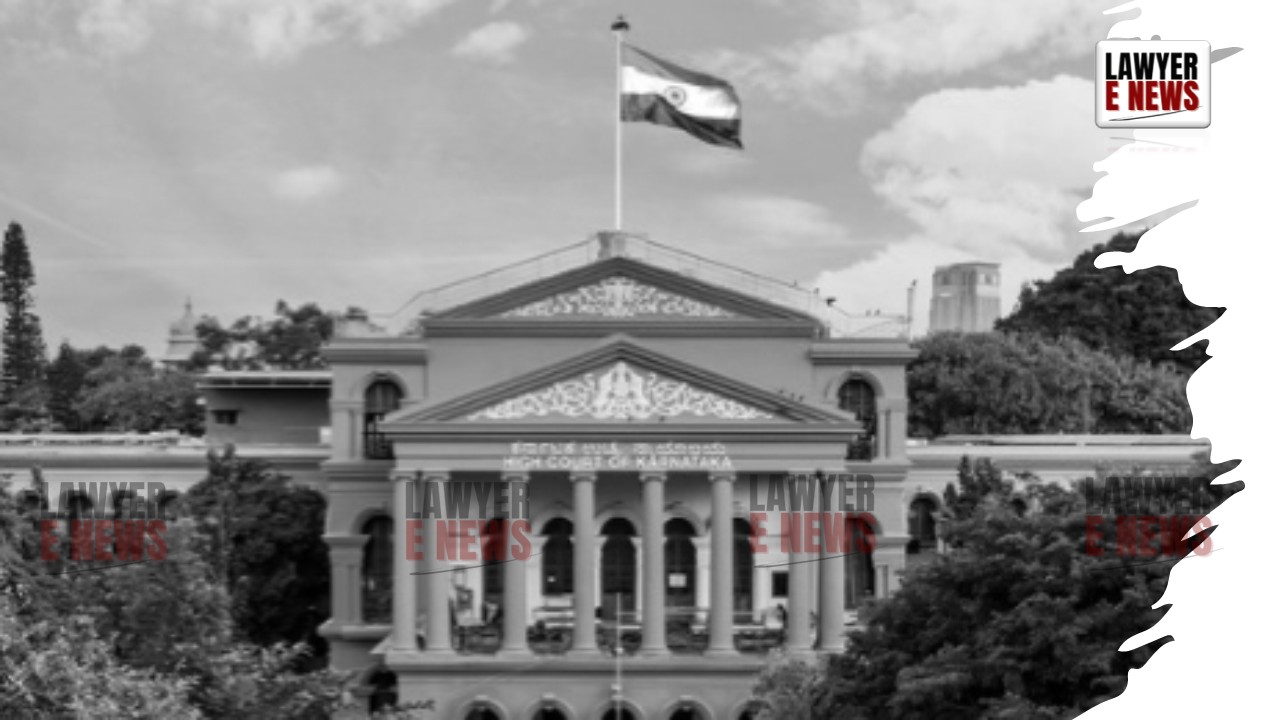
“Where Charge Sheet Is Filed and Passport Seized, Continued Detention Is Unwarranted”— In a significant decision balancing procedural fairness and national security concerns, the Karnataka High Court granted regular bail to a Bangladeshi national who was arrested for allegedly forging an Aadhaar card, fabricating parentage details, and using those credentials to obtain an Indian passport in order to fly to Dubai.
Justice Shivashankar Amarannavar observed that the continued incarceration of the accused was not justified, particularly when investigation had concluded, the charge sheet was filed, and no custodial interrogation was pending. The Court also took serious note of non-compliance with statutory arrest safeguards under the Bharatiya Nagarik Suraksha Sanhita (BNSS), 2023.
“Where a foreign national is arrested, and the grounds of arrest are not communicated in accordance with law, the constitutional and procedural protections become critical,” the Court remarked.
“Non-Furnishing of Grounds of Arrest Weighs in Favour of Bail” — Court Recognizes Procedural Lapse Under BNSS
The petitioner, Mohammed Manik Hussain @ Mohammed Manik, was arrested on October 11, 2024, at Mangaluru Airport when immigration officers apprehended him attempting to fly to Dubai using an Indian passport obtained through forged Aadhaar credentials. He was charged under Sections 319, 336(3), 340 of the Bharatiya Nyaya Sanhita (BNS), Section 12-1A(a)(b) of the Passport Act, and Sections 14A and 14B of the Foreigners Act, 1946.
The petitioner argued that he was arrested in violation of Section 35(1) of the BNSS, as the grounds of arrest were never furnished to him. Relying on recent Supreme Court decisions (Vihaan Kumar v. State of Haryana, Mihir Rajesh Shah v. State of Maharashtra, Kasireddy Upender Reddy v. State of A.P.), the petitioner contended that such a procedural defect affects the legality of detention, especially for a person not conversant with the local language.
“The petitioner does not understand Kannada, yet the arresting authorities failed to communicate the grounds of arrest as mandated under law,” the Court noted. “This lapse supports the petitioner’s plea for bail.”
“Seizure of Passport Removes Flight Risk – Nationality Not Sole Ground to Deny Bail”
The State opposed the bail, citing risk of flight and the seriousness of the offence, asserting that the petitioner, being a foreigner, might abscond. The Court, however, rejected this apprehension, observing:
“The passport of the petitioner has already been seized. There is no immediate risk of flight. Bail cannot be denied merely because the accused is a foreign national.”
Justice Amarannavar underscored that the maximum punishment under the alleged offences is up to 8 years, with no provision for life imprisonment or death, and that the petitioner had no criminal antecedents. Further, co-accused in the case had already been granted bail, and proceedings against one of them had even been stayed by the High Court.
“Once Charge Sheet is Filed, Bail Becomes the Rule” — Custody No Longer Necessary
The Court emphasized that custodial interrogation is no longer necessary, and therefore, prolonged judicial custody would serve no purpose. Noting that the petitioner had already undergone more than three months in judicial custody and had undertaken to cooperate with the trial, the Court allowed the petition with strict conditions.
“Considering all these aspects, the petitioner has made out a case for grant of bail with conditions,” the Court held.
Court Imposes Stringent Conditions to Secure Presence and Prevent Abuse of Bail
While granting bail, the Court directed the petitioner to furnish a bond of Rs. 1,00,000 with two solvent sureties, regularly appear before the trial court, report to the police station every Sunday, and not tamper with evidence or commit any further offence.
The Court concluded: “If the petitioner is found involved in any further offence, the prosecution is at liberty to seek cancellation of bail.”
Date of Decision: 02 February 2026