-
by sayum
27 August 2026 3:32 PM







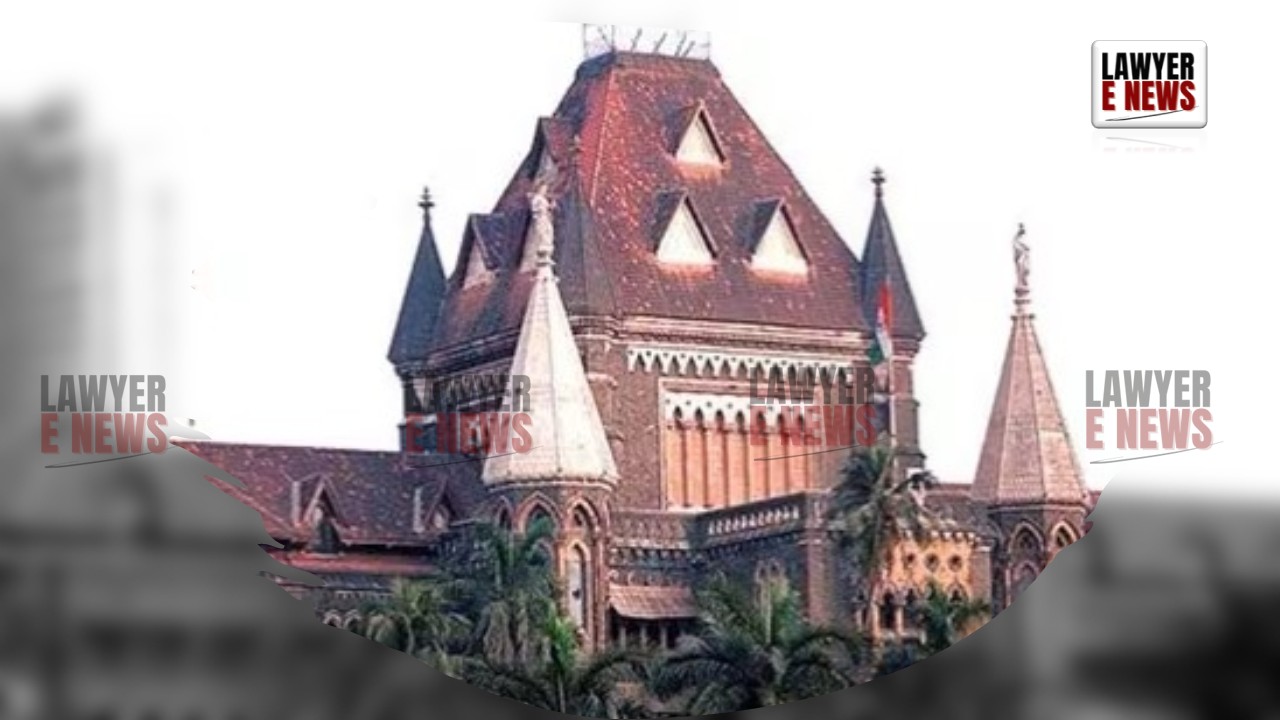
"Until the Constitutional Validity of Section 15(1) is finally determined by the Division Bench of this Court, the estate of the Deceased cannot be depleted", Bombay High Court, in a significant ruling dated April 20, 2026, held that Section 15(1) of the Hindu Succession Act (HSA) remains operative and has not been declared unconstitutional by any binding precedent.
A single-judge bench of Justice Firdosh P. Pooniwalla observed that the existing statutory hierarchy of succession, which prioritizes a husband's heirs over a female's own natal family in cases of intestacy, must be applied. The court noted that while the Law Commission has recommended changes, these have not yet been implemented by the legislature.
The suit was filed by Santsaran Gursaran Advani, seeking to be declared the sole heir of his deceased sister, Bimal Mohan Sikka, who passed away in May 2025. The plaintiff challenged a Gift Deed and a Will executed by the deceased in favor of Nina H. Bhalla (Defendant No. 1), alleging they were void. The plaintiff contended that as the brother, he was entitled to the entire estate under the laws of intestate succession, arguing that the gender-biased provisions of the HSA should not bar his claim.
The primary question before the court was whether a brother has any entitlement to the estate of a deceased Hindu female under Section 15 of the HSA when heirs of the husband are surviving. The court was also called upon to determine whether Section 15(1) of the HSA has been declared unconstitutional by previous coordinate bench rulings and the effect of a granted probate on interim relief.
Statutory Hierarchy Under Section 15 Hindu Succession Act
The court began by examining the scheme of Sections 15 and 16 of the HSA, which govern the intestate succession of a female Hindu. The bench noted that Section 15(1) provides a specific order of devolution: first to children and the husband, and "secondly, upon the heirs of the husband." Natal heirs, such as the mother and father (third entry) and heirs of the father (fourth entry), appear lower in the priority list.
The court observed that in the present case, while the deceased’s husband had pre-deceased her and they had no children, the husband’s sister survived the deceased. Under the statutory scheme, the husband’s sister falls within entry ‘b’ as an "heir of the husband." Consequently, by the operation of Section 16, she excludes the plaintiff, who as a brother falls under entry ‘d’ as an "heir of the father."
Court Clarifies Hierarchy Of Heirs
The bench emphasized that the language of the statute is clear regarding the exclusion of subsequent entries by earlier ones. Justice Pooniwalla stated that "the heirs in the earlier entries exclude those in the subsequent entries. In these circumstances, the Deceased's husband's sister... excludes the Plaintiff." The court found that even if the deceased had died intestate, the brother would have no legal interest in the estate under the current law.
"By virtue of the provisions Section 15(1), the Plaintiff has no entitlement to the Deceased's property at intestacy."
The Constitutional Validity Of Section 15(1) HSA
The plaintiff heavily relied on the 2012 ruling in Mamta Dinesh Vakil v. Bansi S. Wadhwa, where a Single Judge of the Bombay High Court had observed that Section 15(1) was discriminatory and unconstitutional. However, Justice Pooniwalla clarified the status of that decision, noting that the Single Judge in that case had specifically referred the issue of constitutionality to a Division Bench.
The court pointed out that the subsequent Division Bench did not actually deliver a finding on the unconstitutionality of the provision, as it found the issue unnecessary to decide on the facts of that particular case. Therefore, the bench held that Section 15(1) has not been struck down and remains a valid part of the statute book, as reinforced by various subsequent Supreme Court decisions that continue to apply the provision.
Law Commission Recommendations Not Binding Until Legislated
Addressing the plaintiff’s reliance on the 207th Report of the Law Commission of India, which recommended modifying Section 15 to give precedence to a woman's natal heirs, the court held that such reports carry no legislative weight until enacted. The bench noted that "the said recommendation has not been implemented by the legislature and Section 15(1) has not been amended."
The court remarked that while there may be a "strong possibility" of future change, a court cannot grant relief based on a law as it might be in the future. "The 207th Report of the Law Commission of India cannot carry the case of the Plaintiff any further," the bench observed.
Probate Acts As Authenticated Evidence Of Title
A critical factor in the refusal of interim relief was the fact that Defendant No. 1 had already obtained probate of the deceased’s Will. The court noted that the plaintiff had failed to file a caveat in the probate proceedings, which the bench viewed as an admission of a lack of caveatable interest. The court held that once probate is granted, it serves as authenticated evidence of the Will, and the property vests in the executor from the date of death.
The bench held that unless and until the probate is revoked by a competent Testamentary Court, the properties are legally vested in the executrix. Justice Pooniwalla observed that "the Probate granted to Defendant No.1 is authenticated evidence of the Will... by virtue of which the property of the Deceased vests in her from the death of the Deceased."
"Unless and until the Probate is revoked, the interim reliefs sought in the present Interim Application cannot be granted."
Maintainability And The Prima Facie Case
Citing the Supreme Court’s decision in Asma Lateef v. Shabbir Ahmad, the court reiterated that before granting interim relief, a court must record a prima facie satisfaction regarding the maintainability of the suit. Since the plaintiff could not establish a legal interest in the estate under Section 15, the court found no grounds to interfere with the estate's management by the executrix.
The court concluded that the plaintiff failed to demonstrate even a prima facie interest in the estate, whether the succession was testamentary or intestate. The court dismissed the interim application, holding that the statutory provisions of the Hindu Succession Act, as they currently stand, do not favor the natal brother over the husband's heirs.
Date of Decision: 20 April 2026