-
by kapil
27 October 2026 6:21 AM







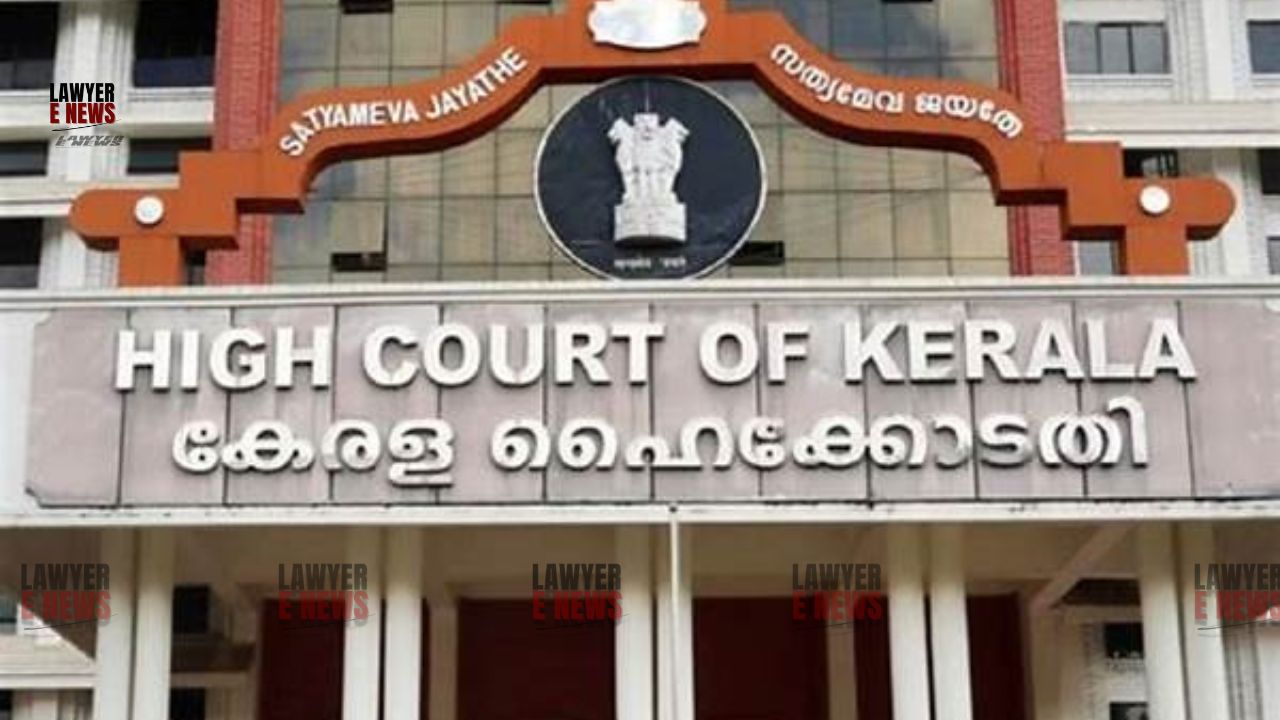
"If the amendment of the complaint is only formal in nature and not substantial, the amendment can be allowed. Nevertheless, if an amendment to the complaint causes serious prejudice to the accused and changes the nature and character of the complaint, the amendment must be rejected." Kerala High Court, in a significant ruling dated September 16, 2026, held that a criminal court possesses the inherent power to permit formal amendments to a complaint under the Negotiable Instruments Act, 1881, provided the infirmity is merely clerical and does not cause prejudice to the accused.
A bench presided by Justice C.S. Dias observed that, "to meet the ends of justice or to prevent prejudice or miscarriage of justice, what is not prohibited can be taken as permitted."
The petitioner had initiated proceedings under Section 138 of the NI Act against the respondent in 2016. Due to a clerical error, the statutory notice and the original complaint erroneously mentioned the name of the bank through which the cheque was presented. While the cheque was presented through Syndicate Bank, the petitioner’s counsel inadvertently named South Indian Bank in the legal documents, relying on the bank name printed on the rejection advice memo. The mistake was discovered during the final hearing stage, prompting the petitioner to move applications for amendment and re-examination of the witness, which were initially dismissed by the trial court.
The primary question before the court was whether a trial court has the authority to permit an amendment to a criminal complaint filed under the NI Act to rectify a clerical error. The court was also tasked with determining whether such an amendment would materially alter the nature of the proceedings or cause legal prejudice to the accused.
Inherent Power to Prevent Miscarriage of Justice
The Court observed that while the Code of Criminal Procedure (CrPC) and the Bharatiya Nagarik Suraksha Sanhita (BNSS) do not contain specific provisions for the amendment of a criminal complaint, the absence of such a provision does not strip the court of its duty to ensure justice. The Court clarified that criminal courts are not denuded of the power to rectify defects when such action is necessary to prevent a miscarriage of justice, provided the exercise of power is not arbitrary.
Court Applies the 'Curable Infirmity' Test
Referencing the Supreme Court judgment in S.R. Sukumar v. S. Sunaad Raghuram, the High Court emphasized that easily curable legal infirmities can be rectified through a formal application for amendment. The court noted that if the amendment is purely formal and does not prejudice the defence, it should be allowed to ensure the trial proceeds on merit rather than technical errors.
Distinguishing Substantial vs. Formal Amendments
The court distinguished between permissible formal changes and prohibited substantial alterations. Citing Munish Kumar Gupta vs. Mittal Trading Company, the Bench noted that amendments that touch upon the core aspects of the limitation period or the statutory requirements of the NI Act—such as the date of the cheque—may be disallowed if they fundamentally change the nature of the claim. However, corrections of clerical errors in banking details fall under the category of formal amendments.
Amendment Allowed to Meet Ends of Justice
In the present case, the court noted that the documentary evidence, specifically the cheque and the return memo, clearly identified the actual bank used for presentation. The error was purely a result of the counsel misreading the return advice. Consequently, the Court held that the amendment did not alter the nature of the complaint and caused no prejudice to the respondent.
"The amendment sought for is only formal in nature and it does not materially alter the complaint or causes any prejudice to the respondent, because the materials on record prove the said fact."
The High Court set aside the trial court's order and allowed the petitioner’s applications. The petitioner was granted one month to carry out the necessary amendments, and the trial court was directed to recall and re-examine the complainant (PW1). Given that the litigation has been pending since 2016, the High Court directed the Magistrate to dispose of the matter within an outer time limit of six months.
Date of Decision: 16 September 2026