
-
by kapil
27 October 2026 6:21 AM







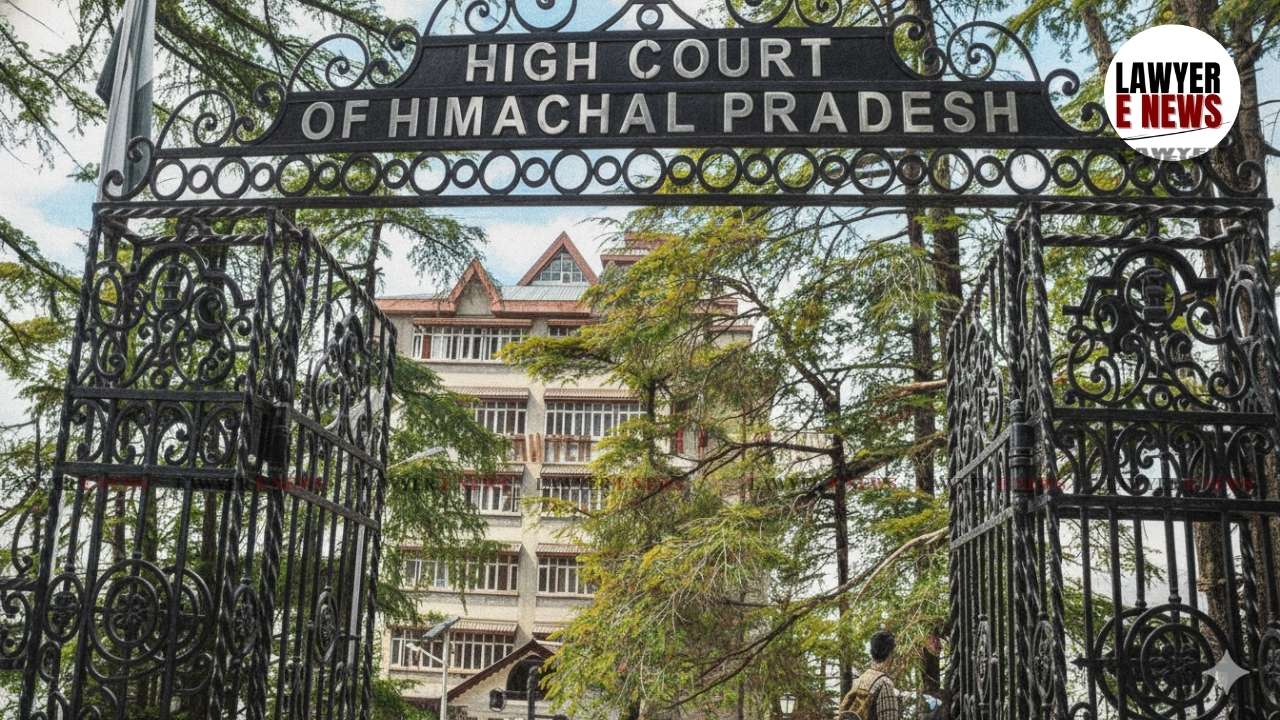
"The notification as required under the above provision of the Constitution has not been produced or proved that the complainant belongs to a caste which is declared to be a 'Scheduled Caste' to attract the provisions of this Act. Hence, the charge against the accused persons under the Act is not proved at all." Himachal Pradesh High Court, in a judgment, held that the provisions of the Scheduled Castes and Scheduled Tribes (Prevention of Atrocities) Act, 1989 (SCST Act) cannot be invoked unless the prosecution produces and proves a valid caste certificate for the complainant.
Justice Rakesh Kainthla, while dealing with criminal appeals filed against an acquittal, emphasized that the foundational requirement for establishing an offense under the SCST Act is the proof of the victim's caste status as specified under the Constitution of India.
The complainants alleged that they were subjected to atrocities, including social boycotts, physical violence, and the poisoning of their cattle by the accused, due to their Scheduled Caste status. Following the registration of an FIR and a subsequent cancellation report by the police, the complainants filed a protest petition which the Magistrate treated as a complaint, eventually leading to the trial and subsequent acquittal of the accused by the Special Judge, Nahan. The State and the complainants challenged this acquittal, alleging that the trial court failed to properly appreciate the evidence.
The primary question before the court was whether the prosecution had sufficiently established the ingredients of the offences charged, particularly under the SCST Act, in the absence of documentary proof of the complainants' caste. Furthermore, the court was called upon to determine if the trial court’s order of acquittal was perverse or unsustainable, thereby warranting appellate interference.
The court reiterated the settled legal position regarding the limited scope of interference with an order of acquittal. Relying on the principles laid down by the Supreme Court in Sanjay Kumar v. State of Bihar, the bench observed that an appellate court should not disturb an acquittal unless the finding is impossible, perverse, or manifestly illegal.
Requirement of Caste Certificate
The bench clarified that the SCST Act requires the victim to belong to a caste specifically notified under Article 341 of the Constitution. Without the production of a caste certificate, the essential ingredients of an offence under the Act cannot be met, rendering the charges unsustainable. The court noted that in the present case, the prosecution failed to place any such document on record.
"The provisions of the SCST Act are not attracted without the caste certificate."
Fatal Delay in Reporting
Regarding the general criminal charges, the court highlighted that the FIR was lodged with an inordinate delay of nearly one year, without any plausible explanation. Citing the Supreme Court’s judgment in Mehraj Singh v. State of U.P., the court observed that such delays allow for "embellishments, concoction and fabrication," casting significant doubt on the authenticity of the prosecution’s case.
Need for Specificity in Testimonies
The court rejected the testimony of witnesses who provided omnibus statements alleging general beatings by the accused without specifying dates, locations, or individual roles. Invoking the ruling in Pandurang v. State of Hyderabad, the bench held that it is unsafe for courts to rely upon sweeping, all-embracing statements made by witnesses who fail to differentiate between the actions of individual accused persons.
Bold pull-quote: "Unless, therefore, a witness particularises when there are several accused, it is ordinarily unsafe to accept omnibus inclusions like this at their face value."
Procedure for Protest Petitions
Addressing the complainants' contention regarding the procedure adopted by the Magistrate, the court held that while a protest petition can be treated as a complaint, it must satisfy the requirements of a complaint as defined under Section 2(d) of the CrPC. The court affirmed that a protest petition must disclose a cognizable offence and contain the necessary particulars to trigger the trial process, noting that in this instance, the procedure followed was legally sound.
Concluding that the trial court’s view was reasonable and supported by the lack of evidence, the High Court dismissed both appeals. Under Section 437-A of the CrPC, the acquitted respondents were directed to furnish bail bonds for a sum of ₹25,000 each, ensuring their appearance before the Supreme Court in the event of any further legal challenge.
Date of Decision: 09 September 2026