-
by kapil
27 October 2026 6:21 AM







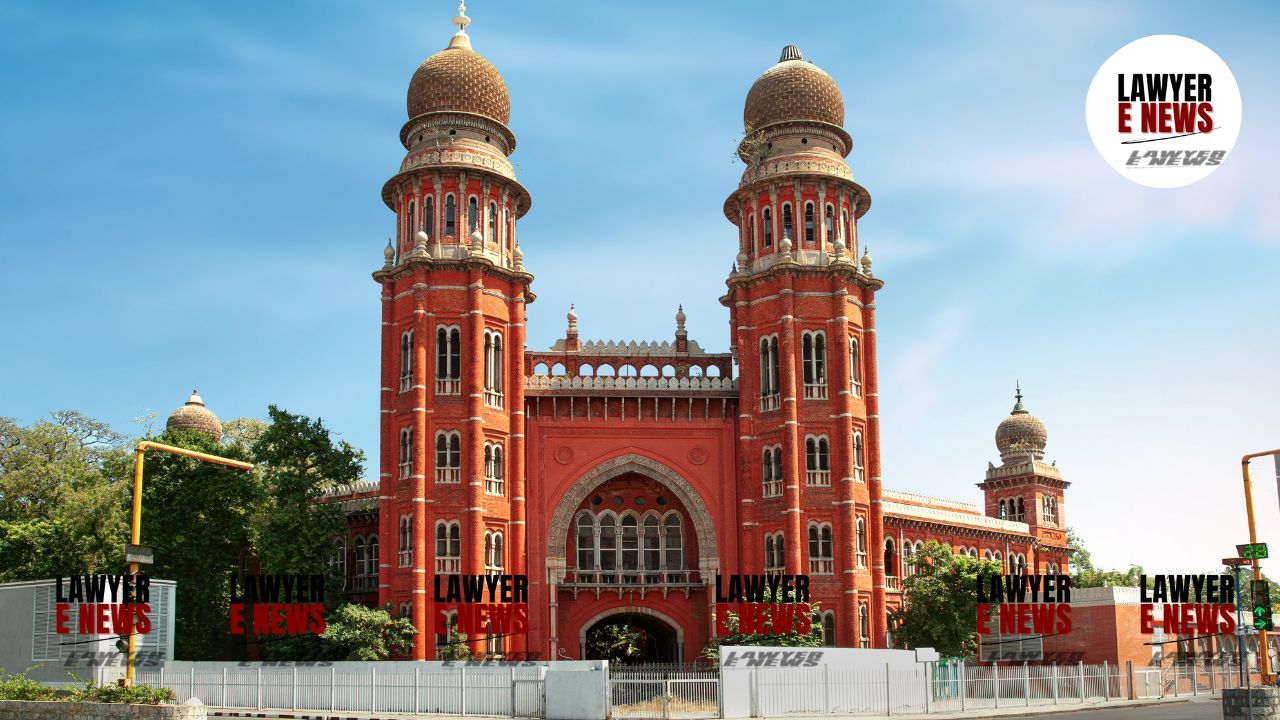
"If ultimately the Hon’ble Apex Court decides that there is no necessity to deduct the TDS amount from the compensation amount, the Insurance Company can be directed to deposit the TDS amount to the credit of the claim petition." Madras High Court, in a significant ruling, has clarified that the deduction of Tax Deducted at Source (TDS) by insurance companies from motor accident compensation is subject to the final decision of the Supreme Court.
A single-bench of Justice N. Anand Venkatesh observed that while the issue of whether TDS is applicable under Section 194A of the Income Tax Act is currently pending before the Apex Court, claimants' rights must be protected if the tax is eventually found to be non-deductible.
The matter arose from a Civil Miscellaneous Appeal filed by United India Insurance Company Ltd. challenging an award of Rs. 19,57,000/- passed by the Motor Accidents Claims Tribunal, Coonoor. The claim petition was originally filed by the husband and minor children of the deceased, Muthulakshmi, who succumbed to injuries sustained in a road accident on November 16, 2018. The Insurance Company moved the High Court primarily on the grounds that the Tribunal failed to deduct TDS and that the quantum of compensation was excessive.
The primary question before the court was whether the Insurance Company is entitled to deduct TDS from the compensation amount under Section 194A of the Income Tax Act. The court was also called upon to determine whether the quantum of compensation fixed by the Tribunal required any downward interference.
Court Relies on Division Bench Precedent Regarding TDS
The Court noted that the issue regarding the deduction of TDS is squarely covered by a previous decision of a Division Bench of the Madras High Court in C.M.A. (MD) No. 1424 of 2024. The Bench highlighted that several High Courts, including Himachal Pradesh and Gujarat, had previously quashed circulars ordering TDS on motor accident awards.
Uncertainty Pending Supreme Court Decision
The Court observed that while the Himachal Pradesh High Court judgment was challenged before the Supreme Court, there is currently no stay on the same. However, since the reference regarding the deduction of TDS remains pending before the Hon’ble Apex Court, the Court held that the finality of this issue would depend on the outcome of the Supreme Court's decision.
Conditional Direction for TDS Deposit
Justice Anand Venkatesh directed that if the Supreme Court eventually decides that there is no necessity to deduct TDS from compensation, the insurance company must deposit the deducted amount. The Court remarked that in such an event, the appellant insurance company would be directed to deposit the said TDS amount to the credit of the claim petition for the benefit of the claimants.
Procedure for Claiming Refunds from Income Tax Department
The Court further clarified the procedure in cases where the insurance company has already deposited the TDS amount with the Income Tax department. In such instances, the Court directed the company to issue a necessary certificate to the claimants. This certificate would enable the claimants to seek a refund directly from the Income Tax department in accordance with the law.
Quantum of Compensation Held to be Just and Proper
Regarding the challenge to the compensation amount, the Court refused to interfere with the Tribunal's findings. The Court observed that the total compensation of Rs. 19,57,000/- under various heads including loss of dependency and consortium was just and proper. It was held that the appreciation of evidence by the Tribunal did not require any interference by the High Court.
Protection of Minor Claimants Who Attained Majority
The Court took judicial notice of the fact that during the pendency of the appeal, two minor claimants had attained the age of majority. Consequently, the Court directed the Tribunal to entertain petitions from all three claimants to permit them to withdraw their respective shares along with the accrued interest.
Final Disposal of the Appeal
In the result, the High Court disposed of the Civil Miscellaneous Appeal while upholding the primary award and providing specific directions regarding the tax components. No costs were awarded in the matter, and the connected miscellaneous petition was closed.
Date of Decision: July 2, 2026