-
by sayum
11 August 2026 2:00 PM







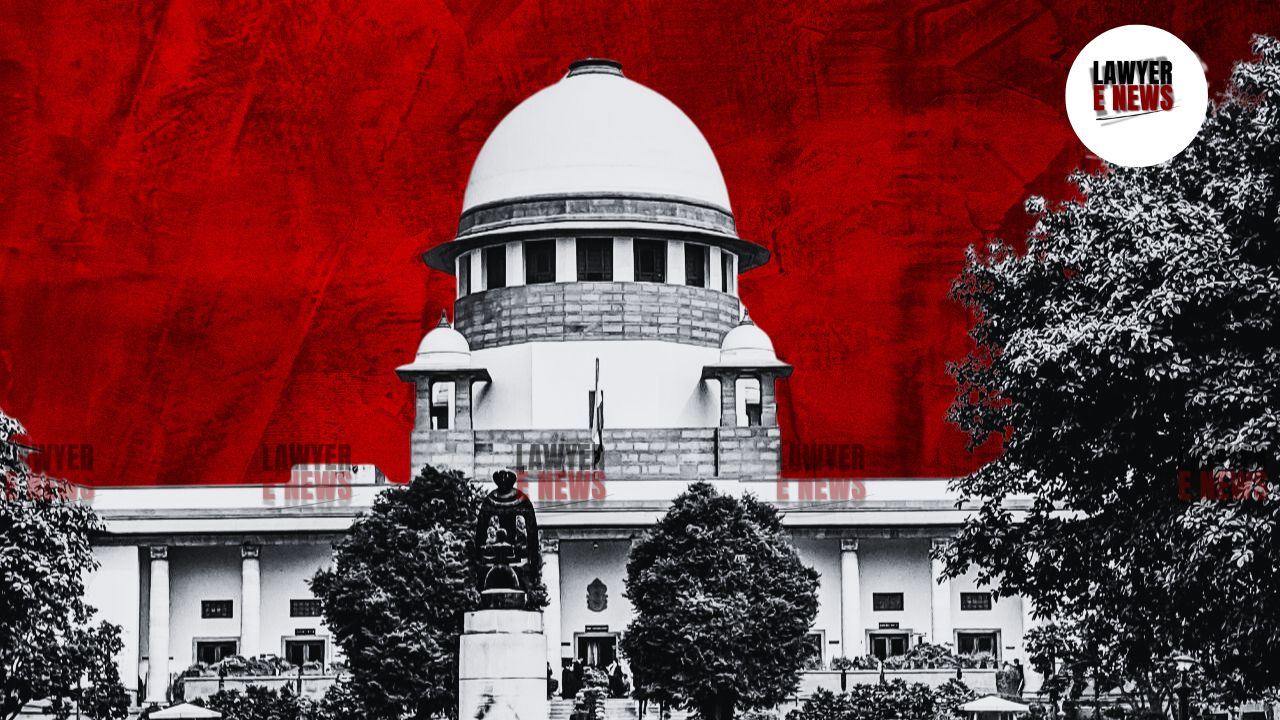
"Once eligibility criteria is declared by advertisement, it cannot be changed midway through the recruitment process… it would tantamount to changing the rules of the game after the game is played." — In a decisive verdict reinforcing the sanctity of declared recruitment norms, the Supreme Court of India allowed the appeal of Prabhjot Kaur and upheld her selection as Deputy Superintendent of Police (DSP) under the Scheduled Caste Sports (Women) quota. The Court set aside the Punjab & Haryana High Court’s Division Bench order that had remanded the matter for fresh adjudication, calling the interference unwarranted and contrary to established principles.
The Court ruled that the eligibility criteria for government recruitment cannot be altered retrospectively, especially when the process has already commenced. Citing the doctrine laid down in K. Manjusree v. State of A.P., the Court held that "changing the recruitment rules midway is impermissible", and reaffirmed that advertisement No.14 dated 11.12.2020—which reserved one DSP post specifically for SC Sports (Women)—was binding on all applicants.
The controversy arose from the Punjab State Civil Services Combined Competitive Examination 2020, which initially advertised two posts under the SC Sports quota—one for DSP and one for Deputy Superintendent (Jails)/DPO. Following the introduction of the Punjab Civil Services (Reservation of Posts for Women) Rules, 2020, which mandated 33% horizontal reservation for women, the state government withdrew the earlier advertisement and issued a fresh Advertisement No.14 on 11.12.2020.
Under this revised advertisement, the DSP post under SC Sports was reserved for women, and a single DSJ post remained unreserved within the SC Sports category. The state’s roster system was only issued later on 29.01.2021, after the deadline for applications (30.12.2020) had lapsed.
Prabhjot Kaur applied under the SC Sports (Women) category and topped the merit list among female candidates. The private respondent, a male candidate who also applied under SC Sports, ranked first among men but was found ineligible for the reserved DSP post under the new advertisement.
Legal Challenge and High Court’s Division Bench Order
The male candidate challenged only the reservation of the DSP post for women under SC Sports, claiming that the roster issued on 29.01.2021 did not mandate such a reservation. Initially, the learned Single Judge dismissed his plea, finding that the advertisement was consistent with the 2020 Rules and that no post existed for him under the revised structure.
However, the Division Bench of the High Court, noting conflicting positions taken by the Home Department and the Department of Social Justice, directed the Chief Secretary to clarify the issue. The Chief Secretary subsequently claimed the reservation of DSP post for SC Sports (Women) was a mistake, suggesting the post should have been open to all under SC Sports.
Acting on this affidavit, the Division Bench remanded the matter for fresh adjudication—prompting Prabhjot Kaur to approach the Supreme Court.
Rejecting the remand, the Supreme Court upheld the decision of the learned Single Judge and made critical observations: “The recruitment process begins with the advertisement and ends with the filling of vacancies. The process had already begun under Advertisement No.14. Midway changes are not permissible.”
The Bench, comprising Justices Sudhanshu Dhulia and K. Vinod Chandran, stressed that the roster system introduced later (29.01.2021) cannot invalidate an advertisement that had already crystallized candidate rights and eligibility. The Court observed: “Advertisement No.14 dated 11.12.2020 holds the field… it is only under this advertisement that the respective rights of the appellant and private respondent can be determined.”
The Court was categorical that the roster, though based on an amendment dated 29.12.2020, cannot operate retrospectively to alter an already-notified advertisement. Importantly, the Court emphasized that: “The private respondent participated in the entire recruitment process without protest and made a representation only after the merit list was released.”
On the issue of procedural fairness, the Court relied on the Constitution Bench ruling in Tej Prakash Pathak v. High Court of Rajasthan (2025) 2 SCC 1, reaffirming that K. Manjusree (2008) 3 SCC 512 remains binding law: “Eligibility criteria notified at the commencement of the recruitment process cannot be changed midway… unless expressly permitted under existing rules or advertisement.”
The Supreme Court restored the order of the learned Single Judge, holding that Prabhjot Kaur was the only eligible SC woman candidate under the advertisement and had lawfully secured her position.
“We thus allow the appeal and set aside the impugned order passed by the Division Bench… The directions given in the judgment dated 03.03.2023 shall be complied with within three weeks from today.”
This judgment reinforces a crucial constitutional and administrative law principle: Governments cannot retrospectively tinker with recruitment rules or advertisements once the process begins. The ruling serves as a strong precedent ensuring predictability and fairness in public employment, especially concerning horizontal reservations such as those for women.
Date of Decision: April 9, 2025