-
by sayum
25 August 2026 12:32 PM







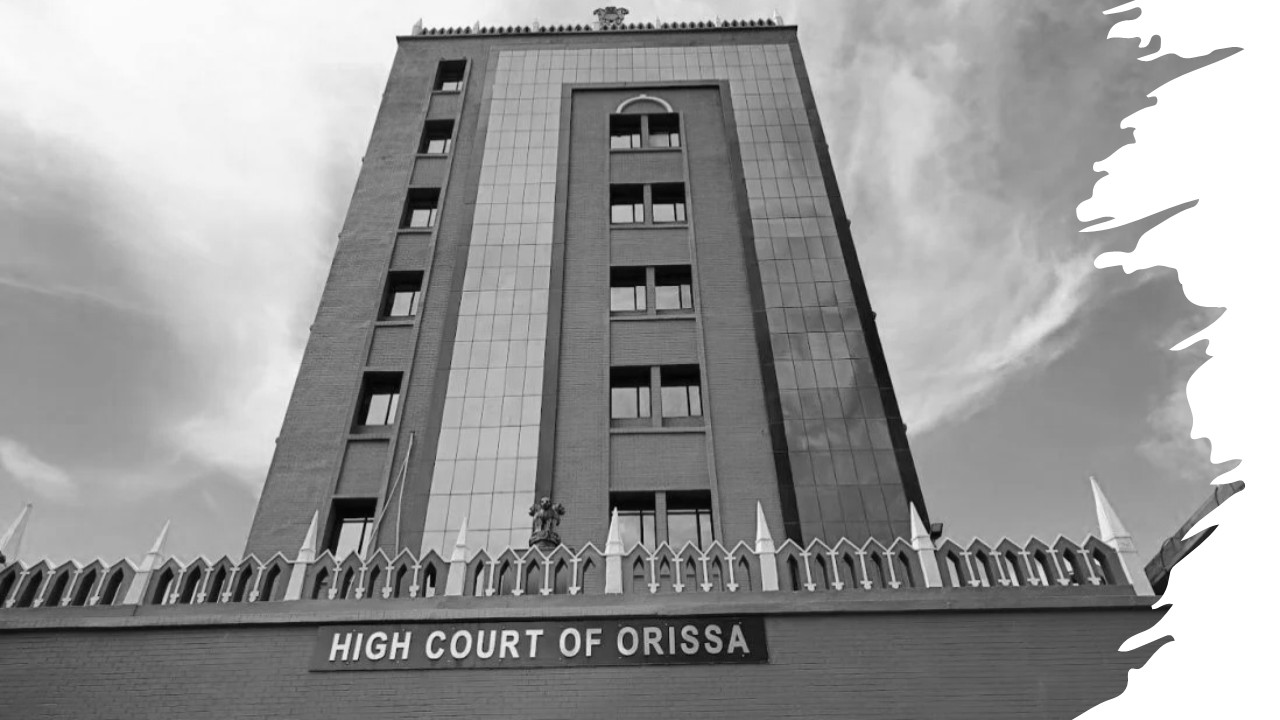
Earlier Compromise Decree Doesn’t Bar Fresh Adjudication of Unpartitioned Properties, Orissa High Court refused to interfere with a trial court order allowing the impleadment of a Will beneficiary as a party in a long-pending partition suit. Justice Sashikanta Mishra held that “whether the intervenor has entitlement or not can only be decided through trial, but not allowing him to contest will deprive him from right of hearing.” Dismissing the petition under Article 227 of the Constitution, the Court emphasized that the earlier compromise decree in a previous suit did not extinguish claims over properties that had not been included in that decree.
Dispute Over Remaining Ancestral Properties Not Covered by Previous Decree
The petitioner, Bibekananda Mahar, is the plaintiff in a partition suit (C.S. No. 12 of 2013) pending before the Civil Judge (Senior Division), Athmallik. The suit involves Schedule-A properties, and also seeks declaration that certain sale deeds are void, declaration of title over Schedule-B property, permanent injunction, and recovery of possession.
Opposite Party No.1, Dipti Ranjan Gartia, filed an application under Order 1 Rule 10 of the Code of Civil Procedure, seeking to be impleaded as a party. He claimed rights over the suit property as the grandson and legatee of one Malati Mahar, a recorded tenant and co-sharer, who had allegedly bequeathed her property to him through a registered Will.
The petitioner objected to this impleadment on the ground that Malati Mahar had already received her share through a compromise decree in an earlier suit (T.S. No. 3/1989), and the decree had been acted upon. According to the plaintiff, the Will had not been probated, and the disputed property had already been mutated in Dipti Ranjan’s name—therefore, he had no claim over the suit property.
The core legal issue before the High Court was whether a legatee under a Will—allegedly executed by a previous co-sharer—can be impleaded as a party in a pending partition suit, despite an earlier compromise decree that partially settled property claims among the parties.
Justice Mishra noted that: “Out of the three schedules of properties involved in the earlier suit, only ‘B’ Schedule property was allotted to Malati and there was no mention as regards the rest of the property, which not being partitioned was the subject matter of the present suit.” [Para 4]
The Court agreed with the trial court’s reasoning that the impleadment of Opposite Party No.1 was necessary for effective adjudication. It observed that while the entitlement of the legatee could be tested at trial, barring his participation at the threshold would be unjust.
In distinguishing the case from Sudhamayee Pattnaik v. Bibhu Prasad Sahoo (AIR 2022 SC 4304), which upheld the plaintiff’s autonomy in impleading parties, the High Court clarified:
“The present case obviously stands on a different footing as it is a case of partition, wherein the strict segregation of co-sharers as plaintiff and defendants may not be very relevant.” [Para 9]
The Court reaffirmed that in partition suits, where the objective is comprehensive settlement among all interested parties, the traditional notion of dominus litis must give way to the need for effective adjudication:
“It is also well settled that if the Court is of the view that the presence of a party in the suit would be helpful for effective adjudication of the suit, there is no reason why such a person should not be impleaded as a party.” [Para 9]
The Court also referred to the decision in Manjunath Tirakappa Malagi v. Gurusiddappa Tirkappa Malagi (2025 INSC 517), while emphasizing that procedural provisions like Order 1 Rule 10 CPC are meant to facilitate comprehensive and final resolution of disputes—not to curtail the rights of interested persons.
Petition Dismissed, Trial to Be Expedited
Holding that there was no infirmity in the trial court’s decision, the High Court dismissed the petition under Article 227. However, considering the age of the case, the Court directed the trial court to expedite the matter:
“Considering the fact that the suit is of the year 2013, the trial Court is directed to expedite the proceedings and dispose of the suit preferably within a period of six months from today.” [Para 10]
In upholding the impleadment of a legatee under a Will in an ongoing partition suit, the Orissa High Court has once again reiterated that the primary objective of partition suits is the just and final resolution of all co-sharers’ rights. When a person has a plausible legal claim—whether as heir, legatee, or otherwise—the right to participate in the litigation cannot be brushed aside, particularly when their presence contributes to an effective adjudication. The Court’s insistence on expeditious disposal also reflects growing judicial concern over delays in civil litigation.
Date of Decision: 5 December 2025