-
by kapil
27 October 2026 5:18 AM







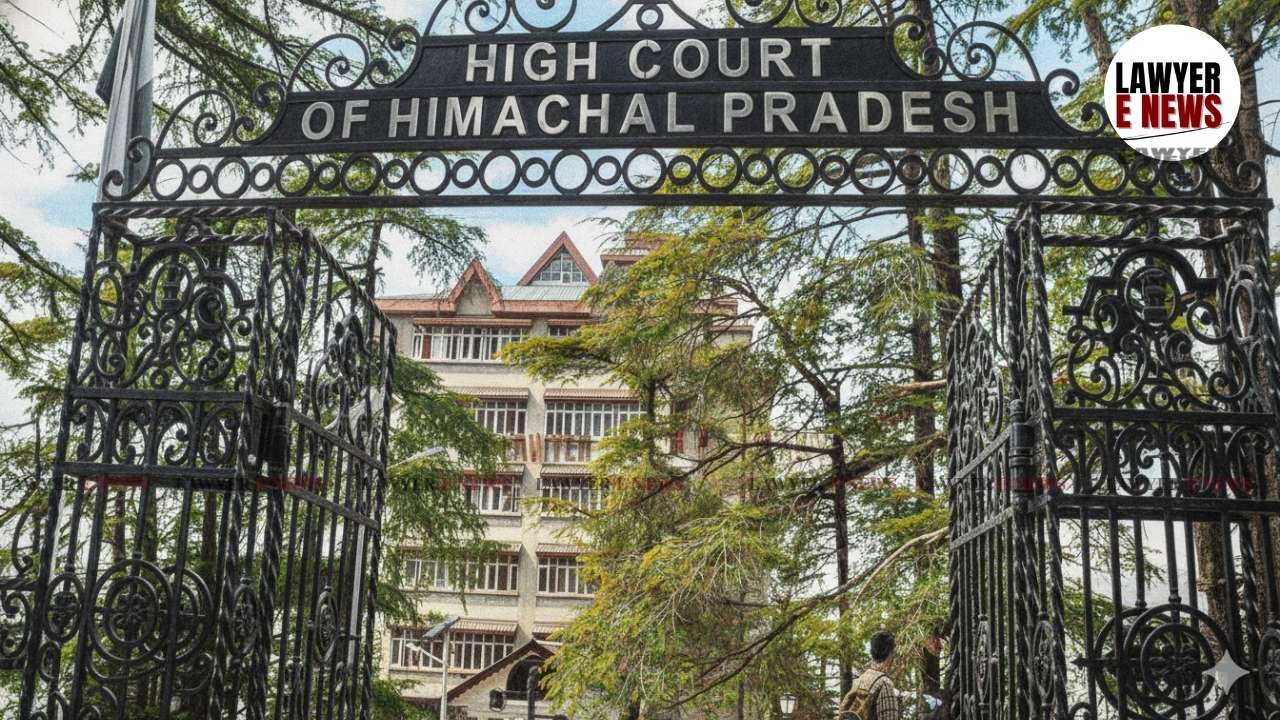
"In its revisional jurisdiction, the High Court can call for and examine the record of any proceedings for the purpose of satisfying itself as to the correctness, legality or propriety of any finding, sentence or order. In other words, the jurisdiction is one of supervisory jurisdiction... But the said revisional power cannot be equated with the power of an appellate court nor can it be treated even as a second appellate jurisdiction." High Court of Himachal Pradesh, in a judgment delivered on September 7, 2026, by Justice Rakesh Kainthla, reiterated that the scope of revisional jurisdiction under Section 397 of the CrPC is strictly supervisory and does not permit the court to act as a second appellate authority by reappreciating evidence.
The bench dismissed a revision petition challenging a conviction for rash and negligent driving, ruling that concurrent findings of the trial court and the appellate court cannot be disturbed in the absence of perversity or gross legal error.
The petitioner, Yashwant Singh, was convicted by the trial court for offences under Sections 279, 337, and 338 of the IPC and Section 187 of the MV Act following a vehicular accident in 2008. The prosecution established that the accused, while driving a pickup truck, hit two stationary vehicles and subsequently collided with the informant's car, causing grievous injury. The Sessions Judge upheld the conviction and sentence in appeal, leading the petitioner to approach the High Court in its revisional jurisdiction.
The primary legal issue was whether the High Court, while exercising its revisional powers, could interfere with the concurrent findings of fact recorded by the lower courts regarding the identity of the driver and the negligence attributed to him. Additionally, the court examined whether the accused was entitled to the benefit of the Probation of Offenders Act for offences related to rash and negligent driving.
Scope of Revisional Jurisdiction
The Court held that the revisional jurisdiction is confined to examining the correctness, legality, or propriety of the proceedings. It emphasized that interference is permissible only if the findings are perverse, grossly erroneous, or based on no evidence. The court noted that a revisionist court should not substitute its own conclusion on an elaborate consideration of evidence merely because an alternative view is possible.
Binding Nature of Accused's Statement Under Section 313 CrPC
The Court observed that the statement of the accused recorded under Section 313 CrPC, while not evidence stricto sensu, can be taken into consideration as a piece of evidence. In this instance, the accused admitted to driving the offending vehicle in his statement, which served to corroborate the prosecution's evidence regarding his identity and involvement.
Court Explains Statutory Duty Under MV Act
The bench highlighted that Rule 8 and Rule 9 of the Rules of the Road Regulations, 1989, mandate that a driver must slow down at junctions and give way to vehicles on the main road. The court observed that the failure of the accused to adhere to these regulations was the proximate cause of the accident, as he had entered the main road without ensuring it was safe to do so.
No Probation For Rash Driving Cases
Regarding the petitioner’s plea for probation, the Court relied on the settled position that benevolent provisions of the Probation of Offenders Act are inapplicable to cases of rash and negligent driving. Citing apex court precedents including Dalbir Singh v. State of Haryana, the court held that a deterrent sentence is essential for professional drivers to emphasize the gravity of the offence and the necessity of public safety.
Finding no illegality or perversity in the orders of the courts below, the High Court dismissed the revision petition. The conviction and sentence were upheld, reinforcing that road safety violations involving grievous injury must be dealt with firmly to deter future negligence on public roads.
Date of Decision: 07 September 2026