-
by sayum
26 October 2026 4:04 PM







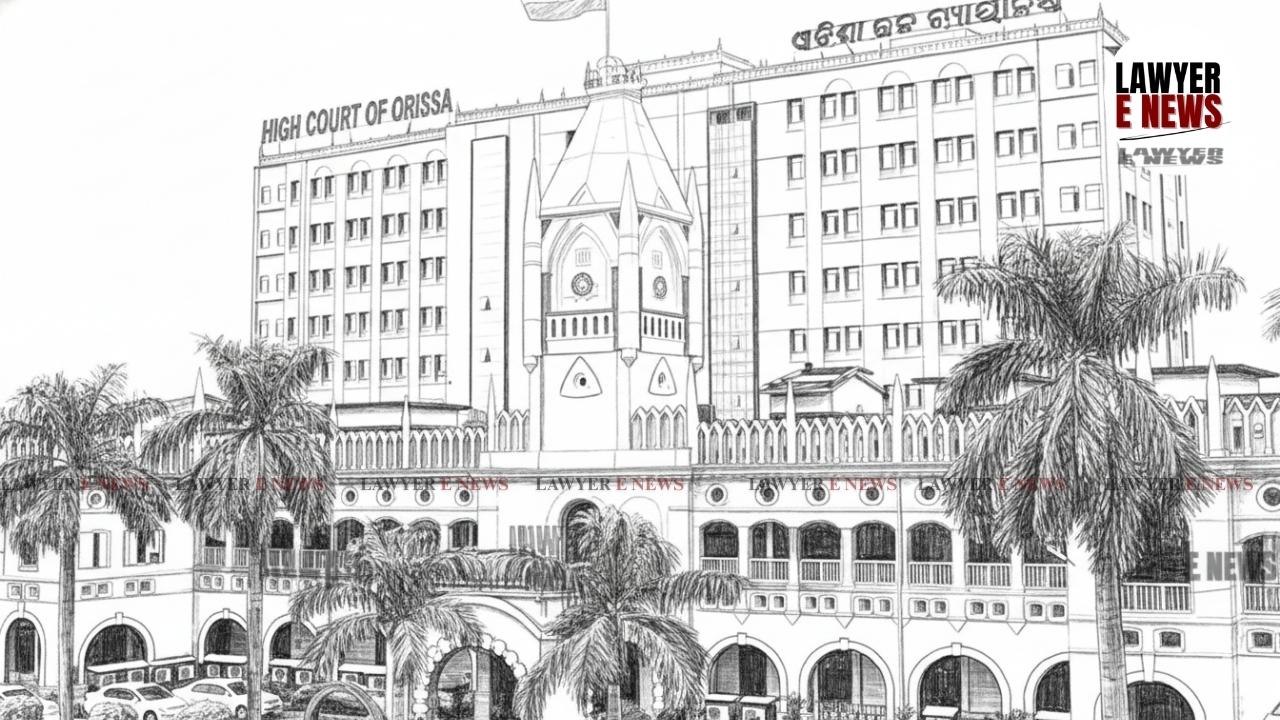
"The jurisdiction of the High Court under Article 226 and 227 of the Constitution would come to the questions of jurisdiction, illegality and alike and it cannot be curtailed by the presence of provisions of the Act." Orissa High Court, in a batch of writ petitions decided on 21st September 2026, held that the bar on second appeals under Section 37(3) of the Arbitration and Conciliation Act, 1996 (the "1996 Act") does not preclude the High Court from exercising its constitutional jurisdiction under Articles 226 and 227 to entertain challenges against orders passed by an Appellate Court under Section 37(1) of the Act.
A single bench of Justice B.P. Routray observed that while the Arbitration Act is a self-contained code, the constitutional power of judicial review remains untouched by statutory non-obstante clauses.
The matter arose from multiple writ petitions challenging orders passed by the District Judge (Commercial Appellate Court) in appeals filed under Section 37(1) of the 1996 Act, which had previously adjudicated challenges to arbitral awards under Section 34. The respondents raised a preliminary objection, arguing that since Section 37(3) of the 1996 Act explicitly prohibits a "second appeal," any challenge to an order of the Appellate Court under Section 37(1) must be directed exclusively to the Supreme Court, rendering the current writ petitions non-maintainable.
The primary issue for the Court's determination was whether the statutory prohibition against a second appeal under Section 37(3) of the 1996 Act operates to oust the jurisdiction of the High Court under Articles 226 and 227 of the Constitution of India. The Court was further required to determine whether such writ petitions, if entertained, would effectively circumvent the legislative intent of the arbitration regime.
High Court's Constitutional Power Remains Intact
The Court noted that while Section 5 of the 1996 Act limits judicial intervention, it cannot curtail the basic features of the Constitution. Referring to Nivedita Sharma v. COAL, the Court emphasized that the power of High Courts to issue writs is a constitutional mandate that cannot be restricted by Parliamentary legislation. The bench clarified that while the High Court must be circumspect in entertaining such petitions, the availability of a statutory remedy does not entirely erase the High Court's supervisory jurisdiction over patent illegalities or jurisdictional errors.
Supervisory Control Is Not Appellate Review
The bench underscored that the supervisory jurisdiction under Article 227 is not an appellate remedy and must not be used to re-adjudicate merits in a routine manner. It observed, "The rule is confined to correct manifest circumstances of illegality, faith or perversity so glaring that it indicts a patent lack of jurisdiction and should not be used in routine manner lest would nullify the entire performance of separate arbitration regime."
Reliance on Supreme Court Precedents
The Court drew significant support from the Supreme Court’s decision in Deep Industries Ltd. v. Oil and Natural Gas Corporation Ltd., which held that while the High Court must be "extremely circumspect" to avoid derailing the arbitral process, Article 227 remains an untouched constitutional safeguard. The High Court also took judicial notice of recent Supreme Court orders in National Aluminum Company Ltd. and United India Insurance Company Limited, which explicitly granted litigants liberty to approach the High Court under Articles 226/227 to challenge orders passed in Section 37 appeals.
"The jurisdiction of the High Court under Article 226 and 227 of the Constitution would come to the questions of jurisdiction, illegality and alike and it cannot be curtailed by the presence of provisions of the Act."
Overruling the preliminary objection, the Court held that the writ petitions are maintainable, provided the petitioners can demonstrate patent lack of inherent jurisdiction or egregious illegality in the impugned orders. The Court clarified that this ruling on maintainability does not express any opinion on the merits of the individual cases. All matters were directed to be listed before the regular assigned bench for further proceedings, with existing interim orders ordered to continue.
Date of Decision: 21 September 2026