-
by sayum
24 August 2026 3:22 PM








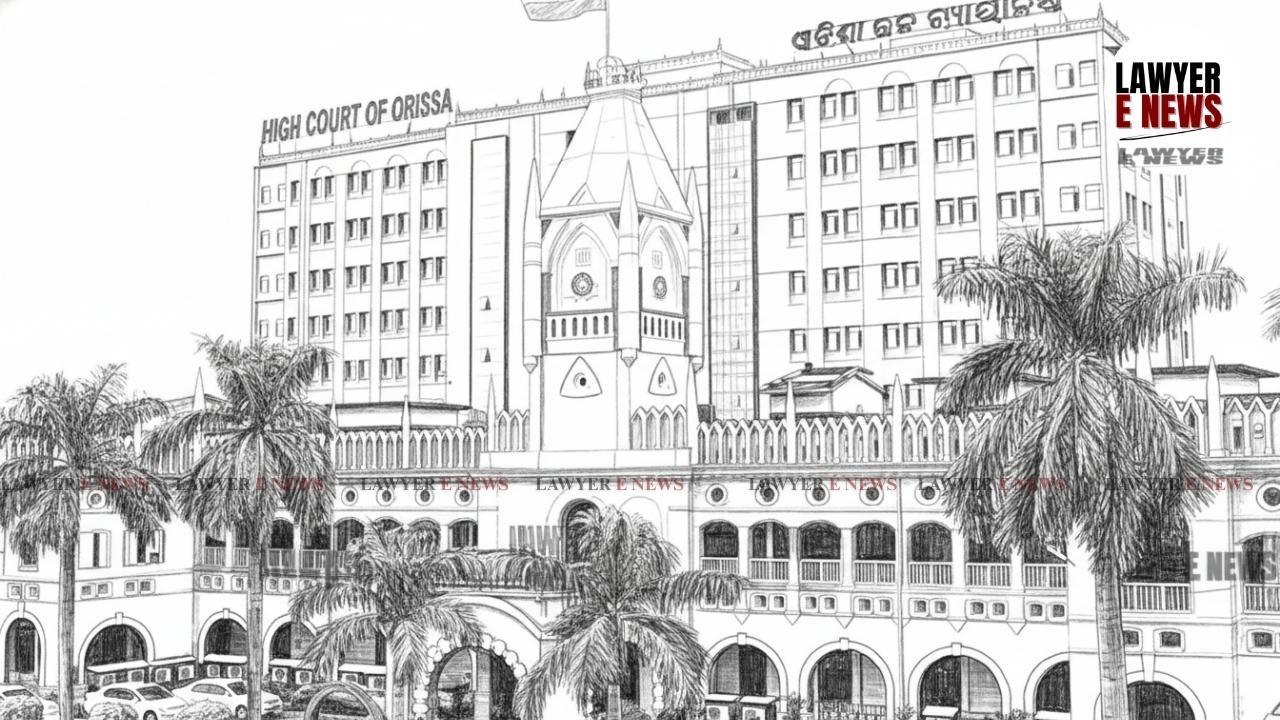
“Horizontal Reservation Must Cut Across Verticals – Not Supersede Them”, In a significant ruling that fortifies the constitutional architecture of reservation policy, the Orissa High Court held that Mahanadi Coalfields Ltd. (MCL) acted illegally by treating Ex-Servicemen reservation as vertical, instead of horizontal, in the recruitment process for Security Guards (T&S Grade G). The Division Bench comprising Chief Justice Harish Tandon and Justice Murahari Sri Raman dismissed a batch of writ appeals filed by MCL, thereby affirming the Single Bench’s landmark judgment dated 17.12.2024.
"The reservation for Ex-Servicemen under Article 16(1) is special in nature and must operate horizontally across vertical categories like SC, ST, OBC, and General. It cannot be applied as a separate vertical reservation," the Bench ruled, echoing the Constitution Bench decision in Indira Sawhney v. Union of India.
“Selection Process Cannot Stand When It Rests on a Constitutional Misapplication” – Court Rejects Estoppel Argument
The dispute arose from an employment notice dated 19.02.2014, inviting applications to 303 posts of Security Guard, of which 74 were reserved for Ex-Servicemen, constituting 24.5% of total vacancies. MCL, relying on a Ministry of Defence circular dated 04.06.2014, created a vertical quota for Ex-Servicemen, applying lower cut-off marks for ESM-General candidates (31.5) compared to the General category (42.5).
Unsuccessful candidates challenged the process, contending that the ESM quota should have been applied horizontally within each social category, and that the manner in which the selection was conducted had distorted the reservation matrix, taking overall reservation beyond 50%, in violation of constitutional principles.
MCL’s defence rested on the claim that the candidates had participated in the selection process with full knowledge of the reservation structure and were thus estopped from challenging it.
The Court, however, rejected this argument unequivocally:
“Participation does not bar challenge when the selection process itself is contrary to constitutional mandate… Illegality in the reservation structure goes to the root of the matter,” the Bench observed, aligning with precedents like Saurav Yadav v. State of U.P. and Anil Kumar Gupta v. State of U.P.
“Not Just a Mistake, But a Structural Violation of Reservation Law”: Bench Highlights Constitutional and Statutory Breach
The High Court noted that Ex-Servicemen reservation is not social reservation under Article 16(4) but special reservation under Article 16(1) meant to honor and rehabilitate those who served the nation. Such a category must be adjusted within existing vertical categories without disturbing their integrity.
Quoting the Supreme Court’s words in Indira Sawhney, the Bench observed:
“Horizontal reservations cut across the vertical reservations — what is called interlocking reservations… even after providing for these, the percentage of reservations in favour of backward class of citizens remains — and should remain — the same.”
The Court also referred to Rule 3 of the Ex-Servicemen (Re-employment in Central Civil Services and Posts) Rules, 1979, holding that it supports the same horizontal structure by requiring ESM selection within vertical categories unless they are selected on merit.
“Appointments of Ex-Servicemen Shall Be Protected, But Errors Must Be Corrected”: High Court Moulds Relief
While affirming that the entire selection process was constitutionally flawed, the Court refused to disturb the appointments of Ex-Servicemen already recruited, taking into account the long passage of time and their continued service.
“It would be too harsh at this juncture to disturb their appointments… The direction of the Single Bench to regularize such appointments by creating supernumerary posts is legally sound,” the Division Bench noted.
Simultaneously, the Court upheld the Single Bench’s order to consider the writ petitioners afresh and, if found eligible, appoint them with seniority above the supernumerary ESM appointees.
“Fence-Sitters Have No Right to Claim Parity”: Court Distinguishes Between Active Litigants and Passive Candidates
Rejecting MCL’s argument that only three petitioners could be accommodated against remaining vacancies, the Court took judicial notice of unfilled vacancies exceeding the number of writ petitioners, and declared:
“The petitioners who timely approached the Court cannot be equated with fence-sitters who acquiesced in the illegality… Those who didn’t challenge the process are not entitled to any equity.”
Upholding the Constitutional Framework of Reservation
The Orissa High Court has reinforced a foundational principle in Indian service law: Horizontal reservations must interlock with, not override, vertical reservations. By doing so, the Court has not only corrected a legal anomaly that compromised the merit list, but also provided a balanced remedy protecting vested rights of Ex-Servicemen while restoring the rights of those unlawfully excluded.
Date of Decision: 28 January 2026