-
by sayum
24 August 2026 3:22 PM







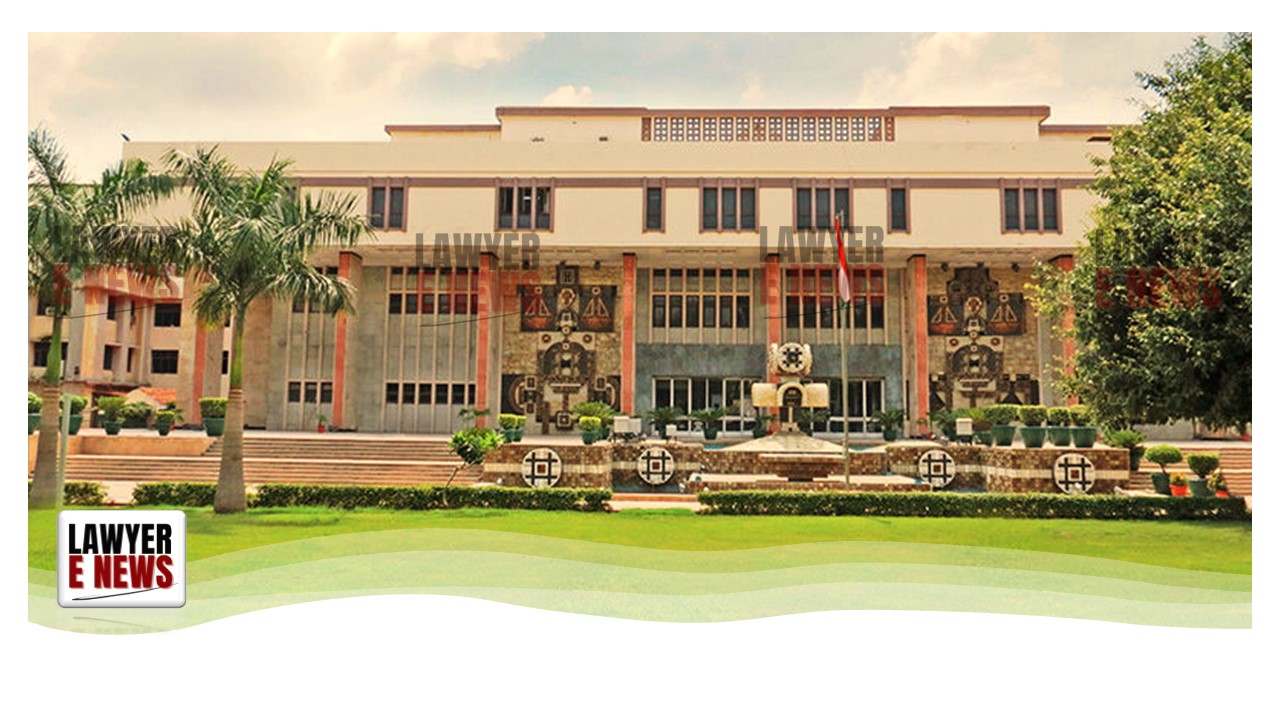
“Bar Under Section 14 SAFEMA Doesn’t Preclude Civil Claims for Mesne Profits Once Forfeiture Is Quashed” – High Court of Delhi delivered a significant judgment delineating the scope of jurisdiction under the Commercial Courts Act, 2015, and clarifying the civil liability of the Government for unauthorized occupation of private property post-quashing of SAFEMA proceedings. The Division Bench of Justices Anil Kshetarpal and Amit Mahajan partly allowed the government’s appeal only to the limited extent of recalculating mesne profits based on limitation, while upholding its liability for the entire period of unauthorized use.
The Court emphatically held that “continued occupation of the suit property by the Government, without authority or payment of rent even after the SAFEMA forfeiture had been annulled, is legally unjustified and cannot be protected under the cloak of Section 23 of SAFEMA”.
Commercial Lease Dispute Arising from Post-Forfeiture Occupation Validly Entertained by Commercial Court
The judgment arises from a civil suit filed by the owners of Flat No. 1108, Ansal Bhawan, New Delhi, who had leased the property to the Government decades ago. Following forfeiture of the property under the Smugglers and Foreign Exchange Manipulators (Forfeiture of Property) Act, 1976 (SAFEMA), in 1998 due to proceedings against their deceased father, the Government stopped paying rent from 1999 onwards. However, the SAFEMA forfeiture was ultimately quashed by the Delhi High Court in Veera Sarin v. UOI on 01.12.2014 for want of jurisdiction.
Despite this quashing, the Government continued occupying the premises without payment or formal renewal of lease until possession was restored to the plaintiffs on 02.07.2020. While the Writ Court directed the payment of arrears of rent at a nominal rate, it left the plaintiffs at liberty to pursue market rent/mesne profits via a civil suit. Accordingly, CS (Comm) 12/2021 was filed seeking mesne profits.
The Single Judge decreed the suit for ₹1,76,79,550/- with 6% interest per annum. This appeal followed.
"Dispute Arises Out of Lease of Immovable Property Used Exclusively for Commercial Purposes" – Court Affirms Commercial Court's Jurisdiction
Rejecting the Government’s preliminary objection on maintainability, the Division Bench held that the suit was well within the scope of Section 2(1)(c)(vii) of the Commercial Courts Act, which covers “agreements relating to immovable property used exclusively in trade or commerce.”
The Court noted: “The underlying transaction pertains to the leasing of an immovable property for commercial usage. The property forms part of Ansal Bhawan—a commercial complex—and the consistent pattern of leases on record establishes its commercial character.”
The Bench further clarified that: “The explanation to Section 2(1)(c) of the Commercial Courts Act makes it clear that a dispute does not cease to be commercial merely because one party is the Government.”
"Bar Under Section 14 SAFEMA Not Attracted Once Forfeiture Proceedings Are Quashed"
Turning to the Government’s second objection under Section 14 of SAFEMA, the Court ruled that the civil suit did not challenge the forfeiture order but was a “consequence of continued possession after the forfeiture had been quashed.”
It was categorically observed: “The bar under Section 14 of SAFEMA does not apply to a situation where the proprietary rights of the plaintiffs stood revived upon quashing of forfeiture. The present suit seeks damages for post-quashing occupation, not any relief concerning the SAFEMA proceedings themselves.”
Further, regarding Section 23 of SAFEMA, which immunizes the Government from liability for actions taken in good faith under the Act, the Court rejected its applicability, stating:
“Continued occupation of property for over seven years after quashing of forfeiture, without payment of rent or legal justification, cannot be said to be in good faith. Immunity under Section 23 does not extend to such conduct.”
“Limitation Does Not Bar Recovery of Mesne Profits in Continuing Wrong and Recurring Cause of Action”
The most crucial part of the judgment deals with limitation. The Government had not specifically raised the issue, but the Court suo motu examined whether the mesne profits claim was time-barred.
Referring to Article 51 of the Limitation Act, 1963, the Court noted that the right to claim mesne profits is a recurring cause of action.
Citing Rushibhai Jagdishbhai Pathak v. Bhavnagar Municipal Corporation (2022) 18 SCC 144, the Bench held:
“Each month of unauthorized possession gives rise to a fresh cause of action. The law of limitation must not be applied mechanically, particularly where the plaintiffs were bona fide pursuing remedies in a constitutional court.”
Crucially, the Court invoked Section 14 of the Limitation Act, excluding the time spent in the writ proceedings (W.P. (C) 10395/2019), where the plaintiffs sought restoration of possession. The Court found that such writ proceedings, prosecuted in good faith, qualified for exclusion of time:
“The entire period from the filing of the writ petition until possession was restored on 02.07.2020 is liable to be excluded. The plaintiffs are thus entitled to mesne profits for three years prior to the date of the writ petition—i.e., from 23.09.2016 to 02.07.2020.”
Mesne Profits Reduced to ₹67.13 Lakhs Based on Market Rent, Limited to Statutory Period
The Court accepted the methodology adopted by the Trial Court in computing market rent based on lease deeds of comparable properties in Ansal Bhawan but recalculated the amount for the restricted period. The mesne profits were pegged at ₹76,35,840/- for the period between 23.09.2016 to 02.07.2020.
After adjusting ₹9,22,500/- already paid by the Government under prior court orders, the net award was modified to:
“Plaintiffs are entitled to mesne profits of ₹67,13,340/- along with interest @ 6% p.a. from 23.09.2016 to 02.07.2020.”
Government Can’t Hide Behind Nullified Forfeiture to Avoid Civil Liability
This decision squarely addresses a recurring issue in public property litigation—whether government departments can avoid liability for rent or damages by citing statutory forfeitures that are later overturned. The Court made it clear:
“A forfeiture that has been quashed cannot become a refuge against civil liability for unjust enrichment due to continued illegal occupation. Mesne profits are a consequence of possession without title, and not dependent on earlier orders of forfeiture.”
The appeal was partially allowed, modifying the Trial Court’s decree to limit mesne profits to the period 23.09.2016 to 02.07.2020, amounting to ₹67,13,340/- with interest @ 6% per annum. However, the Government’s liability was firmly upheld on both jurisdictional and substantive legal grounds.
Date of Decision: 20 January 2026