-
by sayum
24 August 2026 3:22 PM







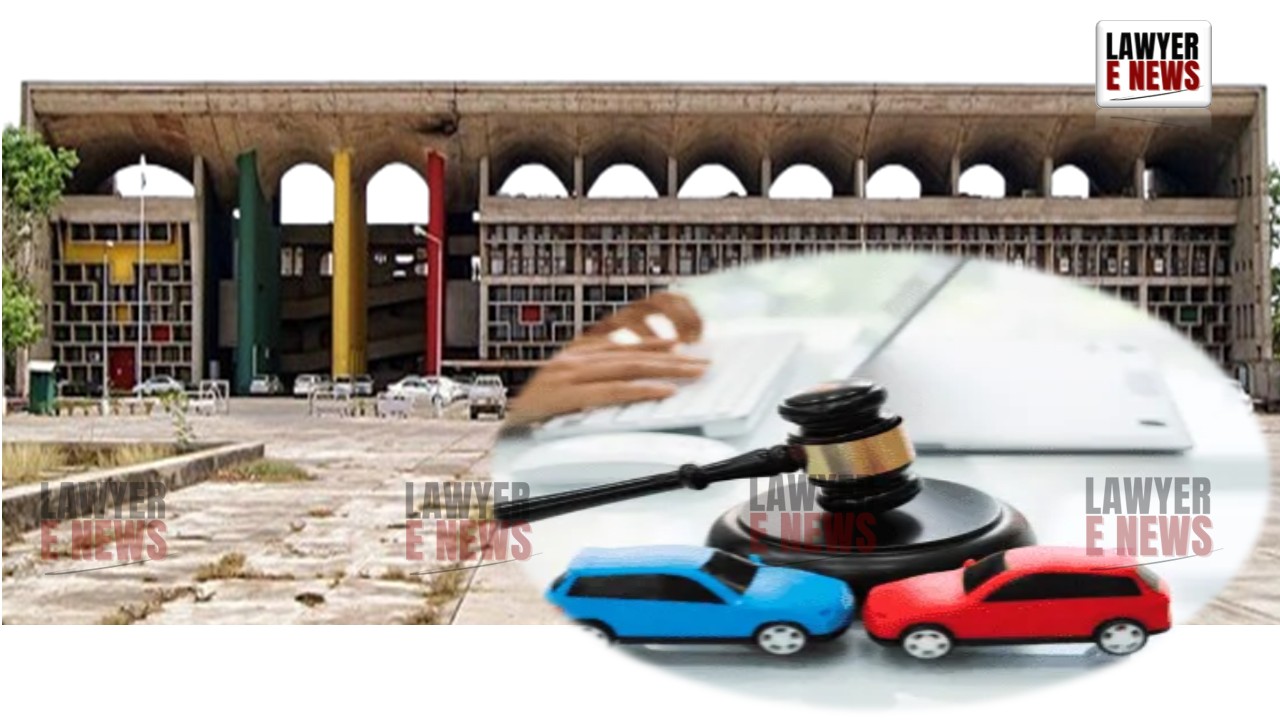
"Permanent Disability Results in Loss of Dignity and Life Enjoyment — Pain and Suffering Cannot Be Tokenised", Punjab & Haryana High Court delivered a significant ruling on the assessment of “just compensation” under Section 166 of the Motor Vehicles Act, 1988. Justice Sudeepti Sharma allowed the appeal for enhancement of compensation filed by the claimant, a 62-year-old accident victim, and increased the compensation amount from ₹2,29,248/- to ₹8,65,728/-, reflecting a deeper appreciation of the principles laid down by the Supreme Court in Raj Kumar v. Ajay Kumar and Pranay Sethi.
The Court held that, “Compensation must not merely be an arithmetical formality; it must realistically restore the injured to a position as close as possible to what prevailed prior to the accident.”
Tribunal Erred by Guessing Income — Court Fixes Monthly Earning at ₹11,100 Based on Minimum Wages
The claimant, Chand Singh, a retired serviceman operating a dairy farm, suffered 20% permanent disability to his whole body following a motor accident on August 6, 2021. Although he claimed a combined income of ₹1.2 lakh per month, the Tribunal guessed his monthly income without any reliable basis. The High Court found this approach untenable.
“Where no documentary proof is available, the Courts must rely upon prevailing minimum wages rather than conjecture,” Justice Sharma observed. Accordingly, monthly income was fixed at ₹11,100, as per the State’s notified minimum wages.
Applying the multiplier of 7 (appropriate for a 62-year-old per Sarla Verma), the Court reassessed the compensation under the head of future loss of income at ₹1,86,480.
Pain and Suffering Cannot Be Discounted for Age — ₹3 Lakhs Awarded for Intangible Losses
A scathing observation was made on the meagre amount earlier granted for pain and suffering. “Permanent disability impairs both dignity and capacity for self-sufficiency,” noted the Court, especially emphasizing the need for humanised consideration of elderly claimants.
Quoting K.S. Muralidhar v. R. Subbulakshmi (2024 INSC 886), the Court reiterated that “life-long disability results in chronic physical and emotional trauma, for which monetary redress must reflect the real-world impact.” Relying on this and similar Supreme Court precedents, ₹3,00,000 was awarded solely under the head of pain and suffering.
₹50,000 Granted as Attendant Charges Recognising Post-Accident Dependency
The Court found sufficient evidence of the claimant’s prolonged dependence on others due to the injuries sustained. Relying on the reasoning in Kajal v. Jagdish Chand and Ajay Kumar v. Jasbir Singh (FAO No. 1356-2007), Justice Sharma stated:
“An injured person’s need for an attendant is not a luxury but a necessary extension of the right to live with dignity.” A lump sum of ₹50,000 was accordingly awarded.
Additional Compensation Granted for Transportation, Special Diet, and Loss of Amenities
Refusing to ignore the daily and long-term non-pecuniary consequences of the injury, the Court enhanced compensation under multiple heads, including:
₹70,000 towards special diet
₹50,000 towards loss of amenities of life
₹30,000 towards transportation expenses
₹40,000 for general disability and impact on lifestyle
“This Court must view the claim holistically and not dissect the injury into cold arithmetic,” the judgment observed, ensuring compensation covered both tangible and intangible dimensions.
Interest @ 9% on Enhanced Compensation from Date of Petition
In line with Dara Singh v. Shyam Singh Varma (2019 ACJ 3176) and R. Valli v. Tamil Nadu State Transport Corporation (2022) 5 SCC 107, interest at the rate of 9% per annum was awarded on the enhanced amount from the date of filing the claim petition.
The Insurance Company (Respondent No.3) was directed to deposit the enhanced sum within two months before the Tribunal, which would oversee disbursement to the claimant.
In conclusion, the judgment reaffirms that “just compensation” under the Motor Vehicles Act is not a notional number, but a constitutionally grounded effort to offer true restitution. The High Court’s intervention has not only corrected a legally flawed award but has also realigned the compensation mechanism with the foundational principles of human dignity and restorative justice.
Date of Decision: 12 January 2026