-
by sayum
28 August 2026 6:47 AM







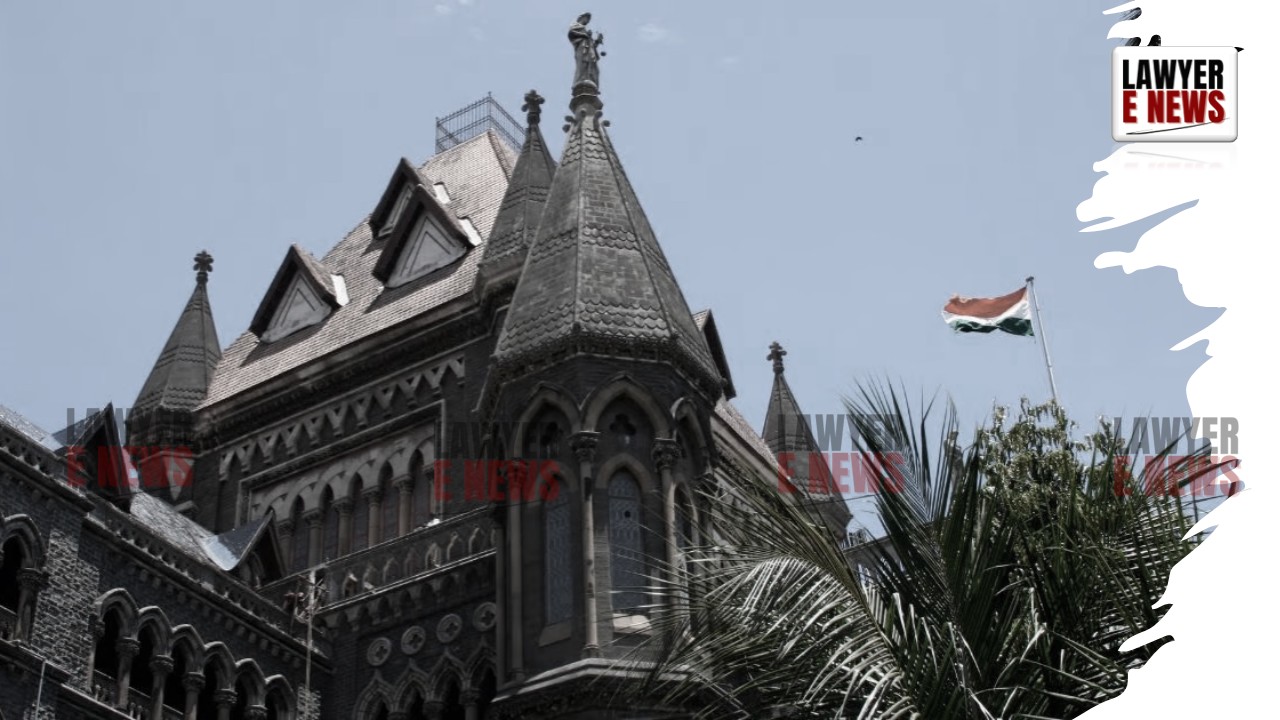
“You Can’t Claim Tenancy Just Because You’re Family — Law Demands Rent, Records, and Reality, Not Relationships” - In a sharply worded and legally rigorous decision, the Bombay High Court quashed a long-pending tenancy declaration granted in favour of a man who claimed he had cultivated ancestral agricultural land for decades. The Court, in Ramchandra Supanekar & Ors. v. Heirs of Uttamrao Khot, Writ Petition No. 1374 of 1998, held that the claim was fabricated, unsupported by rent receipts, falsified by revenue records, and weakened by the claimant’s own admission of family ties with the original landowners.
Justice Sandeep V. Marne found that the claimant, Uttamrao Khot, had built his claim more on family legacy than legal evidence, and that courts below had committed serious errors by overlooking the absence of cultivation entries, dubious proof of rent, and the legal bar on deemed tenancy for family members.
“The Tahsildar proceeded to hold in favour of the respondent on absolutely sketchy and insufficient material,” the Court remarked, making it clear that possession without proof is not tenancy, and “a tenancy claim is not a sentimental right — it is a legal one, and must be proven as such.”
“You Say You Paid Rent, But the Proof Is a Tainted Letter Written on Your Son’s Law Firm’s Letterhead”
The entire case for tenancy relied heavily on a single letter dated 3 August 1976, allegedly showing that Uttamrao sent ₹2,000 to the landowner towards rent. But this document did not inspire judicial confidence. Justice Marne found that it had been written on the letterhead of “Khot & Associates,” the law firm run by Uttamrao’s son — and worse, the amount of ₹2,000 was written in a different ink and later interpolated.
“The interpolation in the letter was admitted by none other than the son of the respondent,” the Court noted. It called the document “suspicious” and said it was “dangerous” to infer tenancy based on it. “It is difficult to digest why a tenant would send rent through a law firm’s letterhead,” the Court observed, adding that there was no detail of rent amount, no receipts, and no record of for which period rent was paid.
“The Land Revenue Records Paint a Very Different Picture — For 20 Years, He Doesn’t Exist as Cultivator”
Reviewing the land records for Gat Nos. 3273 and 836, the Court found that from 1975 to 1980, the cultivation columns in the revenue extracts were blank. In 1981 — just before the land was sold — the name of the landowner’s son appeared, not Uttamrao’s.
“There was not even a whisper in the 7/12 extracts that Uttamrao was cultivating the land,” the Court held. While Uttamrao tried to argue that the blanks implied he was in possession, the Court rejected this outright, noting that such a reading would defeat the very purpose of crop inspection rules under the Maharashtra Land Revenue Code.
“The burden was on Uttamrao to show actual cultivation. The records don’t support his claim — they contradict it,” Justice Marne concluded.
“You’re Her Brother — That’s the End of the Matter. Section 4(1)(a) Bars Family Members from Claiming Tenancy”
Perhaps the most decisive blow to the case came when Uttamrao’s own son admitted during cross-examination that Bhagirathibai Tope, the original landowner, was Uttamrao’s adoptive sister. That alone was sufficient under Section 4(1)(a) of the Maharashtra Tenancy and Agricultural Lands Act to disqualify any claim of “deemed tenancy.”
“Once this admission was made, the entire claim collapses,” the Court ruled. “Cultivation, even if proved, would not help the respondent — the law simply does not allow a family member to be declared a deemed tenant.”
“This Is Not a Tenancy Dispute — It Was a Backdoor Attempt to Undo a Registered Sale”
Looking at the broader picture, the Court noted that Uttamrao’s application before the Tahsildar was more of a challenge to the 1982 sale deed than a genuine tenancy declaration. He focused more on restraining the buyers from taking possession than proving any tenancy.
“Tenancy declaration was not the core focus of the application,” the Court observed. “It was a civil challenge in the garb of a tenancy claim.”
Setting aside the Maharashtra Revenue Tribunal’s 1997 decision, the Bombay High Court reinstated the SDO’s 1994 order, which had rejected Uttamrao’s claim. The Court held that no lawful tenancy existed, that the documents were doctored, and that familial proximity to the landowners completely barred the claim.
“The MRT’s approach was casual and legally unsustainable,” Justice Marne concluded. “The findings are based on presumptions, not legal proof.”
This verdict sends a clear message: tenancy cannot be claimed on emotion, relation, or fiction — it must be demonstrated through hard, reliable, and lawful evidence.
Date of Decision: April 16, 2025