-
by sayum
03 August 2026 8:55 AM







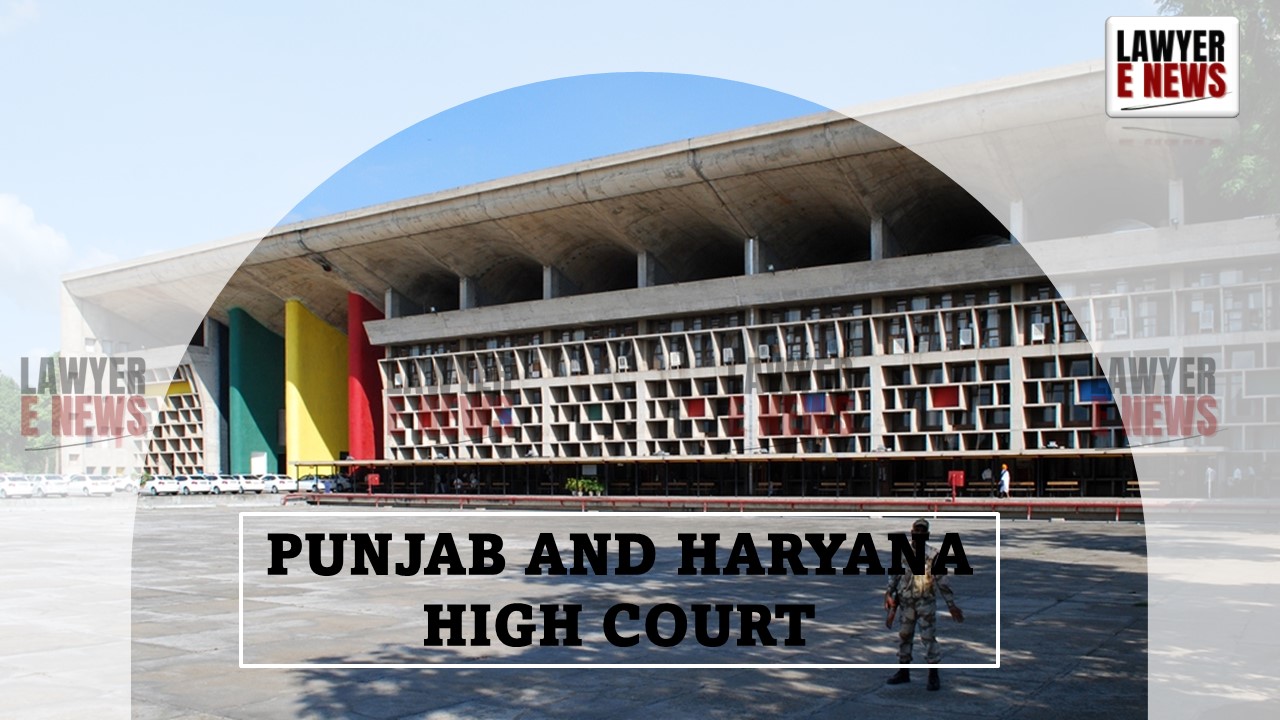
Punjab and Haryana High Court, in Principal Hindu College, Dhab Khatikan, Amritsar vs. Ravi Kumar and Others, set aside the Labour Court’s award of reinstatement with 50% back wages to retrenched workers. The court replaced the order with a lump sum compensation of ₹3.5 lakhs to each workman, citing that reinstatement is not warranted when appointments were made without proper approval or on ad hoc basis.
Relief of Reinstatement with Back Wages is Not Automatic for Ad Hoc Workers: Court Grants Lump Sum Compensation
The High Court emphasized that reinstatement is not a guaranteed remedy in cases of retrenchment, especially when the workman was not appointed through regular procedures. The court cited the Supreme Court’s ruling in B.S.N.L. v. Bhurumal (2014) to grant lump sum compensation instead of reinstatement.
In the case of Principal Hindu College, Dhab Khatikan, Amritsar vs. Ravi Kumar and Others, the Punjab and Haryana High Court delivered a significant ruling concerning the retrenchment of workers employed on an ad hoc basis. The petitioners, a government-aided private college, challenged the Labour Court’s award that ordered the reinstatement of retrenched workers with 50% back wages. The workers had been retrenched after completing 240 days of service without following due process under the Industrial Disputes Act, 1947. The High Court set aside the reinstatement and awarded lump sum compensation of ₹3.5 lakhs to each workman, along with 50% back wages for the period prior to the interim stay and last drawn salary under Section 17-B of the Industrial Disputes Act, 1947.
The petitioner, Principal Hindu College, Amritsar, had employed the respondents (workmen) on an ad hoc basis as Peons in 2002. The college, being a government-aided institution receiving 95% aid for sanctioned posts, had appointed the workmen without obtaining prior approval from the Education Department. The workmen were retrenched on February 28, 2006, after completing 240 days of service. They subsequently approached the Labour Court, which, in its first award on April 23, 2014, ordered a lump sum compensation of ₹50,000 to each workman but did not order reinstatement. The management challenged this award, leading to a remand by the High Court.
On remand, the Labour Court, in its fresh award dated July 13, 2017, ordered the reinstatement of the workmen with 50% back wages. The college challenged this second award before the High Court, arguing that reinstatement was inappropriate as the workmen were not appointed to sanctioned posts, and the college had not received government approval for their appointments.
The primary legal issue revolved around whether reinstatement with back wages was appropriate for workmen appointed on an ad hoc basis without approval from the competent authority and retrenched in violation of Section 25-F of the Industrial Disputes Act, 1947.
Reinstatement vs. Compensation: The court relied heavily on the principles laid down by the Supreme Court in B.S.N.L. v. Bhurumal (2014) and State of Uttarakhand v. Raj Kumar (2019), which clarified that reinstatement is not automatic in cases where retrenchment occurs without complying with Section 25-F of the Industrial Disputes Act. The court noted that the workmen had been appointed on an ad hoc basis and not against sanctioned posts, making reinstatement inappropriate. Instead, lump sum compensation was deemed a more fitting remedy.
Section 11-A of the Industrial Disputes Act, 1947: Under Section 11-A, the Labour Court has the discretion to grant relief, including reinstatement or compensation, based on the circumstances of the case. The High Court observed that since the workmen were retrenched after completing 240 days and without following proper procedure, they were entitled to relief. However, considering the nature of their appointments and the fact that they had accepted lump sum compensation in the first round of litigation, reinstatement was unnecessary.
Unfair Labour Practice and Ad Hoc Appointments: The respondents (workmen) alleged that the petitioner college had engaged in unfair labour practices by repeatedly hiring and retrenching ad hoc workers without regularizing their employment. The court acknowledged these practices but emphasized that reinstatement would violate the principles set out in State of Karnataka v. Umadevi (3) (2006), where the Supreme Court ruled against regularizing ad hoc employees who were not appointed through a lawful procedure.
Reinstatement Set Aside: The court held that reinstatement with back wages is not automatic, especially when the workers were not appointed through a lawful process. The court cited the Bhurumal and Raj Kumar rulings, which allow for compensation in place of reinstatement for ad hoc or daily-wage workers who had been retrenched.
Lump Sum Compensation Awarded: The court ordered a lump sum compensation of ₹3.5 lakhs to each workman, replacing the Labour Court’s order for reinstatement. This compensation was considered just and fair, given the nature of the employment and the length of time since retrenchment.
Back Wages and Last Drawn Salary: The court upheld the Labour Court's award of 50% back wages for the period before the interim stay was granted by the High Court. Additionally, the petitioner was directed to pay the last drawn salary under Section 17-B of the Industrial Disputes Act from March 2024 to the date of the judgment.
Interest for Non-Compliance: The court imposed a 12% annual interest on the compensation amount if not paid within one month. The petitioner was directed to make the payment without any deduction of TDS or other documentary requirements.
The High Court’s decision replaces the Labour Court’s order of reinstatement with a lump sum compensation of ₹3.5 lakhs to each retrenched workman, along with 50% back wages and last drawn salary under Section 17-B of the Industrial Disputes Act. This judgment emphasizes the principle that reinstatement is not an automatic remedy, particularly in cases of ad hoc employment, and that compensation can be a more appropriate relief depending on the facts of the case.
Date of Decision: September 19, 2024