-
by sayum
25 August 2026 11:12 PM







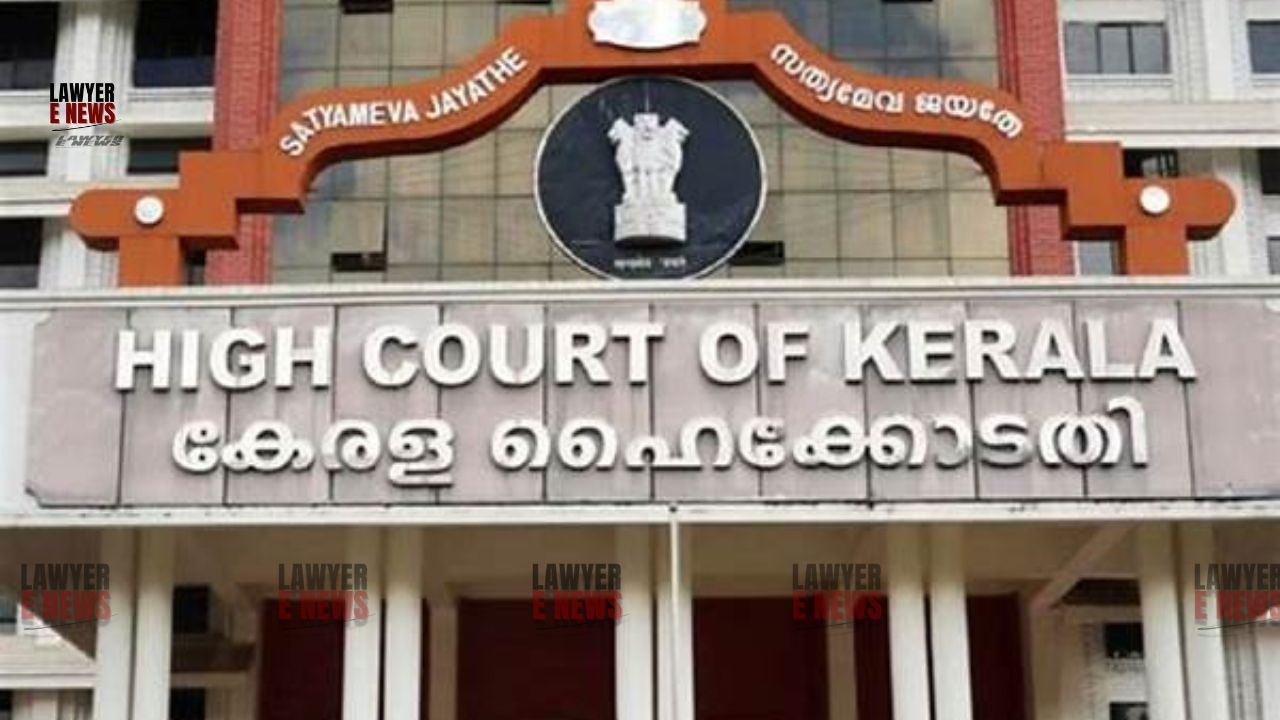
High Court sets aside the appellate court's decision, clarifying the scope of Section 544 of the Kerala Municipality Act regarding limitation periods.The High Court of Kerala has delivered a significant judgment in the case of T. Abdul Khader vs. Kannur Municipality (now Kannur Municipal Corporation), addressing crucial aspects of limitation periods under the Kerala Municipality Act, 1994. The court, presided over by Justice T.R. Ravi, reversed the first appellate court’s decision that barred the plaintiff's claim due to limitation, providing a detailed interpretation of Section 544 of the Act.
The plaintiff, T. Abdul Khader, had initially secured a license for Room No. 47 in a market complex constructed by the Kannur Municipality. After fulfilling the required deposits and rents, he later surrendered the room and sought a refund of his security deposit. Despite multiple requests and a statutory notice, the refund was not processed, leading to the filing of the present suit for recovery of ₹2,06,287/-.
The trial court ruled in favor of Khader, but the Additional District Court-I, Thalassery, reversed this decision, citing the suit was barred by limitation under Section 544 of the Kerala Municipality Act. Aggrieved, Khader approached the High Court.
Justice T.R. Ravi extensively analyzed Section 544, which prescribes a six-month limitation period for suits against municipal authorities related to acts done in pursuance of the Act. The court emphasized that this special provision applies only to actions directly connected with duties performed under the Act or its regulations.
The court observed that the plaintiff's claim was for the refund of a security deposit, which does not fall within the "acts done in pursuance of the Act." The court cited precedents from the Supreme Court, emphasizing that actions not authorized by the Act cannot be shielded by its special limitation provisions.
The judgment referenced key Supreme Court decisions, such as Poona City Municipal Corporation v. Dattatraya Nagesh Deodhar and J.N. Ganatra v. Morvi Municipality, where it was held that actions contrary to statutory provisions do not benefit from special limitation statutes.
The High Court noted that the appellate court had overstepped by considering the limitation issue sua sponte, despite the defendant not raising this defense at the trial stage or in the appellate memorandum.
Justice T.R. Ravi remarked, "Refusal to refund a deposit made for the grant of a license, which is admittedly a refundable security deposit, is not an action that can come within the meaning of 'purported to be done under the provisions of the Act'." He further noted, "The judgment of the first appellate court is liable to be set aside as it is not in accordance with the law."
This ruling by the High Court of Kerala underscores the necessity of distinguishing between actions genuinely performed under statutory provisions and those that are not. By clarifying the interpretation of Section 544, the judgment reinforces the broader application of the Limitation Act in cases of municipal disputes involving security deposits. This landmark decision is expected to guide future litigation involving municipal authorities, ensuring that special limitation provisions are not misapplied to bar legitimate claims.
Date of Decision: 22nd May 2024