-
by sayum
27 August 2026 3:32 PM







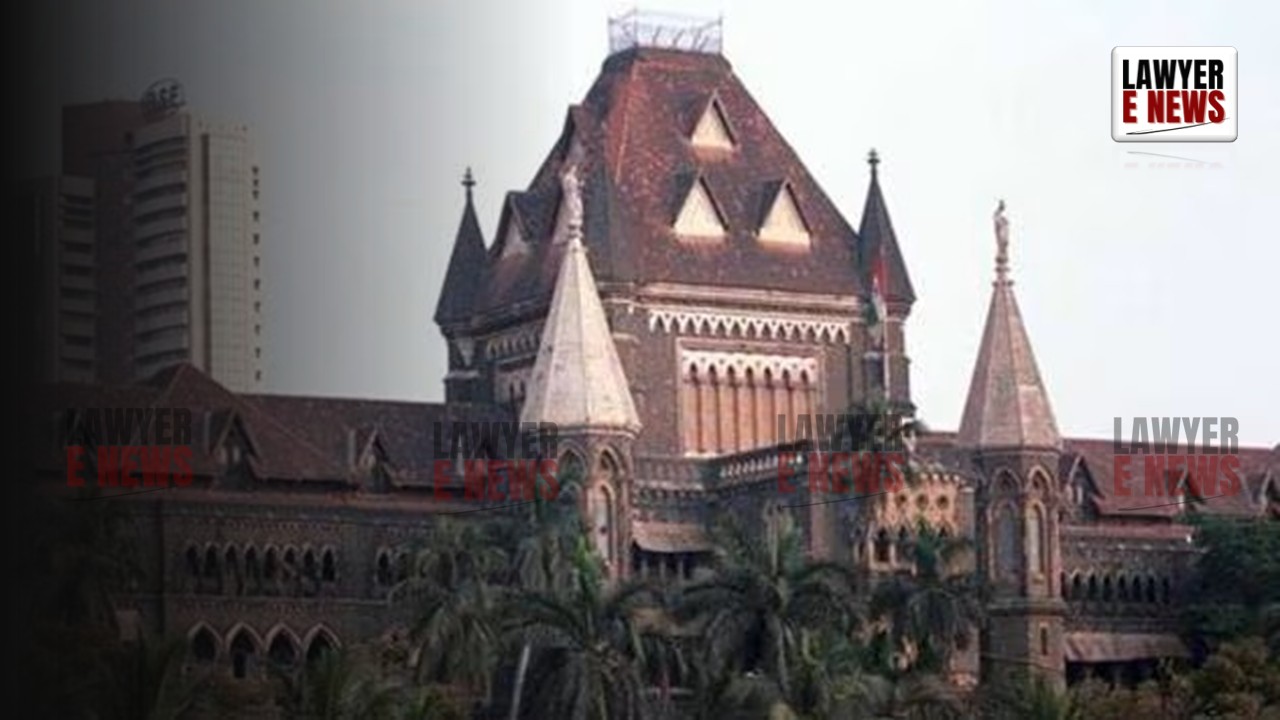
"Rates mentioned in the Ready Reckoner are basically for the purpose of collection of stamp duty and cannot be the basis for determination of compensation for lands acquired under the Land Acquisition Act." Bombay High Court, in a significant ruling, held that compensation for land acquisition cannot be determined solely based on government Ready Reckoner rates.
A division bench of Justices R.I. Chagla and Advait M. Sethna observed that such rates are meant primarily for revenue collection, firmly rejecting the State's appeal against a substantial enhancement of compensation for land acquired for the Mumbai-Pune Expressway.
In 1996, the State acquired 82,200 square meters of agricultural land in Village Kusgaon for quarrying purposes related to the Mumbai-Pune Expressway construction. The Special Land Acquisition Officer (SLAO) awarded compensation of merely Rs. 14.5 per square meter based entirely on Ready Reckoner rates. Upon a reference filed under Section 18 of the Land Acquisition Act, 1894, the Reference Court enhanced the compensation to Rs. 500 per square meter, prompting the State of Maharashtra to file the present first appeal.
The primary question before the court was whether Ready Reckoner rates can form the exclusive legal basis for determining the market value of acquired land under Section 23 of the Land Acquisition Act. The court was also called upon to determine the validity of expert valuation reports and the judicial principle of "guesstimation" when exact comparable sale instances are absent.
Ready Reckoner Rates Are Legally Impermissible
The High Court heavily criticized the SLAO's methodology, noting that the compensation was calculated without considering sale deeds or the land's actual market value. Relying on the Supreme Court's precedent in K.S. Shivadevamma, the bench emphasized that circulars issued under Section 47-A of the Indian Stamp Act are strictly for stamp duty and registration fee fixation. The bench firmly noted that relying on these rates to dictate land acquisition compensation is legally flawed.
Expert Valuation Deserves Due Weightage
The court observed that the SLAO completely ignored a detailed valuation report submitted by a registered government valuer. This expert report highlighted the land's strategic location, its proximity to Lonavala, and its high non-agricultural and building potential. The bench held that expert opinions must be factored in under Section 23 of the Act, especially since the State failed to controvert this crucial evidence during the reference proceedings.
Comparable Sales And Development Potential
Addressing the State's argument that the relied-upon sale instances pertained to smaller, fully developed plots in nearby towns, the bench reiterated that it is not an absolute rule that large tracts of land cannot fetch the price of smaller plots. Citing the Supreme Court's ruling in Bhagwat Thula, the court observed that the strategic location of the acquired land on a hill overlooking Lonavala gave it immense potential for resort or farmhouse development, justifying a higher valuation.
No Rigid Formula For Development Deductions
The State vehemently contended that a mandatory 75% deduction for development charges should have been applied to the base rate. Rejecting this rigid approach, the High Court held that while deductions are necessary, they are highly fact-specific and do not involve drawing upon any inflexible mathematical principle. The bench approved the Reference Court's holistic deduction approach, which ultimately brought the valuer's estimated rate of Rs. 950 per square meter down to a fair market rate of Rs. 500.
The Principle of Judicial Guesstimation
Incorporating recent Supreme Court jurisprudence from New Okhla Industrial Development Authority, the bench recognized that land valuation is not an exact science nor an algebraic problem. The court noted that in the absence of exact comparable exemplars, judges must rely on informed estimation grounded in solid evidence. The bench warned, however, that while subjectivity exists, judicial discretion cannot devolve into arbitrariness.
"Such exercise is fact specific and to an extent influenced by the principle of Guesstimation to be applied by the Reference Court in assessing the market value of the acquired land, particularly when the evidence does not have exactitude... Such discretion, ought not to extend to mere speculation."
Fair and Just Compensation Maintained
Concluding its analysis, the bench found no perversity or illegality in the Reference Court's detailed assessment. The High Court stated that the lower court properly balanced the negative factors under Section 24 of the Act against the land's inherent commercial potential. Ultimately, the court found the enhancement to be both fair and just, firmly shutting down the State's plea that the awarded amount was excessive.
The Bombay High Court dismissed the first appeal filed by the State of Maharashtra, thereby confirming the Reference Court's judgment. The court directed the release of the deposited decretal amount of Rs. 3,99,06,045 along with accrued interest to the landowner, while staying the operation of the judgment for four weeks at the State's request.
Date of Decision: 17 April 2026