-
by sayum
26 August 2026 1:49 PM







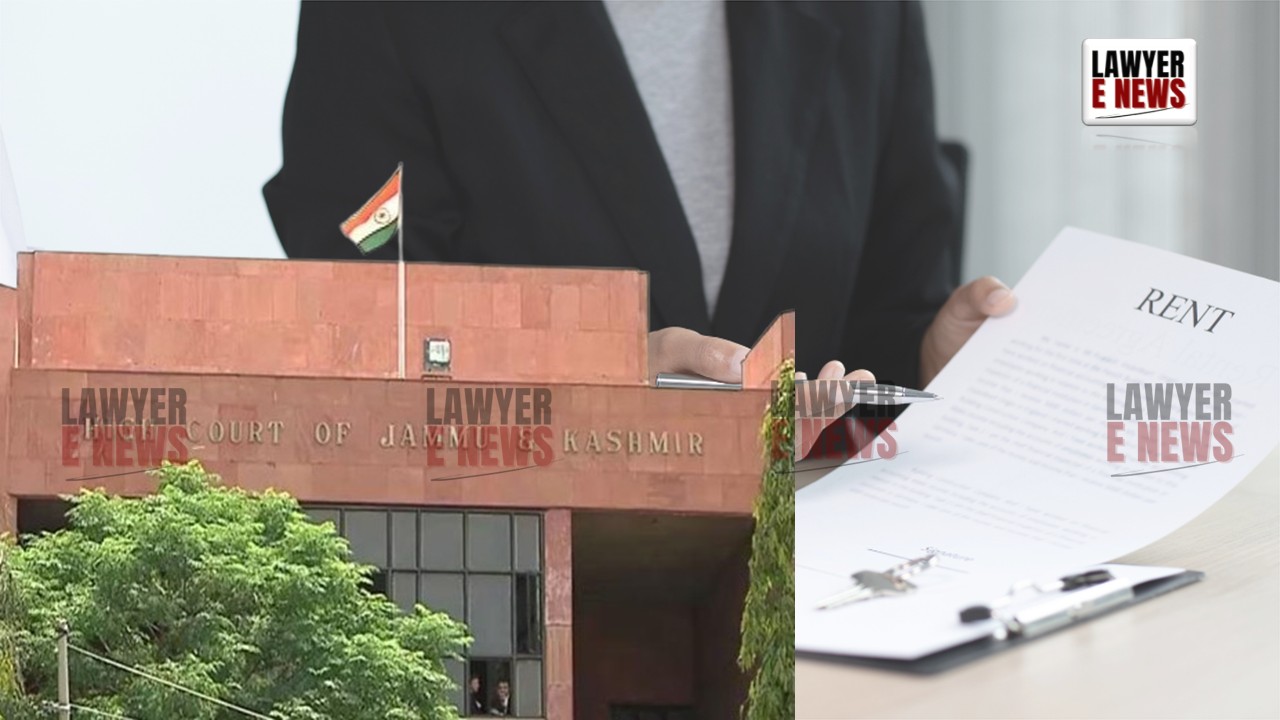
Jammu & Kashmir and Ladakh High Courtupheld the termination of a 28-year-old unauthorized occupation of a fair price shop inside the Sub District Hospital, Bishnah, Jammu. The Court, led by Hon’ble Chief Justice Tashi Rabstan and Justice M.A. Chowdhary, held, “Public property cannot be allowed to be plundered. It is the Government’s policy to go for auction of such properties, so as to earn the maximum revenue.”
The Court refused to accept the appellant’s plea for extension of occupation, finding that the appellant had remained in possession of hospital premises for more than two decades without adherence to the fair and transparent process mandated by Government Orders.
The appellant, Amar Bishnah Cooperative Medical Store, had been running a fair price shop inside the Sub District Hospital, Bishnah, Jammu since 1997, under a license granted without any auction process. Although the appellant initially had a valid agreement, the government later issued Government Order No. 492-HME of 2008, mandating that all allotments of hospital premises, including fair price medical shops, must be made strictly through auction by inviting sealed bids from the general public.
Despite the said order, the appellant continued to occupy the premises, repeatedly securing extensions and revising the rent with the help of the Rogi Kalyan Committee and the local administration. In 2025, the learned Single Judge, relying on the precedent set in Kathua Cooperative Marketing Society Ltd. V. State & Ors., held that the appellant was not entitled to further occupation without following the mandatory auction process. Aggrieved, the appellant filed the present Letters Patent Appeal.
Justice M.A. Chowdhary, speaking for the Bench, noted that “It is not understandable as to why the official respondents have not resorted to the compliance of Government Order No. 492-HME of 2008 for such a pretty long time.”
The Court highlighted that the appellant had remained in the premises for over 28 years, well beyond what could be considered a reasonable or legal period, especially when Government policy had shifted to mandatory auction.
“The contention of the learned senior counsel for the appellant that the appellant is entitled to be considered for extension of two years, pales into insignificance, in view of the fact that the appellant is already holding property in question, for almost more than two and a half decades,” the Court observed.
The Court raised serious concern over the manner in which the appellant managed to hold the government property for so long without auction, noting,
“It appears that the appellant had been managing the allotment of the fair price shop, which is a Government property, in connivance with the local Block Medical Officers and also the local legislator, who is heading the Rogi Kalayan Committee, for his own designs.”
Rejecting the appellant’s claim under Government Order No. 492-HME of 2008, the Court clarified that the said order explicitly envisaged only fresh auction-based allotments and not extensions for old occupants beyond the initially permitted period. The Court reasoned, “Public property cannot be allowed to be plundered and it is the Government’s policy to go for auction of such properties, so as to earn the maximum revenue.”
The Court further noted that compliance with Government Order No. 492-HME of 2008 was not optional but mandatory and non-compliance by authorities for years could not create a vested right in favor of the appellant.
Upholding the Single Judge’s order, the Division Bench held:
“Having given our thoughtful consideration to the grounds raised in the memorandum of appeal, rival submissions urged at the bar, and the record made available, we are of the considered opinion that the impugned judgment does not suffer from any illegality, so as to warrant any kind of intervention from this Bench.”
The appeal was accordingly dismissed, putting an end to the appellant’s claim over the hospital premises.
Date of Decision: 3rd April 2025