-
by sayum
28 August 2026 10:07 AM








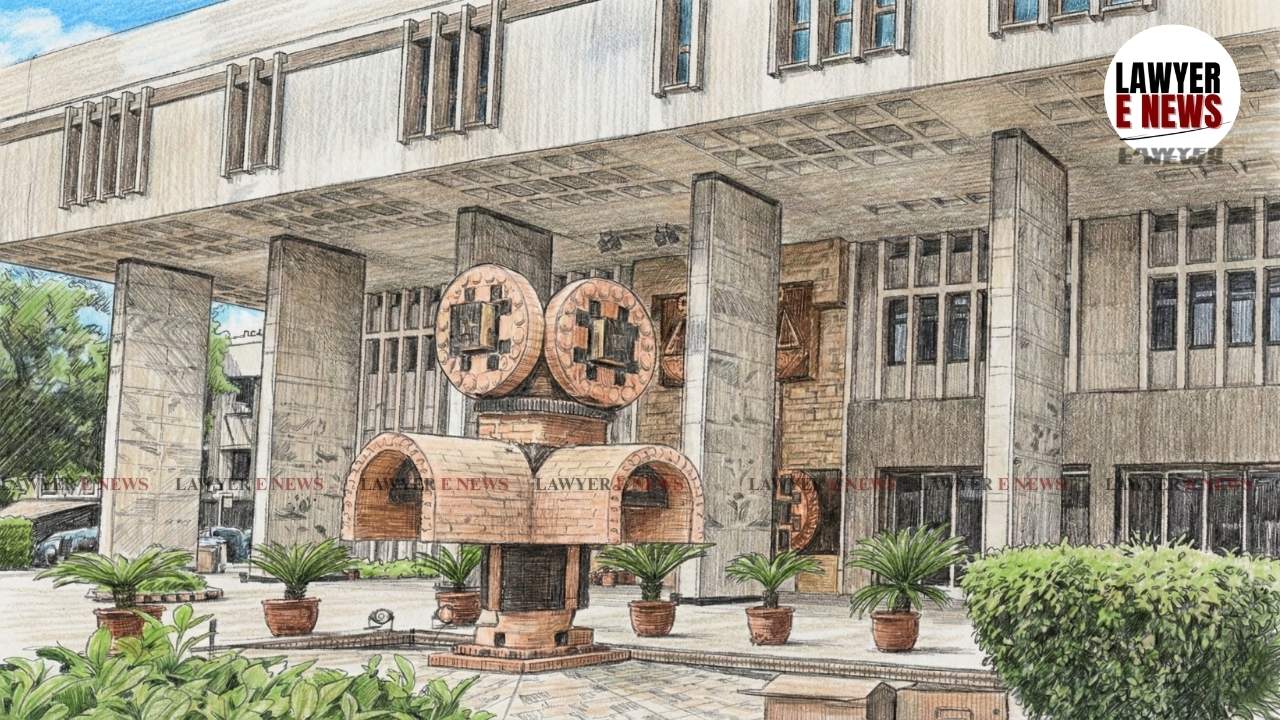
Actual Excellence Cannot Be Obliterated by the Choice of an Orthodox Bureaucratic Brush - Punjab and Haryana High Court delivered a powerful message in favour of equity over formality in the case of Divya Kalia vs. State of Haryana and Others [CWP-23835-2024 (O&M)]. A Division Bench comprising Chief Justice Sheel Nagu and Justice Sumeet Goel quashed the rejection of the petitioner’s candidature for the post of Civil Judge (Junior Division) in the Haryana Judicial Service.
Holding that the rejection of her candidature due to technical lapses in her caste certificate violated the spirit of justice, the Court declared:
“Procedural and technical hurdles ought not to be allowed to stand in the way of substantial justice. Justice is not a mechanical exercise but a tangible pursuit of truth and fairness.”
“The Petitioner Did All That She Could—The Flaw Was Not Hers”: Factual Context Behind the Dispute
Divya Kalia, a Scheduled Caste candidate, had applied under the SC category for the Haryana Civil Services (Judicial Branch) Examination, 2023-24. She cleared the preliminary and main written examinations and was provisionally called for viva voce. But just days before the interview, she received a communication from the Haryana Public Service Commission (HPSC) stating that her candidature was provisionally liable to be rejected for two reasons—her SC certificate dated 11.07.2016 did not mention a registration number and date, and she had not uploaded a domicile certificate.
Divya promptly responded by submitting a verification from the Tehsildar, Gurugram, confirming the genuineness of her 2016 SC certificate, which was issued based on her father’s valid certificate dated 1991. She also uploaded a valid domicile certificate, rectifying the omission.
However, her candidature was formally rejected by HPSC on 12.09.2024.
“Substance Cannot Be Sacrificed at the Altar of Form”: Petitioner’s Counsel Argues for Equity
Appearing for the petitioner, Senior Advocate Anand Chhibbar argued that the petitioner’s eligibility was never in doubt, and the certificate had always been genuine. The lack of a registration number and date on the certificate was a procedural lapse, not a substantive defect.
He submitted before the Court: “All that the petitioner could have done was done promptly—she possessed the qualification, submitted the certificate in time, and rectified whatever technical irregularity existed by providing verification from the issuing authority.”
The petitioner’s case, it was contended, stood squarely within the framework of fairness and substantial compliance with the recruitment rules.
“Clause 30 is Clear—Incomplete Applications Stand Rejected”: HPSC Argues No Exception Can Be Made
In contrast, counsel for HPSC asserted that the terms of the advertisement were binding, and candidates were required to ensure that their applications were complete in every respect. Referring to Clause 30 of the advertisement, they contended: “Incomplete or defective application forms will be summarily rejected. No representation or correspondence shall be entertained under any circumstances.”
HPSC held that relaxing this requirement would set a bad precedent and compromise the fairness of the selection process.
“The Law Demands Possession of Eligibility, Not Perfection in Proof”: Court Reviews Precedents and Principles
In an illuminating analysis of case law, the Court relied on a consistent line of Supreme Court rulings including Charles K. Skaria, Ram Kumar Gijroya, Dolly Chhanda, and Bedanga Talukdar, to reaffirm: “What is essential is the possession of a qualification before the concerned date; mode of proof thereof is ancillary.”
The Court sharply distinguished between eligibility and proof of eligibility, holding that an applicant cannot be penalised for a procedural lapse that did not go to the root of her qualification. The Bench remarked: “A technical irregularity/defect in such certificate issued by the concerned competent authority is beyond the control of an aspirant.”
Rejecting HPSC’s rigid approach, the Court stressed that: “Substantial justice requires that Courts lean towards effectuating justice rather than relying upon procedural and technical violations.”
“Justice Is Not a Mechanical Exercise—It Is a Tangible Pursuit of Fairness”: Court Directs Appointment
Having found the rejection unjustified, the Court allowed the writ petition and directed the authorities to process the petitioner’s result and, if she is otherwise meritorious, to appoint her to the post of Civil Judge (Junior Division).
The Court declared: “The petitioner’s candidature has been rejected on hyper-technical grounds despite her compliance with substantive eligibility conditions. Such exclusion cannot be sustained.”
With this, the Court reinforced the constitutional promise of equal opportunity and clarified that form must always remain subordinate to fairness in public appointments.
This judgment stands as a resolute affirmation of constitutional morality over bureaucratic rigidity. By recognising that technical lapses in certificates beyond a candidate’s control should not cost them their rightful place, the High Court has paved the way for a more humane and just public recruitment process.
In its most memorable articulation of principle, the Court concluded: “Actual excellence cannot be obliterated by the choice of an orthodox bureaucratic brush.”
Date of Decision: March 20, 2025