At the Stage of Framing Charge, Presumption Suffices; Suicide Note and Grave Suspicion Enough: Allahabad High Court Refuses to Quash Charge Under Section 306 IPC 173 CrPC | Framing of Charge Marks End of Investigation—Complainant Cannot Reopen Probe Merely by Citing Police Lapses: Bombay High Court Recovery Alone Cannot Prove Guilt: Andhra Pradesh High Court Acquits Accused in Murder Case Photos, Videos Must Go: Supreme Court Binds Warring Spouses to Clean Up Social Media in Matrimonial Settlement Standard for Bail Under Section 319 CrPC Is Higher Than Framing of Charge, But Short of Conviction: Supreme Court Grants Bail to Accused Summoned Mid-Trial State Cannot Arbitrarily Deny Subsidies to 'New Industrial Units' by Retrospectively Applying Expansion Caps: Supreme Court Companies Act | Offence Under Section 448 Is Covered Under Section 447: Supreme Court Bars Private Complaint Without SFIO Nod “See-To-It” Obligation Is Not A Guarantee Under Indian Law: Supreme Court Clarifies Scope Of Section 126 ICA In IBC Disputes Mere Employment of Litigant’s Relatives in Police or Court Doesn't Prove Judicial Bias: Supreme Court Sets Aside Transfer of Criminal Case Reserved Candidate Availing Relaxed Standards in Prelims Cannot Migrate to General Quota for Cadre Allocation: Supreme Court Mere Vesting Does Not Mean Possession: Supreme Court Rules ULC Proceedings Abated For Failure To Serve Mandatory Notice To Actual Occupants Contempt of Courts Act | Natural Justice in Administrative Action: Supreme Court Directs West Bengal Govt to Re-Adjudicate Teachers' Arrears Claims Live-In Relationship with Married Man Not a ‘Relationship in the Nature of Marriage’ Under Domestic Violence Act: Bombay High Court Applies Supreme Court Guidelines Income Tax Act | Substitution of Shares held as Stock-in-Trade upon Amalgamation constitutes Taxable Business Income if Commercially Realisable: Supreme Court Judges Cannot Enact Their Own Protocols During Bail Hearings: Supreme Court Sets Aside Sweeping Age Determination Directions In POCSO If There Is Knowledge That Injury Is Likely To Cause Death, But No Intention Falls Under Section 304 Part II:  Supreme Court High Court Ignored POCSO’s Statutory Rigour, Committed Grave Error in Granting Bail: Supreme Court Cancels Bail of Gang-Rape Accused Section 22 HSA | Co-Heirs Have Statutory Right of Pre-Emption Even in Urban Property: Punjab & Haryana High Court 138 NI Act | Issuance of Separate Cheques Gives Rise to Independent Causes of Action, Even if Drawn for Same Underlying Transaction: Supreme Court

Protection of Reputation Over Reckless Journalism: Delhi High Court Grants Injunction Against ‘The Wire’ in Defamation Case

07 May 2024 8:19 AM

By: Admin


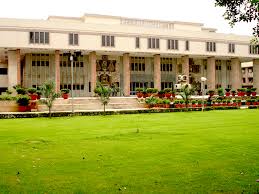
The Delhi High Court  granted an injunction in favor of Shri Naresh Kumar, Chief Secretary of the Government of National Capital Territory of Delhi, in a defamation suit against ‘The Wire’ and others. The Court’s decision, pronounced by Hon’ble Justice Sachin Datta, underscores the primacy of protecting an individual’s reputation against irresponsible and defamatory journalism.

In the landmark judgment, Justice Datta observed, “the impugned article contains defamatory and libellous allegations… made in a reckless manner without regard to the truth, in order to cause injury to the reputation of the plaintiff.” This observation came in the wake of allegations that ‘The Wire’ published an article falsely implicating Kumar in a conflict of interest in a land compensation case related to the Dwarka Expressway project.

The Court directed 'The Wire' and associated defendants to remove the contested article and related social media posts, highlighting the immediate and irreparable damage caused to Kumar’s reputation. The ruling emphasized the delicate balance between freedom of speech and the protection of individual reputation, stating, “a grave and irreparable damage will be caused to the plaintiff if ad-interim injunctive orders are not passed.”

Justice Datta cited various legal precedents, including Institute of Chartered Accountants of India v. L.K. Ratna and Vinai Kumar Saxena v. Aam Aadmi Party, reinforcing the notion that reputation is a critical component of an individual’s dignity and worth.

The Court’s decision has been seen as a significant affirmation of the rights of individuals to protect their reputation against unfounded and defamatory allegations, particularly in the era of digital media. It also serves as a stern reminder to media organizations about the importance of responsible journalism.

Compliance affidavits have been ordered, and the case is scheduled for further hearings, with all observations made by the Court being prima facie and subject to future orders. This judgment is expected to have far-reaching implications in the landscape of media law and the rights of individuals in defamation cases.

Date of Decision: 22 November 2023

SHRI NARESH KUMAR  VS THE WIRE & ORS.

Latest Legal News