-
by sayum
11 August 2026 7:51 AM








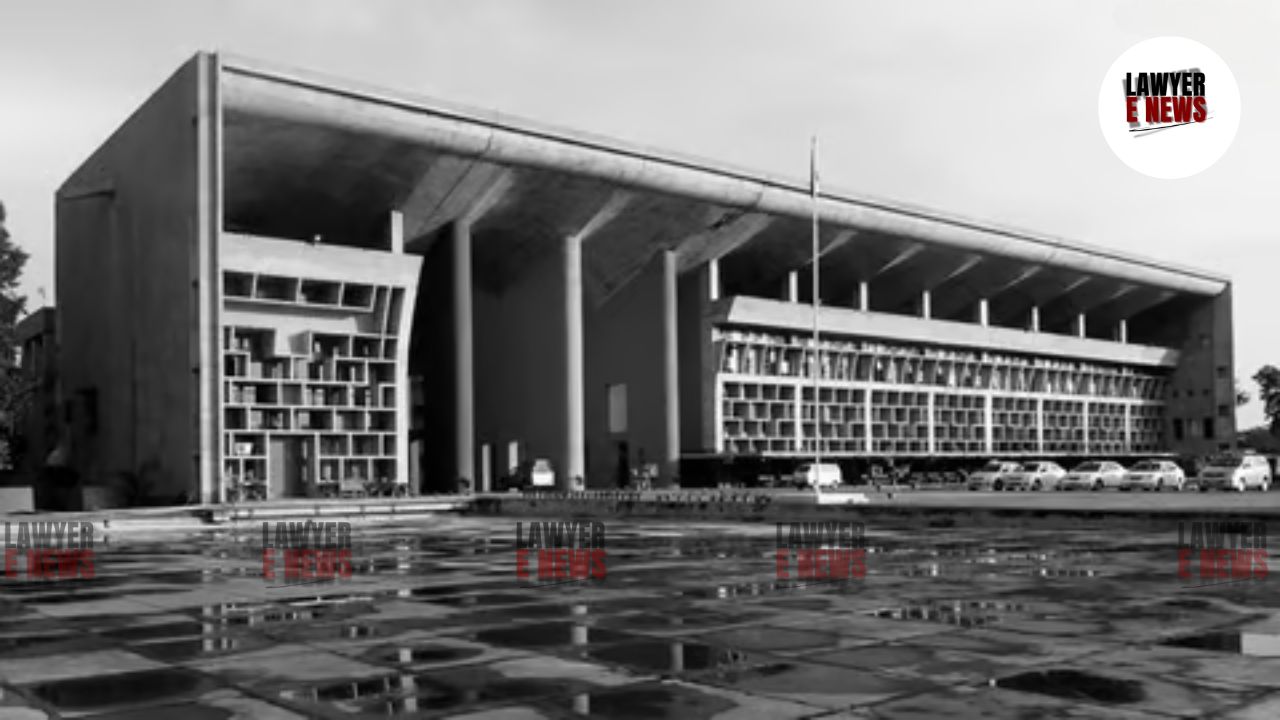
"The prosecution can never be allowed to fill up the lacunas and both the Courts have correctly dismissed the application moved by the prosecution in the present case." Punjab and Haryana High Court, in a ruling, held that the discretionary powers under Section 311 of the CrPC to recall a witness cannot be invoked by the prosecution as a tool to cover up inherent flaws or fill up evidentiary gaps in its case.
A single bench of Justice N.S. Shekhawat observed that once an investigating officer has categorically deposed regarding the case property produced during the initial trial proceedings, subsequent attempts to rectify identification discrepancies under the guise of clerical or inadvertent mistakes are impermissible in law.
Factual Matrix Of The Dispute
The matter arose from an application filed under Section 482 of the CrPC challenging concurrent orders passed by the Judicial Magistrate First Class and the Sessions Judge at Bathinda. The lower courts had dismissed the petitioner's application under Section 311 of the CrPC seeking to recall PW-7 ASI Mukhtiar Singh, the Investigating Officer, for further examination. The controversy centered around the production of case property, wherein the police official had allegedly produced bricks and brickbats bearing a specific mark different from the ones actually recovered during the course of investigation.
Core Legal Questions Before The Court
The primary question before the high court was whether an application under Section 311 of the CrPC could be maintained to rectify discrepancies in the production of case property by a material witness. The court was also called upon to determine if the refusal of the lower courts to recall the investigating officer occasioned a failure of justice or resulted in the creation of an irreparable lacuna.
Court Explains Scope Of Section 311 CrPC
Examining the statutory contours of Section 311 of the CrPC, the bench noted that the provision consists of two distinct parts where the first part is discretionary while the second part is obligatory upon the court. The essentiality of the evidence coupled with the need for a just decision constitutes the touchstone guiding judicial discretion.
"311. Power to summon material witness, or examine person present. Any Court may, at any stage of any inquiry, trial or other proceeding under this Code, summon any person as a witness..."
Reference To Apex Court Precedents
The bench extensively relied upon landmark pronouncements of the Supreme Court, including the rulings in Varsha Garg v. The State of Madhya Pradesh and Zahira Habibullah Sheikh v. State of Gujarat. It was reiterated that while criminal courts possess wide and wholesome powers to summon or recall witnesses at any stage to unearth the truth, such powers must be exercised judicially and with extreme caution.
"The aid of the section should be invoked only with the object of discovering relevant facts or obtaining proper proof of such facts for a just decision of the case and it must be used judicially and not capriciously or arbitrarily."
Prohibition Against Filling Evidentiary Lacunas
The high court emphasized that the foundational principle prohibiting the filling of prosecutorial lacunas remains a vital safeguard in criminal jurisprudence. Although judicial precedents clarify that filling loopholes is a subsidiary factor compared to the test of essentiality, courts cannot permit parties to alter the foundational matrix of evidence under the garb of rectifying inadvertent oversights.
"Now, the prosecution cannot be permitted to fill up the lacunas by showing that in fact, bricks/brickbats having impression 666 were used in the present case, as it apparently amounts to filling up lacunas by the prosecution."
Affirmation Of Concurrent Findings
Analyzing the specific deposition of PW-7 ASI Mukhtiar Singh, the bench noted that the witness had unequivocally stated during his examination that the specific case property bearing Mark M was used in the crime. Allowing a recall to substitute or correct this core testimony would amount to condoning a foundational shift in the prosecution narrative, prejudicing the rights of the accused to a fair trial under Article 21 of the Constitution of India.
"I have carefully perused the order passed by the trial Court as well as judgment passed by the appellate Court and found that there is no irregularity, illegality or perversity in the impugned order and judgment."
Concluding that the concurrent orders passed by the courts below suffered from no legal infirmity or perversity, the high court dismissed the petition filed under Section 482 of the CrPC. Keeping in view that the criminal proceedings originated from an FIR registered in October 2013, the trial court was directed to expedite the proceedings and conclude the trial expeditiously.
Date of Decision: 04 August 2026