-
by sayum
11 August 2026 7:51 AM







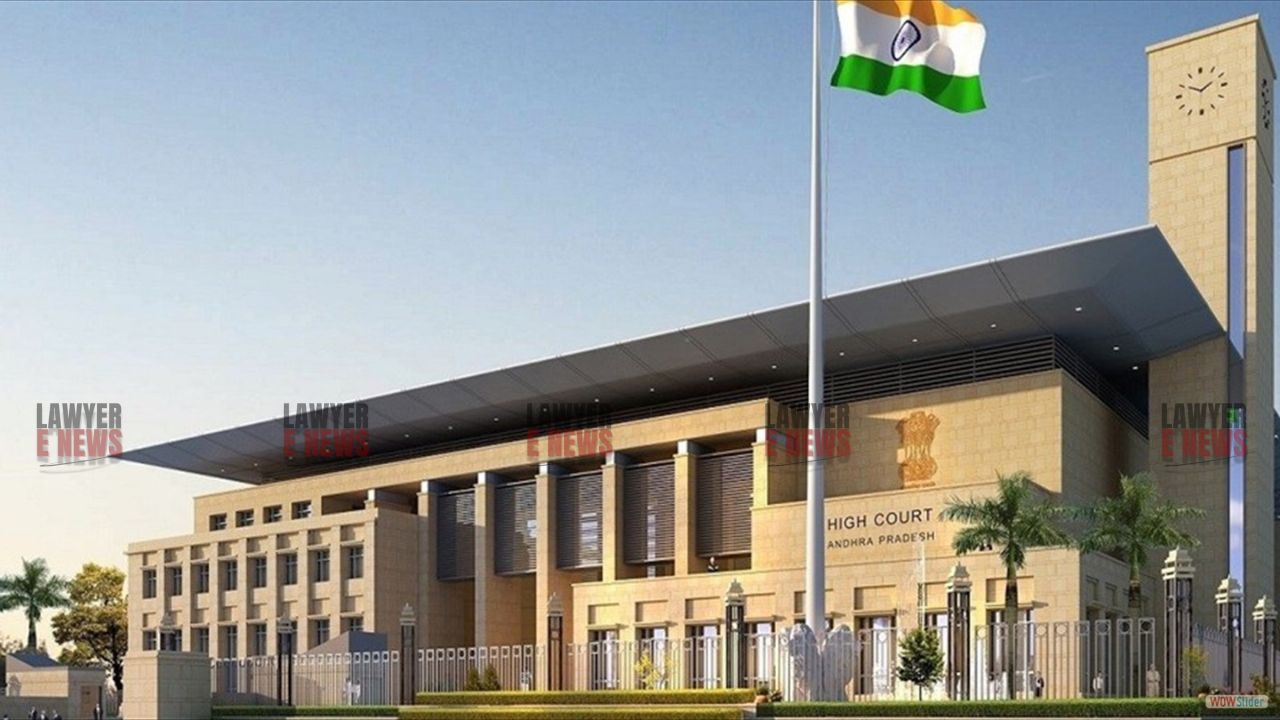
"Due to want of discussion, consideration of the documents and perusal of the material available on record in support of the claim of the parties concerned and reasoning, the above said impugned order of the 3rd respondent dated 26.03.2022 cannot be termed as the order on merits of the case, hence liable to be interfered herewith." High Court of Andhra Pradesh, in a judgment dated August 10, 2026, held that an appellate authority under the Andhra Pradesh (Andhra Area) Inams (Abolition and Conversion into Ryotwari) Act, 1956, cannot set aside an order of a primary tribunal without independently discussing the evidence, evaluating rival documents, or recording reasoned conclusions.
A bench of Justice B Krishna Mohan observed that an appellate order devoid of discussion and reasoning is legally unsustainable and cannot stand scrutiny as an order passed on merits.
The dispute pertains to an extent of land in Rushikonda Agraharam Village of Visakhapatnam Rural Mandal. The petitioner, claiming to be a descendant of the original inamdar, sought a declaration regarding the nature of the lands under Section 3(1) of the Inam Abolition Act, 1956. The Special Deputy Tahsildar (Inams) ruled in favor of the petitioner in 2021, holding that the lands were enfranchised inam lands. This order was challenged in appeal before the Revenue Divisional Officer, who allowed the appeal and set aside the primary tribunal's decision, prompting the petitioner to approach the High Court by way of a writ petition.
The primary question before the court was whether the appellate authority under Section 3(4) of the Inam Abolition Act, 1956, could reverse a primary tribunal's order without proper evaluation of evidence and reasoning. The court was also called upon to examine whether the subject lands formed part of an enfranchised inam village or an estate governed by the Estates Abolition Act, 1948.
Appellate Authority Failed To Discuss Material Evidence
The High Court noted that upon careful reading of the impugned order passed by the appellate authority, it was clear that the authority merely recorded the contentions of the rival parties and directly jumped to conclusions. The bench emphasized that the appellate order completely lacked any discussion on the documents sought to be relied upon by the respective parties.
No Perusal Of Record Or Consideration Of Submissions
The court pointed out that although adjournments were noted in the proceedings, the record did not indicate actual effective hearings of the parties or any documentation of their oral submissions. The bench stressed that an appellate authority exercising statutory powers is duty-bound to evaluate the material available on record before disturbing a reasoned finding of a primary tribunal.
Primary Tribunal Order Set Aside And Remanded
In light of the procedural lapses and the complete absence of reasoning in the appellate order, the High Court set aside the impugned order dated March 26, 2022. The court remanded the matter back to the competent appellate authority for a fresh adjudication on merits, granting liberty to all parties to submit additional documents in support of their respective claims.
Interim Protection Extended Pending Fresh Adjudication
The High Court directed the appellate authority to pass fresh orders within a period of four months from the receipt of the copy of the judgment, strictly after affording a personal hearing to all stakeholders. The court clarified that it had not expressed any opinion on the merits of the rival claims, and ordered that the interim protections operating during the pendency of the appeal shall continue until the fresh disposal of the matter.
The High Court disposed of the writ petition by quashing the unreasoned appellate order and remanding the inam dispute back for a de novo hearing. The ruling reinforces the mandatory requirement for statutory appellate authorities to record independent judicial reasoning when reviewing decisions of primary revenue tribunals.
Date of Decision: 10 August 2026