-
by sayum
11 August 2026 6:53 AM







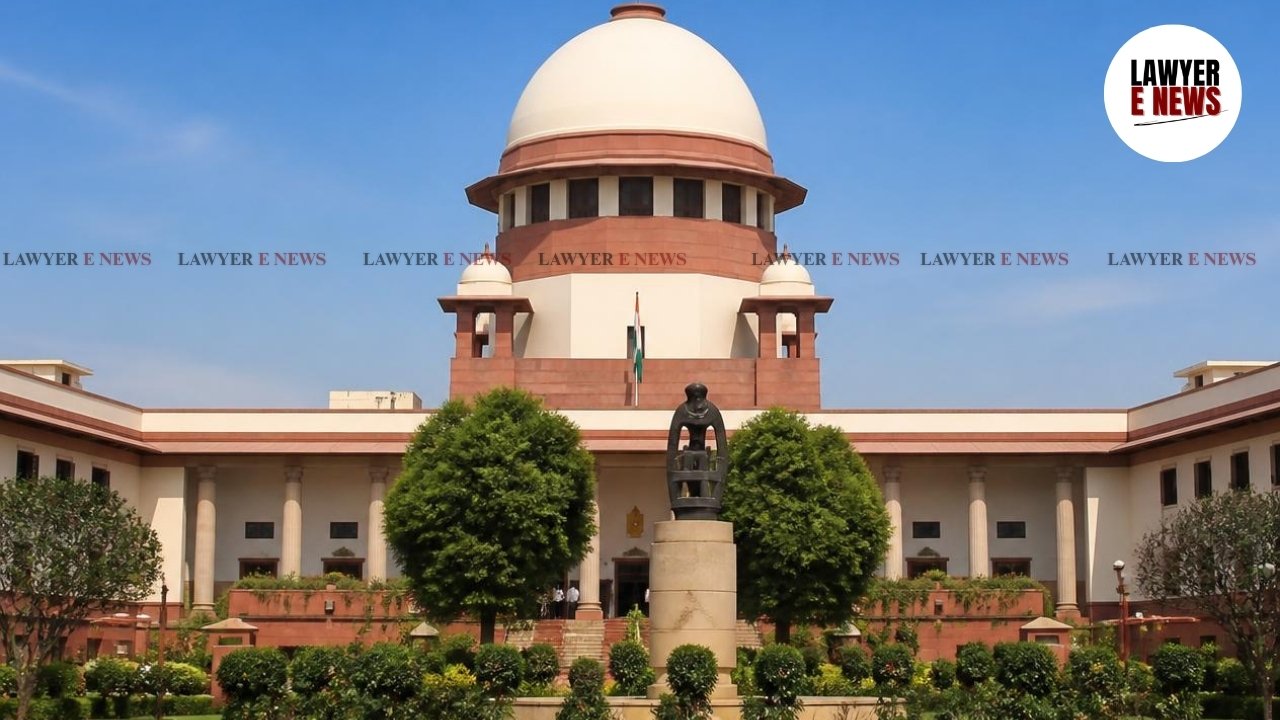
"The decision-making process under Section 19 of the Prevention of Corruption Act, 1988 cannot resemble the dilemma in ‘Hamlet’s Soliloquy’: ‘to be or not to be’, though expressed in a different context. If there is ambivalence, it could be presumed that extraneous considerations weighed and here is a case where political dictate is blatantly displayed." Supreme Court, in a significant ruling, held that once a competent authority declines to grant sanction for prosecution under the Prevention of Corruption Act on a thorough appraisal of material, reviewing such an order on the exact same material without any fresh evidence is impermissible and vitiated by political coercion.
A bench of Justices J.B. Pardiwala and K. Vinod Chandran observed that the statutory safeguard of sanction cannot be overridden by mere change of opinion prompted by external dictates.
The State of Rajasthan approached the Supreme Court challenging a High Court order that quashed a prosecution sanction granted against a government doctor. A corruption complaint had alleged that the respondent doctor demanded a bribe for a patient's knee surgery, leading to a trap and recovery of money from a locked drawer. The initial proposal for sanction was thoroughly examined and declined by the competent authorities, finding the allegations unsubstantiated and suspicious.
The primary question before the court was whether the sanctioning authority could review and reverse an earlier decision declining prosecution sanction in the absence of any new material. The court was also called upon to determine the extent to which political pressure invalidates administrative discretion under Section 19 of the PC Act.
Sanction Acts As A Shield For Innocent Public Servants
The court emphasized that statutory sanction under Section 19 of the PC Act serves as an essential weapon to discourage frivolous prosecutions and protect honest public servants.
"Sanction is a weapon to ensure discouragement of frivolous and vexatious prosecution and is a safeguard for the innocent but not a shield for the guilty," the bench noted, referencing the landmark precedent in Mansukhlal Vithaldas Chauhan v. State of Gujarat.
No Power To Review Sanction Refusal On Same Material
Analyzing established jurisprudence, the court reiterated that while administrative authorities possess inherent flexibility, a decision to decline sanction cannot be reviewed merely due to a change of opinion on the same material. The bench cited State of H.P. v. Nishant Sareen and State of Punjab v. Mohd. Iqbal Bhatti to establish that review is permissible only when fresh, previously unavailable investigative material comes to light.
"A mere change of opinion per se on the same materials cannot be a ground for review or reconsideration of an earlier order refusing to grant sanction," the court observed, highlighting that the Chief Minister's office had improperly prompted a reconsideration without uncovering any new evidence.
Dilemma and Extraneous Pressure Vitiates Decision-Making
The court strongly deprecated the practice of forcing sanction through administrative coercion when initial meticulous reviews yielded reasonable doubts regarding the trap and recovery. The bench noted that the surgery was completed a day prior to the alleged bribe, and the locked drawer had to be forcibly broken open, casting grave suspicion on the prosecution's narrative.
"If the administrative authority itself expresses a doubt and suspicion regarding the demand of bribe, the trap laid and the recovery of the money there is no question of a sanction being granted," the court held, emphasizing that criminal prosecution requires a standard higher than mere preponderance of probabilities.
Concluding that the High Court rightly quashed the blatantly tainted order of sanction, the Supreme Court dismissed the Special Leave Petition filed by the State of Rajasthan. Finding the state's persistence in litigation unwarranted, the bench imposed a cost of Rs. 50,000 each for the proceedings before the High Court and the Supreme Court, payable within two months.
Date of Decision: 23 July 2026