-
by sayum
27 August 2026 3:32 PM







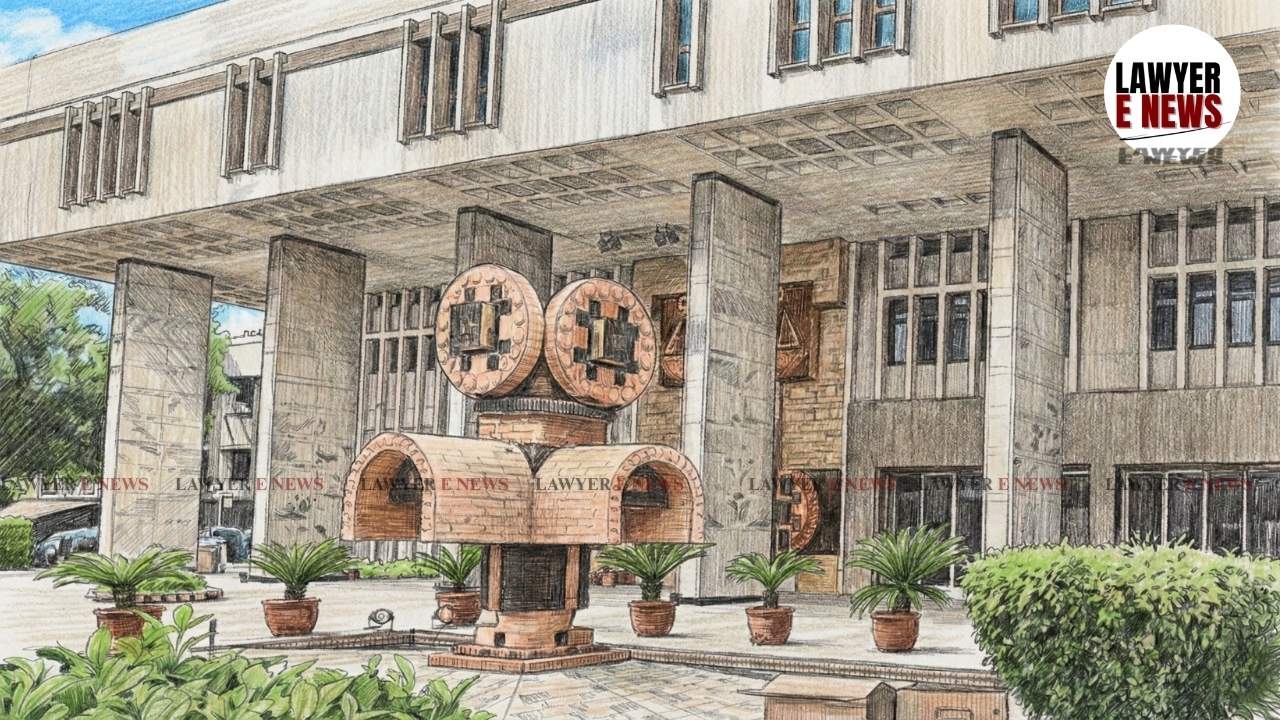
In a significant ruling on the interplay between charge framing and conviction under the POCSO Act, the Delhi High Court has held that an accused cannot be convicted for an offence for which no charge was ever framed, even if the evidence on record fully makes out that offence. The Court partly allowed a criminal appeal, modifying both the conviction and the sentence of a man found guilty of sexually assaulting a 4½-year-old girl, after finding that the trial court had convicted him for commission of aggravated sexual assault despite having framed a charge only for an attempt to commit the same.
Justice Chandrasekharan Sudha, in a judgment dated April 15, 2026, in Criminal Appeal No. 1144 of 2016, reduced the sentence from five years rigorous imprisonment imposed by the trial court to three and a half years — holding that the trial court's sentence of five years for an attempt offence was itself in direct violation of the statutory cap prescribed under Section 18 of the POCSO Act.
The appeal raised three distinct legal questions: whether the victim's testimony, given her age of approximately 4½ years, was credible and reliable without corroboration; whether the accused had been falsely implicated due to an alleged financial dispute; and, critically, whether the trial court could lawfully convict the accused for commission of aggravated sexual assault when the charge framed was only for an attempt to commit it, and whether the sentence of five years was permissible under Section 18 of the POCSO Act for an attempt offence.
On the Credibility of the Child Victim's Testimony
The Court carefully examined the entirety of the evidence. PW12, the victim, had given a Section 164 statement before a Magistrate on July 14, 2014 — four days after the incident — in which she described the accused climbing onto her back, pulling off her pants, and pouring water on her. Before the trial court, she fully supported this version without contradiction.
The Court noted that the child's narration of "water" being poured on her could, in context, mean only one thing. "Water in the context spoken to by PW12 could possibly only have been the semen of the accused," the Court observed.
PW11, the mother, corroborated her daughter's account entirely — both in her FIR given on the same day and in her examination before the trial court. PW9, the father, also supported the prosecution version in full. The defence's attempt to discredit PW12's testimony on the ground that she was too young to accurately comprehend or describe the acts, and may have been tutored, was rejected by the Court. PW12 herself, in cross-examination, specifically denied that she had been coached by her mother.
The Court relied on the Supreme Court's ruling in Ganesan v. State, (2020) 10 SCC 573, to affirm the foundational principle that "the sole testimony of victim regarding the sexual assault, if found credible and reliable, requires no corroboration and is sufficient in law to sustain a conviction."
On Absence of Injuries in Medical Examination
The defence placed reliance on the Medical Legal Certificate which showed no bruises or abrasions on the child, arguing that the absence of physical injury cast doubt on the prosecution's version of forcible assault. The Court categorically rejected this, holding that the argument entirely missed the nature of the charge. Since the charge was one of aggravated sexual assault — specifically acts of physical contact without penetration — and not of penetrative sexual assault, the absence of bruises was wholly irrelevant. "The defence's reliance on the absence of bruises or abrasions in Ex. PW-5/A MLC is without merit, inasmuch as the Charge is not one of penetrative sexual assault, but of an attempt to commit aggravated sexual assault."
On the Plea of False Implication
The accused's defence of false implication on account of a financial dispute unravelled under judicial scrutiny due to its own internal contradictions. When cross-examining PW11, the suggestion advanced was that her husband owed money to the accused's father and had falsely implicated the accused to avoid repayment. When PW9 was in the witness box, however, the suggestion changed entirely — the case put was that the accused was being extorted for money. And when the accused himself was examined under Section 313(1)(b) CrPC, he simply denied all involvement without advancing either version. The Court found this shifting defence wholly unpersuasive. "The accused does not have a consistent version also on this aspect," the Court noted, rejecting the plea outright.
The Core Legal Question: Conviction for Offence Beyond the Charge
This formed the crux of the appeal and the most significant legal holding of the judgment. The charge framed by the trial court on January 29, 2015 was expressly and unambiguously for "attempt of aggravated sexual assault u/s 9(m) of POCSO Act punishable u/s 10 of POCSO Act r/w Section 18 of POCSO Act." The charge was never amended at any stage of the trial to reflect commission of the completed offence.
The High Court undertook an independent analysis of the material on record and found that the accused's conduct — undressing the child, making her lie on her stomach, climbing on top of her, and ejaculating — squarely constituted aggravated sexual assault under Section 7 read with Section 9(m) of the POCSO Act. Section 7 defines sexual assault to include "any other act with sexual intent involving physical contact without penetration," and when committed upon a child below 12 years of age, Section 9(m) classifies it as aggravated sexual assault.
However, the Court held that the evidence establishing commission of the offence could not cure the fundamental defect of the charge having been framed only for attempt. "Though the materials does make out a case of aggravated sexual assault, the accused cannot be convicted for the same as he has been Charged only for an attempt to commit aggravated sexual assault on PW12." The trial court's failure to amend the charge before convicting him of the completed offence was a legal error that could not be overlooked.
The Court also addressed a procedural lacuna: the trial court had not conducted a hearing under Section 232 CrPC after recording the accused's Section 313 statement. However, following the Kerala High Court's ruling in Moidu K. v. State of Kerala, the Court held that non-compliance with Section 232 CrPC does not automatically vitiate proceedings unless it is shown to have caused serious and substantial prejudice to the accused — and no such prejudice was alleged or demonstrated in this case.
On the Sentence: Five Years Was Itself Unlawful
Having modified the conviction to attempt under Section 18 read with Section 9(m) of the POCSO Act, the Court turned to the sentence. Section 18 of the POCSO Act provides that for an attempt to commit any offence under the Act, the maximum punishment shall not exceed one-half of the longest term of imprisonment prescribed for the completed offence.
Section 10 of the POCSO Act prescribes a maximum of seven years for aggravated sexual assault. One-half of seven years is three and a half years. The trial court had imposed five years — the minimum for the completed offence — but entirely impermissible for an attempt, which has its own separate sentencing ceiling. "The trial court could not have sentenced the accused to five years imprisonment, which is apparently wrong," the Court held, and accordingly reduced the sentence to rigorous imprisonment for three and a half years.
The appeal was partly allowed. The conviction was modified to attempt to commit aggravated sexual assault under Section 18 read with Section 9(m) of the POCSO Act, punishable under Section 10. The sentence was reduced to rigorous imprisonment for three and a half years. The fine of ₹5,000/- was maintained.
Date of Decision: April 15, 2026