-
by sayum
27 August 2026 3:32 PM







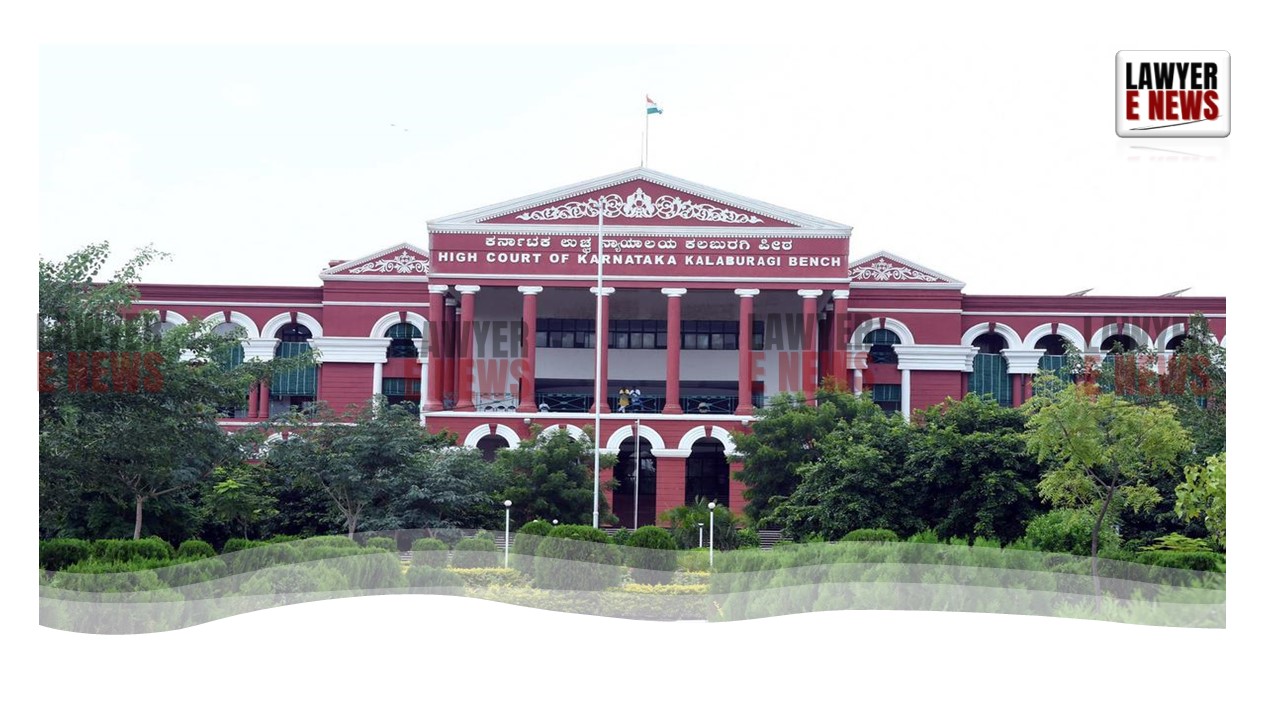
"If on a meaningful reading of the plaint, it is found that the suit is manifestly vexatious and without any merit, and does not disclose a right to sue, the court would be justified in exercising the power under Order 7 Rule 11 CPC," Karnataka High Court, in a significant ruling dated April 22, 2026, held that a suit which is ex-facie barred by limitation must be rejected at the threshold to prevent the wastage of judicial time through sham litigation.
A bench of Justice Anu Sivaraman and Justice Tara Vitasta Ganju observed that plaintiffs cannot circumvent the Law of Limitation through "clever drafting" designed to create an illusory cause of action. The Court emphasized that the power under Order VII Rule 11 of the CPC is mandatory, requiring courts to terminate proceedings where the right to sue has clearly expired.
The appellants filed a suit for partition and declaration seeking 1/5th share in 47 acres of agricultural land, challenging Sale Deeds from 1980 and Release Deeds from 2020. While the plaintiffs claimed the property was ancestral and they only gained knowledge of the alienations in 2021, the record revealed their grandfather had already sold the land via a registered Sale Deed in 1944. The respondents, who acquired the property through a chain of subsequent transfers, sought rejection of the plaint on grounds of limitation, lack of cause of action, and insufficient court fees.
The primary question before the court was whether the Trial Court erred in rejecting the plaint under Order VII Rule 11 of the CPC. The Court specifically examined whether the suit was barred by limitation under Articles 58 and 59 of the Limitation Act, 1963, and if the plaintiffs had suppressed the original 1944 alienation to create a fake cause of action.
Court Highlights Mandatory Nature Of Order VII Rule 11 CPC
The High Court began by reiterating that the power to reject a plaint is a special and independent remedy intended to terminate meritless actions at the earliest stage. Referring to the Supreme Court’s decision in Dahiben v. Arvindbhai Kalyanji Bhanusali, the bench noted that if a suit does not disclose a cause of action or is barred by law, the court has no option but to reject it.
The bench observed that the underlying object of this provision is to ensure that a plaintiff is not permitted to unnecessarily protract proceedings in a sham litigation. The judges noted that while this power is drastic and requires strict adherence to statutory conditions, it remains a mandatory duty of the court to end vexatious suits that would otherwise consume precious judicial resources.
"The court would not permit the plaintiff to unnecessarily protract the proceedings in a sham litigation and to waste judicial time."
Clever Drafting Cannot Circumvent Limitation Laws
Addressing the issue of limitation, the Court found that the plaintiffs had attempted to portray the cause of action as arising in December 2021 to bring the suit within the three-year window. However, the bench observed that the challenge was directed at documents executed 42 years prior. The Court held that "clever drafting" used to create an illusory cause of action should not be allowed to sustain a suit that is otherwise time-barred.
The bench noted that the plaintiffs deliberately omitted the date of the root title transfer from 1944 in their pleadings. Relying on the Dahiben precedent, the Court remarked that such omissions are often done knowingly to mislead the court on the issue of limitation. The bench held that the "right to sue" accrues when the cause of action first arises, and subsequent requests for partition cannot restart the clock for long-expired claims.
"Where a plaintiff deliberately did not mention the date of registration of the Sale Deed, since it would be evident that the suit was barred by limitation, the omission was such that, so as to mislead the Court on this issue."
Registered Instruments Serve As Constructive Notice To All
The Court rejected the plaintiffs' contention that they only recently gained knowledge of the 1980 Sale Deeds. It held that the registration of a document serves as constructive notice of its existence to the entire world. Since the Sale Deeds were registered in 1980, any challenge to their validity should have been instituted within three years from the date of registration under Article 59 of the Limitation Act.
The bench further highlighted that the plaintiffs could not feign ignorance of the 1944 Sale Deed because it was expressly mentioned in the "Schedule E" of the Release Deeds which the plaintiffs themselves had annexed to their plaint. The Court observed that since the grandfather had transferred the title eight decades ago, the plaintiffs had no standing to challenge subsequent transfers without first successfully challenging the original 1944 alienation.
Vague Allegations Of Fraud Insufficient To Sustain Plaint
The Court also took a stern view of the vague allegations of fraud and forgery made by the appellants. It observed that the plaint contained only general assertions that the respondents "created" or "fabricated" documents without providing any specific particulars of the alleged fraudulent conduct.
Under the CPC, the bench noted, fraud must be pleaded with specificity. The Court found that because the property was the separate property of the grandfather and was sold before the plaintiffs were even born, the allegations of fraud were not only vague but legally untenable in a suit filed 78 years after the initial transfer of title.
"The allegation of fraud that has been made in the plaint is completely vague and unspecified... There are no particulars given in the plaint as to the details of the fraudulent conduct of the respondents."
The High Court concluded that the Trial Court was perfectly justified in rejecting the plaint at the threshold as the suit was "hopelessly barred by limitation." While dismissing the appeal and upholding the rejection, the Court reduced the costs payable by the appellants to the respondents from the original amount to Rs. 10,000, noting that the litigation was an abuse of the legal process.
Date of Decision: 22 April 2026