-
by sayum
27 August 2026 3:32 PM







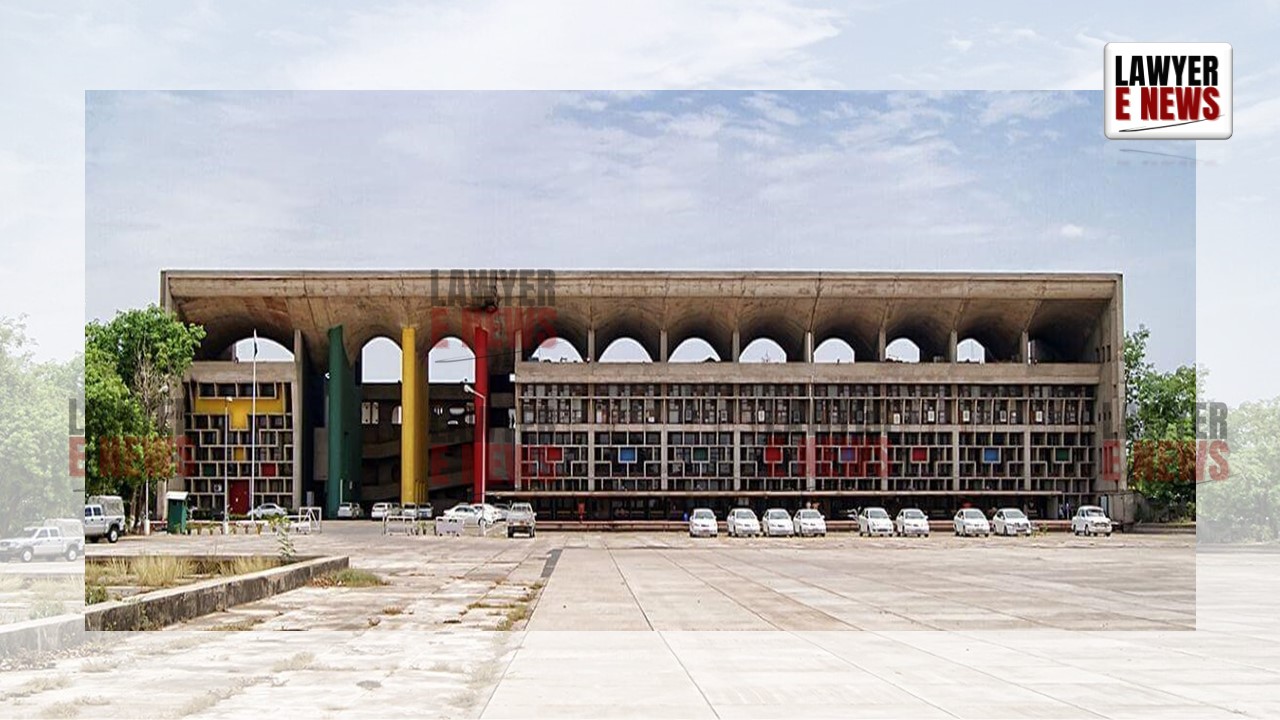
"Any order which substantially affects the right of the accused, or decides certain rights of the parties cannot be said to be an interlocutory order so as to bar a revision to the High Court against that order, " Punjab and Haryana High Court, in a significant ruling, held that an order passed by a Magistrate allowing or rejecting an application under Section 156(3) CrPC is not an interlocutory order and is therefore amenable to criminal revision.
A bench of Justice Shalini Singh Nagpal observed that such orders are "matters of moment" which substantially affect the rights of the parties, making the bar under Section 397(2) CrPC inapplicable. The Court clarified that once a Magistrate disposes of an application for registration of an FIR, the court becomes functus officio regarding that specific prayer, thereby giving the order a final character.
The case arose from a complaint alleging rape and cheating filed by a woman against the petitioner, claiming he established sexual relations on a false promise of marriage. The Judicial Magistrate First Class (JMIC), Panipat, declined to send the matter for police investigation under Section 156(3) CrPC, noting a nine-month delay and a pre-existing extortion FIR against the complainant. However, the Additional Sessions Judge (ASJ) later reversed this decision in a revision petition, directing the registration of an FIR, which led the petitioner to approach the High Court seeking quashing of the ASJ's order.
The primary question before the court was whether a criminal revision is maintainable against an order passed under Section 156(3) CrPC or if such an order is "interlocutory" in nature. The court was also called upon to determine whether the Magistrate is bound to mechanically direct an FIR registration in every case alleging a cognizable offence regardless of delay or surrounding circumstances.
Defining the Scope of Interlocutory Orders Under Section 397 CrPC
The Court began by analyzing the connotation of "interlocutory order" as used in Section 397(2) CrPC, which bars revision against such orders. Relying on the landmark Supreme Court decision in Amarnath and Others v. State of Haryana, the Court noted that the term must be understood in a restricted sense. It merely denotes orders of a purely interim or temporary nature that do not touch upon the important rights or liabilities of the parties.
The Court emphasized that any order which substantially affects the rights of the accused or adjudicates a particular aspect of the trial cannot be labeled interlocutory. While routine steps like summoning witnesses or adjourning cases are interlocutory, orders that decide "matters of moment" fall within the revisional jurisdiction of the Sessions Court or the High Court.
Court Explains Why Section 156(3) Orders Are Revisable
Addressing the maintainability of the revision, the Court held that once a Magistrate passes directions under Section 156(3) CrPC, the court disposes of a valuable right. Whether the application is allowed or dismissed, it terminates the specific proceeding regarding the police's duty to investigate. The Court cited the Delhi High Court's ruling in Nishu Wadhwa v. Siddharth Wadhwa to reinforce this position.
"Disposing of an application under Section 156(3) Cr.P.C. amounts to adjudication of a valuable right whether in favour of accused or the complainant."
The Court further noted that when an FIR is registered following a 156(3) direction, the status of the person concerned changes to that of an "accused," and their liberty is immediately impacted. Therefore, the argument that an accused has no right to be heard or that the order is merely procedural was repelled by the Court.
Magistrate Not Bound to Mechanically Direct FIR Registration
On the merits of the case, the High Court observed that Section 156(3) CrPC does not enjoin a Magistrate to mechanically direct an investigation by the police. The Court highlighted that the Magistrate must apply their mind to see if the information reveals a cognizable offence and if a police investigation is actually necessary to dig out evidence that the complainant cannot procure.
The Bench referred to the Supreme Court's ruling in Om Prakash Ambadkar v. State of Maharashtra (2025), noting that investigation should only be directed where the assistance of the State machinery is required. If the complainant is already in possession of the necessary details and no complex scientific investigation is needed, the Magistrate is well within their rights to treat the case as a private complaint.
Abnormal Delay And Counter-Cases Are Material Factors
The High Court critiqued the Revisional Court's reliance on the Lalita Kumari judgment. It noted that while Lalita Kumari mandates FIR registration for cognizable offences, it explicitly provides an exception for cases involving abnormal delay or laches. In this instance, there was a nine-month delay in filing the complaint which was not satisfactorily explained.
"Lalita Kumari’s case... makes an exception, where there is an abnormal delay/latches in criminal prosecution without satisfactorily explaining the reasons for delay."
Furthermore, the Court found that the Revisional Court ignored a critical fact: the complainant and her family were already facing an FIR for allegedly extorting money from the petitioner. The High Court observed that the Magistrate had correctly exercised discretion by calling for a police report and subsequently deciding to proceed as a private complaint rather than directing a fresh FIR.
The High Court concluded that the power to direct registration of an FIR under Section 156(3) CrPC must be used sparingly to avoid the miscarriage of justice. Finding the ASJ's order to be legally flawed, the Court set it aside and restored the original order of the Judicial Magistrate. The Magistrate was directed to proceed with the matter as a private complaint in accordance with the law.
The High Court affirmed that orders under Section 156(3) CrPC are not interlocutory and are subject to the revisional jurisdiction of higher courts. It underscored that judicial discretion in directing police investigations must be exercised after considering factors like delay, the necessity of state assistance, and the potential for the abuse of the legal process through "counter-blast" complaints.
Date of Decision: 27 April 2026