-
by sayum
19 August 2026 1:58 PM







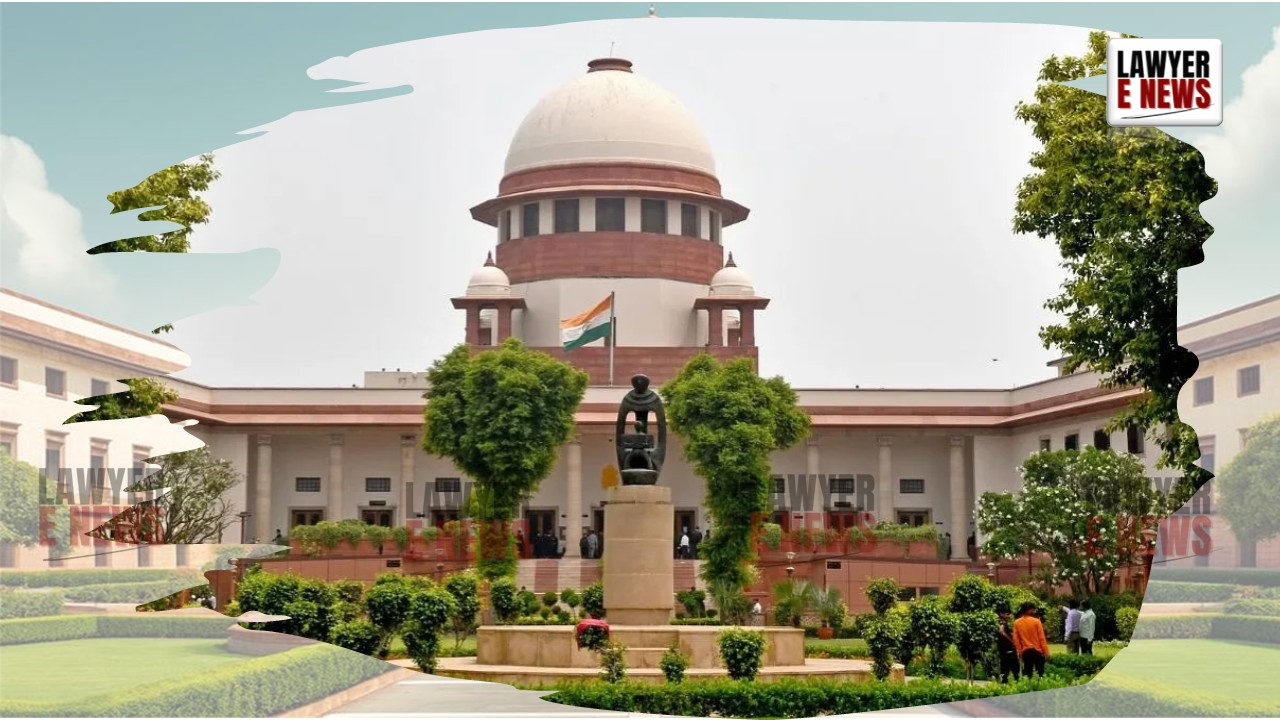
"Legislative choice to implement the right to free and compulsory education through neighbourhood schools is not merely administrative; it is a deliberate constitutional strategy to operationalise equality of status, dignity, and social integration among children in their formative years," Supreme Court, in a significant ruling dated April 28, 2026, held that 'neighbourhood schools' are under a mandatory constitutional and statutory obligation to grant admission to students forwarded by the State Government under the Right to Education (RTE) Act without any delay.
A bench comprising Justice Pamidighantam Sri Narasimha and Justice Alok Aradhe observed that the right to education under Article 21A would remain an "empty promise" if the mandate of the RTE Act, 2009 is not implemented in letter and spirit. The Court emphasized that once the State completes the scrutiny and allots a student to a specific school, the institution has no option but to grant admission.
Schools Cannot Delay Admission To Students Under 25% RTE Quota By Questioning Eligibility
The matter arose when a student (Respondent No. 5) applied for admission into a pre-primary class under the 25% quota prescribed by the UP RTE Rules, 2011. Despite being duly selected and allotted to Lucknow Public School, Eldico, the school refused to complete admission formalities, citing "uncertainty" about the student’s eligibility. The student approached the High Court, which directed the school to grant admission, prompting the school to file the present Special Leave Petition before the Apex Court.
The primary question before the Court was whether a private unaided school can withhold or delay the admission of a student allotted by the State Government under the RTE quota pending a challenge to their eligibility. The Court also examined the scope of the obligations of 'neighbourhood schools' under Section 12 of the RTE Act and Rule 8 of the UP RTE Rules, 2011.
Constitutional Mandate Of Article 21A And The RTE Act
The Court began by reiterating that the right to education is a fundamental right guaranteed under Article 21A of the Constitution of India. It noted that Section 12 of the RTE Act, 2009 and Rule 8 of the UP RTE Rules, 2011 create a clear statutory framework for the admission of children from weaker sections. The bench observed that the limited window for a school to reconsider a government decision is a "conscious choice of the State to avoid delays in securing the children's right to education."
"Once the process of admission is completed and application forms have been duly scrutinized... the school has no option except to grant admission to the students."
Schools Cannot Sit In Appeal Over State’s Selection Process
The bench underscored that schools do not possess the authority to "sit in appeal" over the decisions taken by the State Government regarding student eligibility and allotment. The Court held that the regulatory framework for neighbourhood schools is designed to operationalize equality of status and social integration. By mandating that schools admit children from disadvantaged sections to the extent of at least 25%, the law seeks to transform the social structure of society by breaking entrenched barriers of caste, class, and gender.
"This model envisages the school as a common civic space that breaks down entrenched barriers... thereby advancing substantive social justice."
Identification Of Five Key Duty Bearers Under The RTE Framework
Relying on its earlier precedent in Dinesh Biwaji Ashtikar v. State of Maharashtra & Ors. (2026), the Court identified five primary duty bearers responsible for the realization of the right to elementary education. These include the appropriate government, the local authority, neighbourhood schools, parents/guardians, and primary school teachers. The Court noted that the "appropriate government" has the duty to establish schools and ensure availability, while the "local authority" must monitor admission and attendance at the grassroots level.
"The consequence of identifying the right to elementary education as a positive right is the recognition of co-relative duties and identification of five duty bearers."
The Transformative Role Of Neighbourhood Schools
The Court highlighted the "extraordinary capacity" of Section 12 of the RTE Act to transform society. It noted that the third duty bearer, the neighbourhood school, is "impressed with the responsibility of providing free and compulsory education." The bench remarked that ensuring the admission of such students must be treated as a "national mission" and that courts must "walk that extra mile" to provide efficient relief to parents who complain of a denial of this right.
"Earnest implementation can truly be transformative. It is not only a step towards educating young India, but also a substantive measure in securing the preambular objective of ‘equality of status’."
Schools Bound To Admit Students Even During Representation
Addressing the petitioner school's specific grievance, the Court held that even if a school has a disagreement with the Government’s selection, it cannot withhold admission while seeking a remedy. The bench clarified that while a school may make a representation to the concerned authority, they "ought not wait for the outcome of such a representation." They are mandated to grant admission to the student whose name appears in the list forwarded by the State in the interregnum.
"This immediacy is essential to actualise the promise of Article 21A of the Indian Constitution."
Accountability And Transparency In Admissions
The Court concluded by stating that effective implementation of the RTE Act requires schools to publish available seats in advance and record specific reasons for any denial of admission. Such denials must be reviewed by educational authorities within strict timelines to ensure accountability. The bench emphasized that the success of the legislation ultimately depends on ensuring that children's participation in the classroom is "evident and meaningful."
The Supreme Court dismissed the Special Leave Petition filed by the school, affirming the High Court's direction to grant immediate admission to the student. The bench reiterated that the constitutional promise of education through common local schools is a deliberate strategy to operationalize dignity and social integration. No orders were made as to costs.
Date of Decision: April 28, 2026