-
by sayum
25 August 2026 12:32 PM







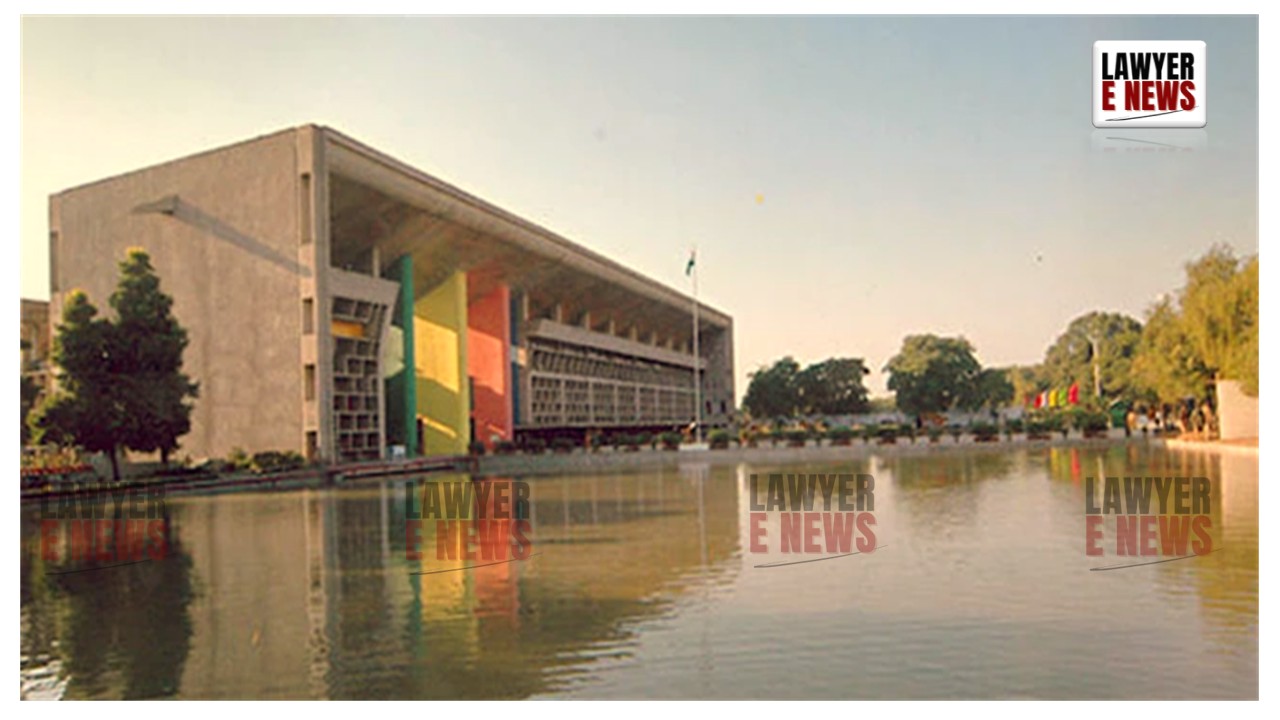
The Punjab & Haryana High Court quashed the reinvestigation order against Pawan Kharbanda, ruling that ordering a fresh inquiry after 12 years, without any new evidence, is arbitrary and an abuse of legal process. The court reaffirmed that "the right to a fair and speedy trial is fundamental, and indefinite reinvestigation cannot be allowed to perpetuate harassment."
Justice Harpreet Singh Brar, allowing CRM-M-3193-2025, ruled that "the Magistrate’s order directing reinvestigation lacked legal justification and failed to consider that the case had already been thoroughly examined and closed after due process."
The dispute originated from a politically charged altercation in 2012 during municipal elections in Ludhiana, where the petitioner, Pawan Kharbanda, and his family members were attacked with swords and baseball bats while putting up election posters.
Following the incident, an FIR (No. 119 dated 5th June 2012) was lodged at Police Station Salem Tabri, Ludhiana, under Sections 323, 324, 34 IPC against the accused. However, in a turn of events, the accused filed a cross-complaint (DDR No. 22 dated 5th June 2012), alleging that Kharbanda and others assaulted them using a pistol.
During the investigation, the police thoroughly examined the allegations and, after due inquiry, concluded that no case was made out against Kharbanda. As a result, the investigating agency filed a cancellation report in 2020, absolving the petitioner of any wrongdoing.
Despite this, the complainant challenged the cancellation report, leading to an order by the Magistrate on 21st August 2024, directing reinvestigation into the case. The petitioner, aggrieved by this decision, approached the Punjab & Haryana High Court, seeking quashing of the proceedings.
"Magistrate’s Order Lacks Legal Basis and Violates Judicial Precedents"
The High Court, after examining the case record, found that the Magistrate’s decision to order reinvestigation was legally unsound and failed to take into account that the case had already been thoroughly investigated. The court noted that the cancellation report had been filed after an exhaustive probe, and no new material had emerged to justify reopening the case.
Referring to Supreme Court rulings, the High Court observed: "The law is clear that once a cancellation report is submitted and accepted, reinvestigation can only be directed if fresh evidence is presented. Mere dissatisfaction of the complainant is not a valid ground to reopen a closed case."
The court also cited State of Punjab v. CBI (2019) 2 SCC 381, where the Supreme Court held that: "Reinvestigation or further investigation under Section 173(8) CrPC (now Section 193(9) of BNSS) cannot be ordered mechanically. The investigating agency must have fresh evidence that necessitates reopening the case. Otherwise, it would lead to endless harassment of individuals through frivolous litigation."
The Punjab & Haryana High Court ruled that the Magistrate had failed to exercise judicial discretion and had overlooked binding precedents that protect individuals from being subjected to perpetual criminal proceedings.
"Criminal Proceedings Cannot Be Used as a Tool of Harassment"
The court strongly condemned the misuse of criminal law to harass individuals, particularly in politically motivated cases. It noted that the petitioner had already suffered mental and legal harassment for over a decade, and the Magistrate’s order would only prolong his agony.
"Criminal law cannot be weaponized to settle political scores. Courts must ensure that individuals are not subjected to endless investigations and trials in the absence of concrete evidence. The right to a fair and speedy trial must be upheld, and frivolous reinvestigations must be curtailed."
The High Court further emphasized that if such orders are permitted, it would set a dangerous precedent, allowing complaints to be kept alive indefinitely to harass individuals.
Allowing the petition, the High Court ruled: "In the absence of any new evidence, the order directing reinvestigation is unsustainable in law. The cancellation report was filed after due process, and there is no justification for reopening the case. The proceedings against the petitioner stand quashed."
With this ruling, the Punjab & Haryana High Court reaffirmed that reinvestigation must be based on tangible evidence and not on mere dissatisfaction of the complainant. The judgment ensures that individuals are not subjected to unnecessary legal proceedings, protecting them from prolonged harassment and abuse of the judicial process.
Date of Decision: 29 January 2025