
-
by sayum
26 August 2026 1:49 PM







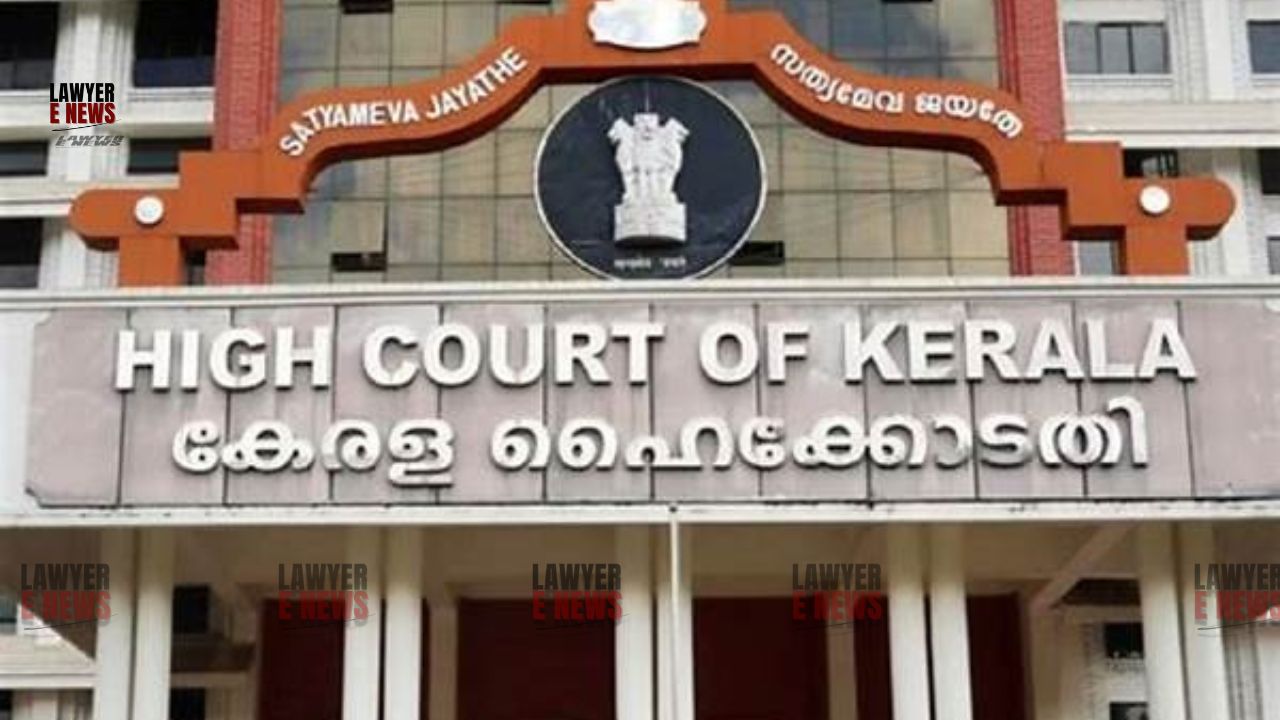
“Ownership of temple property is a civil dispute — not within Ombudsman’s purview under Section 271J of the Panchayat Raj Act” - In a significant judgment, the Kerala High Court held that the Ombudsman for Local Self Government Institutions has no jurisdiction to adjudicate private disputes over property ownership, particularly where no allegations of corruption or maladministration by local bodies are involved.
The Court was deciding two interconnected writ petitions — WP(C) No. 14200 of 2024, filed by the Cochin Devaswom Board, and WP(C) No. 20996 of 2024, filed by V.D. Thankachan, a private individual — relating to the Chirangara Bhagavathy-Vishnu Temple pond (Chirangara Chira) in Thrissur.
“Disputed Temple Pond Ownership Cannot Be Decided by Ombudsman”: Court Declares Order Ultra Vires
The central issue before the Division Bench of Justice Raja Vijayaraghavan V and Justice K.V. Jayakumar was whether the Ombudsman, acting under Section 271J of the Kerala Panchayat Raj Act, 1994, could direct that the Chirangara temple pond be thrown open for public use, based on the claim that it was a revenue poramboke and not temple property.
The High Court decisively held that such a title dispute is outside the jurisdiction of the Ombudsman, whose role is confined to investigating corruption and maladministration in Local Self Government Institutions.
“The ownership of the pond is essentially a private dispute. It has nothing to do with corruption or maladministration of a public servant or a Local Self Government Institution,” the Court observed in Para 23.
Accordingly, the Court set aside Ext. P7, the Ombudsman’s order dated 19.10.2023, which had directed that Cochin Devaswom Board must not obstruct public access to the temple pond.
Writ Jurisdiction Not for Settling Land Title or 12-Year-Old Construction Complaints
In the connected petition filed by V.D. Thankachan — WP(C) No. 20996/2024 — the petitioner alleged that the Devaswom Board had illegally constructed a compound wall around the pond without proper permission and sought a mandamus to demolish it.
However, the High Court declined to entertain this plea on multiple grounds:
Delay: The construction in question was carried out in 2013, and the petition was filed in 2024, making it barred by delay and latches.
Disputed Facts: The matter involved complex factual questions about title and encroachment which required oral evidence and adjudication by civil courts, not a writ proceeding.
“The writ courts, invoking its equitable jurisdiction, are not expected to interfere in disputed questions of facts, particularly those involving complex title claims,” the Court observed in Para 25.
The Court also relied on Supreme Court precedents in:
New Okhla Industrial Development Authority v. Kendriya Karamchari Sahkari Grih Nirman Samiti, (2006) 9 SCC 524
Orissa Agro Industries Corpn. Ltd. v. Bharati Industries, (2005) 12 SCC 725
to reiterate that Article 226 jurisdiction is discretionary, and should not be exercised when disputes involve factual complexity and require civil trial.
Temple Pond Holds Religious Sanctity: Reaffirmed as Devaswom Property
The Cochin Devaswom Board, represented by Mr. K.P. Sudheer, had relied on the Thanathu Register (Ext. P1) to establish that the Chirangara Chira is part of temple property. It argued that any interference with the pond's use by the temple would affect the sanctity and functioning of the shrine.
The Court accepted this position and relied on its earlier ruling in Chandran v. Travancore Devaswom Board, 2003 KHC 442, where it had held:
“A pond standing in front of a temple is a place of religious sanctity and forms an integral part of the temple.”
The Cochin Devaswom Board also cited Rule 4 of the Kerala Hindu Places of Public Worship (Authorisation of Entry) Rules, 1965, which mandates that only those in a prescribed state of cleanliness may enter places of worship or associated facilities, further justifying the temple’s control over access.
Limits of Ombudsman’s Powers Clearly Defined by the Court
Referring to Section 271J of the Kerala Panchayat Raj Act, the Court made it clear that the Ombudsman’s powers are limited to investigating maladministration, corruption or irregularities in local self-government institutions. It cannot act as a civil court or issue binding directions in private land disputes.
“The Ombudsman cannot pass orders as if it were a civil court nor can it adjudicate on a private dispute.” [Para 21]
This finding echoed the Court’s earlier view in Mayor of Kochi v. Ombudsman for Local Self Government Institutions, ILR 2010(4) Ker 291, and Chandrakumar v. Ombudsman for Local Self Government Institutions, 2024 (1) KHC 552.
Devaswom Board’s Writ Allowed, Private Writ Dismissed
Orders of the High Court:
WP(C) No. 14200/2024 (Cochin Devaswom Board): Allowed
Ext. P7 Ombudsman order set aside as ultra vires and beyond jurisdiction.
WP(C) No. 20996/2024 (V.D. Thankachan): Dismissed
Claim for demolition of compound wall rejected due to 12-year delay and disputed facts inappropriate for writ jurisdiction.
No direction issued to reconsider complaint before Ombudsman.
Ombudsman’s Role Cannot Be Stretched to Settle Temple Property Claims
The Kerala High Court’s judgment is a significant affirmation of the institutional boundaries of quasi-judicial authorities like the Ombudsman under the Panchayat Raj Act. It reinforces the principle that land and title disputes must be resolved through civil courts and not piggybacked into writ petitions or administrative proceedings meant for checking corruption or governance failures.
This case also safeguards the rights of religious institutions by upholding the principle that temple properties — including sacred ponds — are not automatically public utilities, especially where no legal evidence exists to the contrary.
Date of Decision: 17 October 2025





