-
by sayum
27 August 2026 3:32 PM







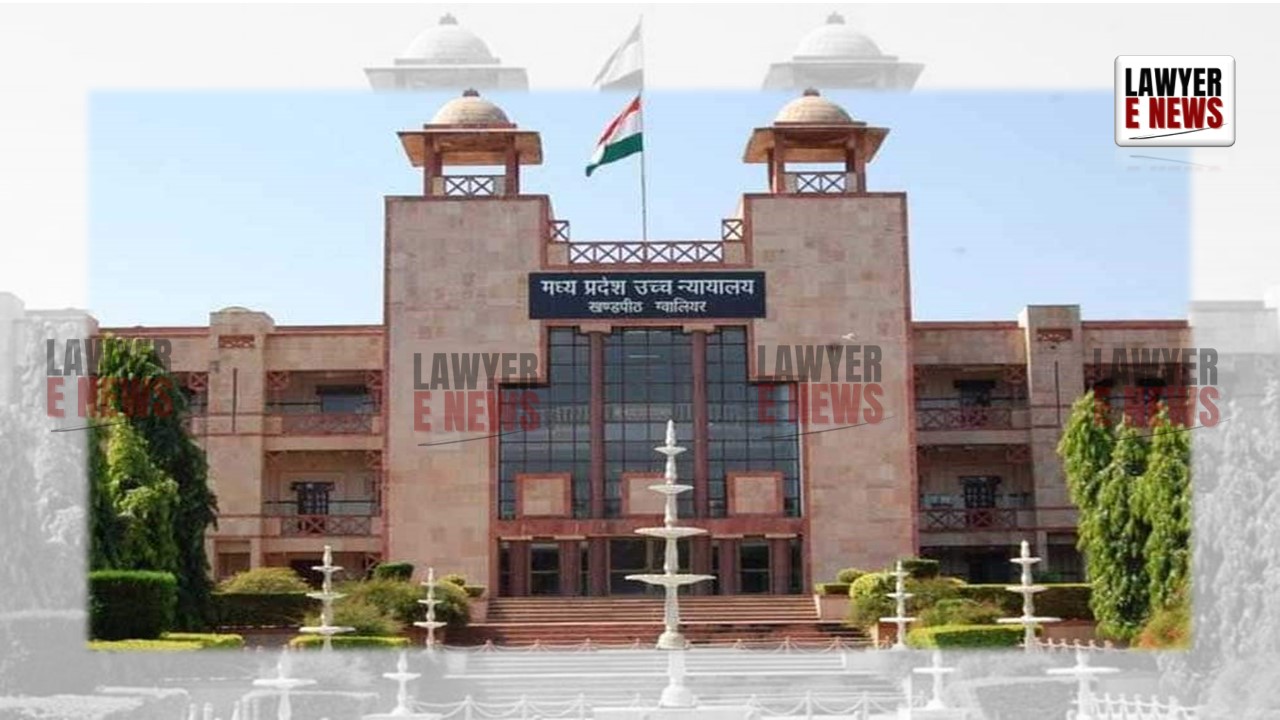
"Non-availability of such visuals of an incident which took place near and also in the police station, is not natural and is enough to draw an adverse inference against the delinquent officers." Madhya Pradesh High Court, in a significant ruling, held that the absence of CCTV footage regarding an incident occurring within a police station is sufficient to draw an adverse inference against delinquent officers.
A single-judge bench of Justice Subodh Abhyankar observed that such "blind spots" in surveillance cannot be used to shield police atrocities and awarded compensation to a petitioner for custodial violence.
The petitioner, Harsh, alleged that on December 29, 2025, two police constables from P.S. Lasudiya, Indore, assaulted him and his friends following an altercation at a restaurant. He claimed he was taken to the police station and brutally beaten for nearly one and a half hours, during which his moustache and hair were pulled. The petitioner approached the High Court seeking the registration of an FIR, departmental inquiry, and compensation for the violation of his fundamental rights.
The primary question before the court was whether an adverse inference can be drawn against police officers when CCTV footage of a custodial incident is missing or unavailable. The court also examined whether the failure to utilize body-worn cameras by the police constitutes a "criminal waste of public resources" and what systemic directions are required to prevent custodial violence in CCTV "blind spots."
Adverse Inference From Missing CCTV Footage
The Court scrutinized the State's reply, which admitted that the petitioner was taken to an inner room of the police station not covered by CCTV cameras. While the State argued this area was reserved for women officers, the Court noted that sounds of beating were audible in the background of available footage. Justice Abhyankar remarked that the non-availability of visuals for an incident inside a police station is "not natural."
Court Draws Adverse Inference Against Officers
The Bench held that the lack of footage, coupled with injury photographs and witness statements from the petitioner’s friends, substantiated the allegations of police violence. The Court emphasized that the State's failure to provide comprehensive surveillance coverage allows for a legal presumption against the conduct of the involved officers.
"Non-availability of such visuals of an incident... is enough to draw an adverse inference against the delinquent officers, which also substantiates the narration of events by the petitioner."
Body-Worn Cameras And Criminal Waste Of Resources
Upon inquiry, the Court discovered that out of 442 body-worn cameras provided to the Indore Police Commissionerate, only two were allotted to the Lasudiya Police Station, and those were used exclusively for traffic violations. The Bench expressed deep dissatisfaction with this state of affairs, noting that no Standard Operating Procedure (SOP) existed for their use or monitoring.
Failure To Adopt Technology Labeled Pathetic
The Court described the underutilization of these gadgets as "pathetic" and a "criminal waste of public resources." It noted a "conscious disregard" on the part of the police in adopting technology, suggesting that such failures are often intended to hide arbitrary and oppressive conduct.
"The complete ignorance or conscious disregard on the part of the officers concerned in adopting the new technology... appears to be only to push under the carpet one’s own shortcomings."
Systemic Directions To Prevent CCTV "Blind Spots"
The Court referred to its earlier decision in Nirmal vs. State of M.P. (2024), where it had previously urged the State to equip personnel with body cameras. Finding that no serious thought had been given to that order, the Court issued mandatory directions to ensure public safety and police accountability.
Mandatory Use Of Body Cameras In High-Crime Stations
The State Government was directed to ensure that no accused or complainant is taken to areas of a police station not covered by CCTV, except for private spaces like toilets. Furthermore, the Court ordered that all personnel in the top five crime-registering police stations in Indore be equipped with body-worn cameras within nine months.
"State Government is directed to ensure that... an accused or a complainant shall not be taken to such areas of the police station which are not covered under the CCTV cameras."
The High Court disposed of the petition by awarding Rs. 10,000 as compensation to the petitioner for the hardship endured. It directed the preservation of all relevant records and CCTV footage for future legal proceedings. The State was ordered to submit a compliance report regarding the implementation of body cameras and surveillance infrastructure by January 4, 2027.
Date of Decision: 22 April 2026