-
by sayum
27 August 2026 7:40 AM







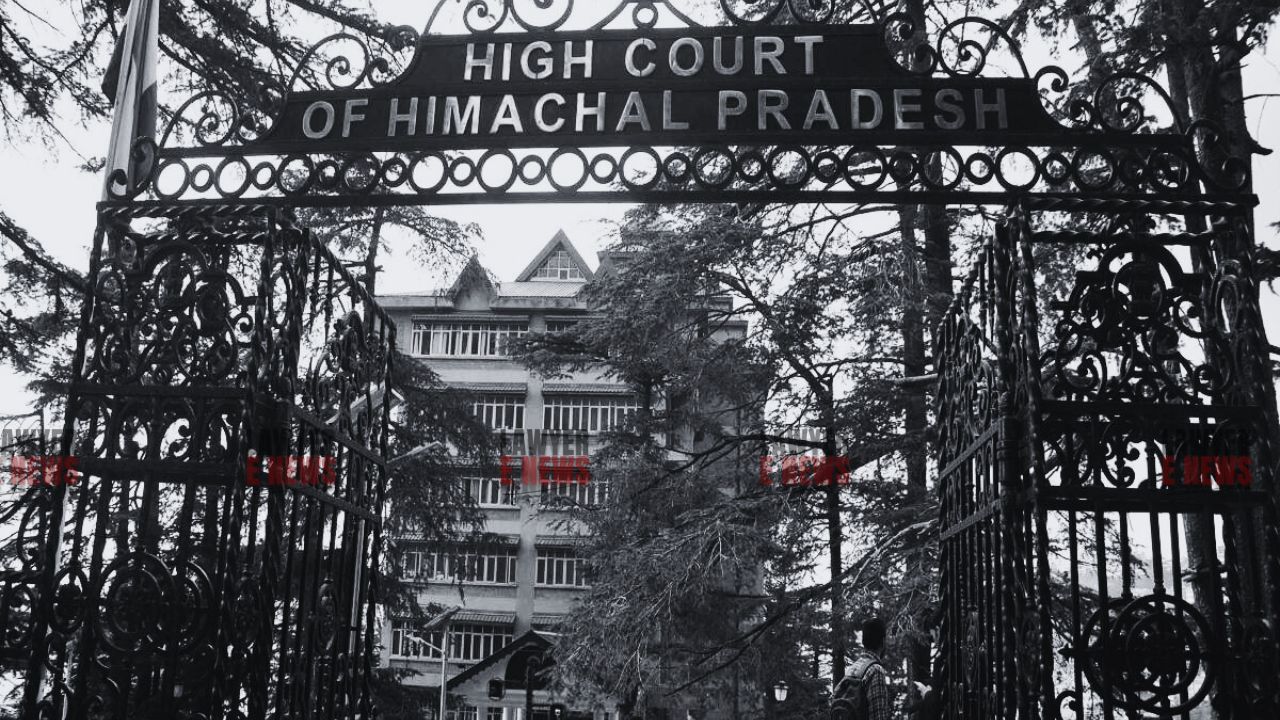
"Except the bald statement of the plaintiff and his witnesses, there is nothing concrete on record to establish that there was any agreement to sell.", Himachal Pradesh High Court, in a significant ruling, held that suits for specific performance based on oral agreements require cogent and authentic evidence, and cannot succeed merely on the unsubstantiated statements of the plaintiff.
A single-judge bench of Justice Romesh Verma observed that a 15-year unexplained delay in seeking to enforce an alleged oral agreement to sell renders the plaintiff's claim highly improbable and militates against the genuineness of the transaction.
The appellant-plaintiff originally filed a civil suit in 2015, claiming that the defendants had entered into an oral agreement on March 15, 2000, to sell the suit land for a consideration of Rs. 1,40,000. He alleged that the entire amount was paid on the spot and possession was handed over to him, where he subsequently planted and maintained an apple orchard. The trial court dismissed the suit in 2020 citing a lack of evidence, and the First Appellate Court affirmed this dismissal in 2021, prompting the plaintiff to prefer the present regular second appeal before the High Court.
The primary question before the High Court was whether the plaintiff had successfully proved the existence of the oral agreement to sell, the payment of sale consideration, and the subsequent transfer of possession. The court was also called upon to determine whether the concurrent dismissal by the lower courts raised any substantial question of law warranting interference under Section 100 of the Code of Civil Procedure (CPC).
Strict Proof Required For Oral Agreements
The High Court thoroughly examined the evidentiary standards required to enforce an unwritten contract for the sale of immovable property. Justice Verma noted that since the plaintiff specifically set up a case based on an oral agreement, it was incumbent upon him to prove his case beyond a reasonable doubt. The bench observed that while oral agreements are legally recognizable, they demand a significantly higher threshold of documentary substantiation regarding the payment of consideration.
The court emphatically noted, "In order to corroborate the said oral agreement, the plaintiff was required to lead cogent and authentic evidence in order to substantiate his case." The bench observed that no written receipt or material record was produced to prove that the sum of Rs. 1,40,000 was ever paid to the defendants.
"Except the bald statement of the plaintiff and his witnesses, there is nothing concrete on record to establish that there was any agreement to sell."
Revenue Records Defeat Claims Of Possession
Addressing the appellant's claim that he was placed in possession of the suit land and had developed an apple orchard, the court turned to the official revenue documents. The bench highlighted that the documentary evidence completely contradicted the oral testimony presented by the plaintiff and his witnesses.
Relying heavily on the revenue entries, the court pointed out that the defendants were officially recorded as the lawful owners-in-possession. Dismissing the appellant's assertions, the court remarked that the claim of possession is "falsified from the copy of jamabandi" for the year 2009-2010, ultimately concluding that the physical handover of the property was never proved.
Unexplained Delay Renders Claim Improbable
A crucial factor weighing against the appellant was the massive time gap between the alleged transaction and the filing of the suit. The court found it highly unnatural that an agreement purportedly made in March 2000 was sought to be enforced through a legal notice only in March 2015. The bench reasoned that normal human conduct in financial transactions usually prompts swift legal action if contractual obligations are evaded by the other party.
The court observed that "no plausible explanation is coming from the plaintiff that why he remained silent for such a long period and no steps were taken by him to redress his grievances against the defendants."
"In case, the story of the plaintiff is accepted that he has paid Rs.1,40,000/-, which is a handsome amount, no prudent man would have kept quite for 15 years."
No Interference Under Section 100 CPC
Finally, the court evaluated its jurisdiction to interfere with the concurrent findings of the lower courts under Section 100 of the CPC. The bench reiterated the settled legal position that second appeals cannot be entertained simply to reappreciate evidence or disturb factual findings.
Relying on the Supreme Court's landmark judgment in Hero Vinoth (Minor) v. Seshammal, the High Court emphasized that the statutory conditions for a second appeal must be strictly fulfilled. Justice Verma concluded that the findings returned by the trial court and the first appellate court "are pure findings of facts and no substantial question of law is involved in the present case."
Finding no perversity or illegality in the judgments of the lower courts, the High Court dismissed the second appeal. The ruling reinforces the heavy burden of proof placed on litigants seeking specific performance of unwritten contracts, establishing that oral claims of property transfer cannot survive without corroborating documentary evidence and prompt legal action.
Date of Decision: 01 April 2026