-
by sayum
11 August 2026 2:00 PM







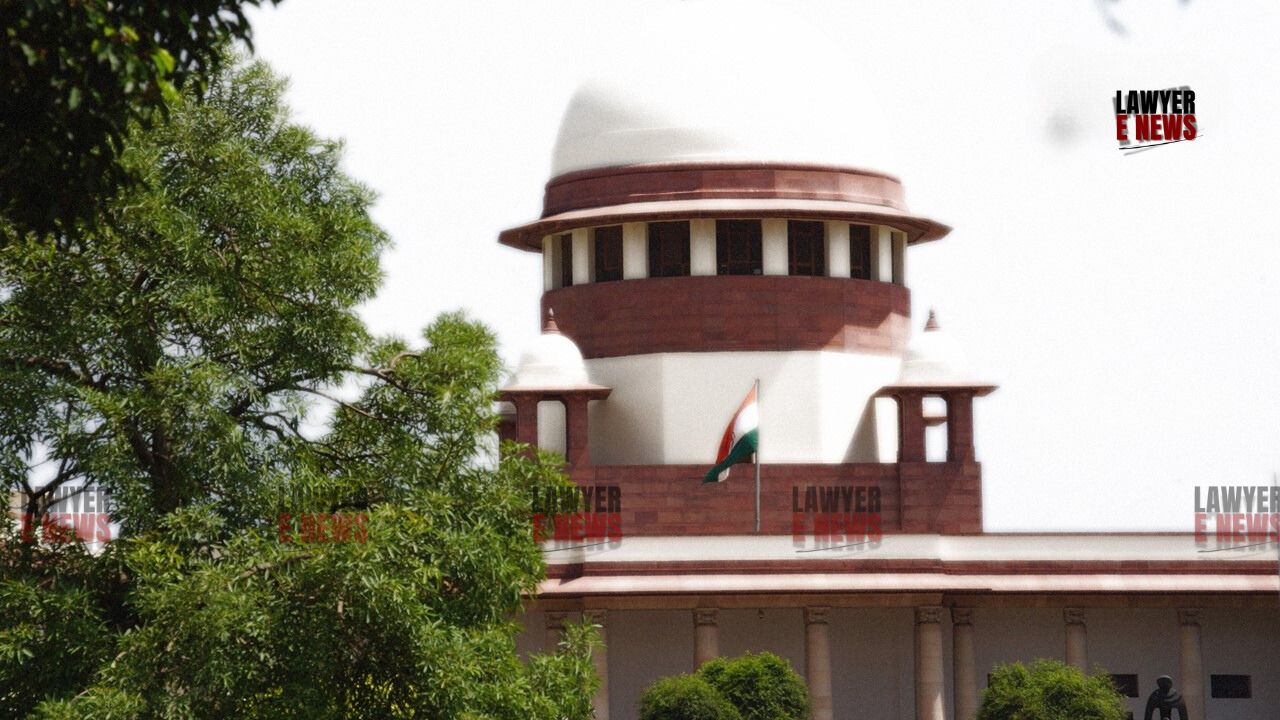
In the teeth of clear expression in Section 13(7) of the Act, we find it difficult to give effect to the intent or policy made known through notifications to grant input tax credit.” — In a definitive ruling Supreme Court of India upheld the denial of input tax credit (ITC) on sales made to manufacturer-exporters that were exempt from tax under Section 7(c) of the Uttar Pradesh Value Added Tax Act, 2008. The Court observed that once the sale is covered under the exempt category notified by the government, “no facility of input tax credit shall be allowed to a dealer” as per the unambiguous prohibition in Section 13(7).
Rejecting the appellant’s plea for a purposive interpretation aligned with the government’s export promotion policy, the Court categorically held that “the prohibition from allowing input tax credit is a statutory mandate” and cannot be overridden by any perceived intent or policy behind the exemption.
The case arose from a dispute relating to the assessment year 2010–11, during which Neha Enterprises, a registered dealer under the UP VAT Act, reported a turnover of ₹1.89 crores through direct sales to manufacturer-exporters. These sales were made against Form-E, and the dealer claimed input tax credit of ₹6.42 lakhs on the purchase tax paid.
Initially, the input tax credit was allowed by the Assessing Officer. However, on 22.02.2013, in a reassessment order passed under Section 28 of the Act, the ITC was disallowed, invoking Section 13(7) which prohibits credit on goods sold under tax-exempt conditions specified in Section 7(c).
This order was successively upheld by the First Appellate Authority, the Commercial Tax Tribunal, and finally by the Allahabad High Court in its order dated 24.11.2014. Each authority held that once the sale qualifies for exemption under a notification issued under Section 7(c), the statutory bar under Section 13(7) kicks in and precludes the grant of ITC.
The principal legal issue before the Court was whether a dealer, who makes exempt sales under Section 7(c) of the UP VAT Act by filing Form-E, could still claim input tax credit under Section 13(1) on the tax paid at the time of purchase.
The dealer argued that such denial of ITC is "prima facie illegal and unsustainable," and undermines the purpose of the government’s export promotion policy. It was contended that since the sale to manufacturer-exporters was intended to boost trade, denying ITC to sellers effectively nullifies that purpose.
The Court, however, was not persuaded. It held: “Section 13(7) also sets out that no facility for input tax credit shall be allowed to a dealer with respect to the purchase of any goods where the sale of such goods by the dealer is exempt from tax under Section 7(c) of the Act.”
The Court emphasized that in tax jurisprudence, “plain interpretation” must be preferred over policy considerations: “It is axiomatic, particularly in tax jurisprudence, that distinct concepts, such as taxable persons, taxable goods and taxable events, are established for levying and collecting the tax.”
“In the teeth of clear expression in section 13(7) of the Act, we find it difficult to give effect to the intent or policy made known through notifications to grant input tax credit.”
The Bench noted that dealers availing of tax exemption under Section 7(c) are presumed to be aware that such benefit comes at the cost of forfeiting input tax credit.
The exemption claimed by the appellant was rooted in the Notification dated 24.02.2010, which exempted direct sales to manufacturer-exporters of raw materials and other inputs from VAT. This was further operationalized through Form-E, as per the Commissioner’s Circular dated 25.03.2010. However, the Court clarified that: “The controversy is not over the exemption from levy and collection of tax… but over the entitlement or eligibility of the dealer for the input tax credit.”
And to that extent, the law was unambiguous: “No credit of any amount of input tax shall be claimed by a dealer… where the sale of such goods by the dealer is exempt from payment of tax under clause (c) of section 7.”
Rejecting the appeal, the Court decisively ruled that the legislative bar under Section 13(7) must prevail over any policy argument made by the dealer: “The dealer availing Section 7(c) of the Act knows the extent to which the input tax credit could be claimed.”
The civil appeal was dismissed, and the orders of the High Court and the lower tax authorities were affirmed.
This judgment reinforces the well-established principle that tax statutes must be interpreted strictly, and that benefits under one provision cannot be used to override express limitations under another. In matters of tax exemptions and credits, legislative clarity overrides executive intention.
Date of Decision: April 9, 2025