-
by sayum
27 August 2026 7:40 AM







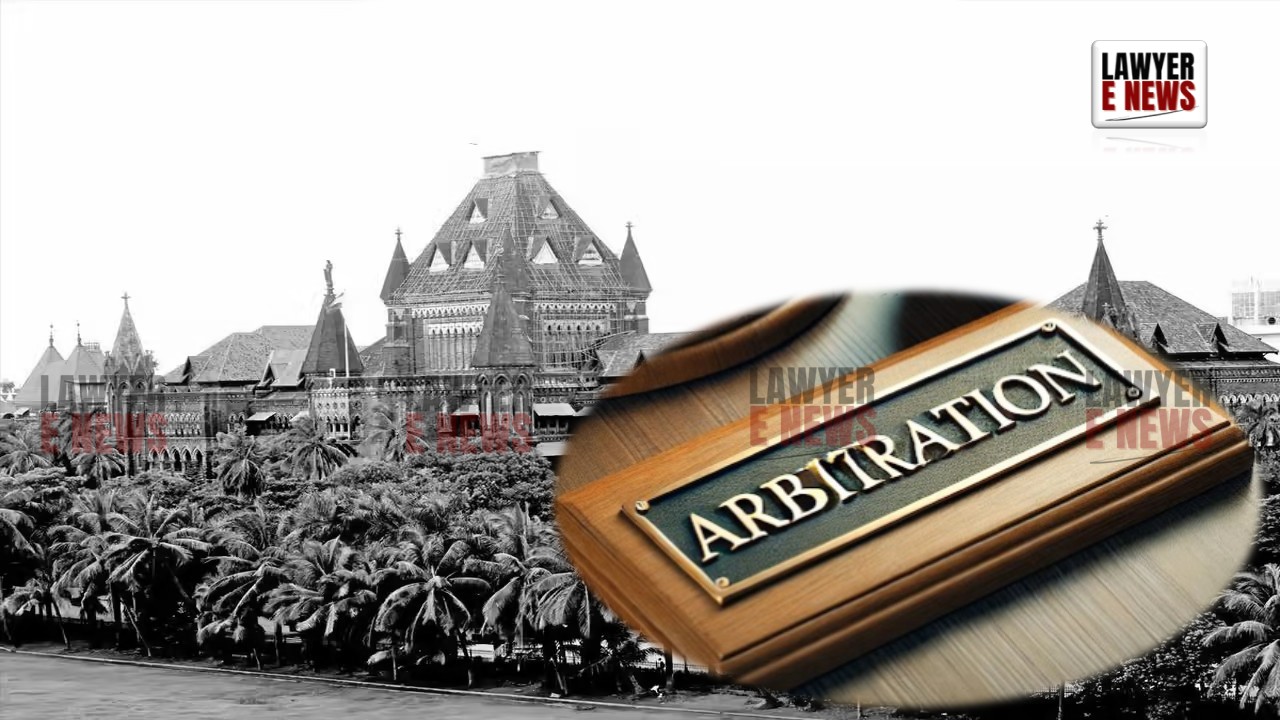
"Thus, in one hand the National Highway Authority are alleging that for village Satara the award was passed granting compensation... by fraud, however, the same award is not challenged by the NHAI. Thus, the NHAI is blowing hot and cold at the same time." Bombay High Court, in a significant ruling, dismissed a batch of appeals filed by the National Highways Authority of India (NHAI), ruling that a party cannot claim denial of a fair hearing in arbitration when it failed to produce evidence for over two years.
A single-judge bench of Justice Arun R. Pedneker observed that NHAI cannot challenge land acquisition compensation by alleging fraud while concurrently accepting and settling similar awards for adjacent lands, noting that the statutory authority was adopting self-contradictory stances to evade compensation payouts.
The dispute arose from the acquisition of lands in village Deolai for the widening of National Highway-211, for which the Competent Authority for Land Acquisition (CALA) awarded compensation at a basic rate of Rs. 7,966 per square meter in July 2017. The NHAI challenged this determination before the Arbitrator under Section 3-G(5) of the National Highways Act, 1956, alleging that the compensation was exorbitant and based on fraudulently selected sale deeds. After the Arbitrator dismissed the challenge and the District Court upheld the award under Section 34 of the Arbitration and Conciliation Act, 1996, the NHAI preferred the present batch of 18 appeals before the High Court.
The primary question before the court was whether the Arbitrator's refusal to consider documents submitted by NHAI after the closure of proceedings amounted to procedural unfairness and a denial of a fair hearing. The court was also called upon to determine whether the arbitral award suffered from any patent illegality under Section 34 of the Arbitration and Conciliation Act, 1996, warranting judicial interference.
Self-Induced Prejudice Cannot Justify Procedural Unfairness Claims
The High Court strongly deprecated NHAI's contention that it was denied an opportunity to lead evidence before the Arbitrator. The bench noted that the arbitration application was filed in January 2022, yet NHAI completely failed to file any supporting documents along with its affidavit in evidence despite being granted multiple "last chance" opportunities between June and July 2023. The court noted that NHAI essentially attempted to submit its documents via e-mail two days after the final arbitral award was pronounced in January 2024.
Delay Solely Attributable To The Appellant
Emphasizing the appellant's own lethargy, the bench rejected the plea to set aside the award and remand the matter. The court agreed with the District Court's finding that NHAI was entirely at fault for not placing its evidence on record. The bench explicitly observed that the argument of not being granted a fair opportunity "does not appeal to this Court," as the failure to substantiate its case for two long years was a self-inflicted procedural lapse by the acquiring body.
Blowing Hot And Cold On Allegations Of Corruption
Addressing NHAI's allegations that CALA engaged in corruption and fraudulently selected comparable sale deeds to inflate market value, the court examined the appellant's inconsistent conduct. The court noted that in the adjacent village of Satara, where CALA awarded much higher compensation ranging from Rs. 13,656 to Rs. 21,397 per square meter, NHAI did not challenge the arbitral awards. Instead, NHAI accepted the awards and even entered into compromise settlements before the District Court where claimants merely waived one year's interest.
"Having himself sent the documents belatedly after the declaration of the impugned award, it is a misleading argument on behalf of the NHAI to contend that their documents are not considered by the Arbitrator."
Compensation Awarded Appears Reasonable
The court further evaluated the adequacy of the compensation granted by CALA under the provisions of Sections 26 to 30 of the Right to Fair Compensation, Transparency in Land Acquisition, Rehabilitation and Resettlement Act, 2013. The bench pointed out that the Arbitrator had found, based on evidence led by the landowners, that the actual market value of the lands exceeded Rs. 12,191 per square meter. The court observed that the awarded rate of Rs. 7,966 per square meter "appears to be reasonable, if not undervalued," particularly when compared to the higher compensation granted for adjacent villages.
Strict Scope Of Interference Under Section 34 And 37
Reaffirming the established jurisprudence on arbitral interference, the court relied on the Supreme Court's decision in PSA Sical Terminals Private Limited v. Board of Trustees. The bench reiterated that a court exercising jurisdiction under Section 34 of the Arbitration and Conciliation Act, 1996, cannot act as an appellate court to reappreciate evidence. The court emphasized that interference is only justified if an award violates the fundamental policy of Indian law, conflicts with the most basic notions of morality, or suffers from a patent illegality going to the root of the matter.
No Patent Illegality On Face Of Award
Referencing the apex court's precedents in Mc Dermott International Inc. and Associate Builders, the High Court concluded that an erroneous application of law or mere reappreciation of evidence does not constitute patent illegality. The bench held that since the Arbitrator's award was based on a valid consideration of the 22 sale deeds relied upon by CALA, and NHAI completely failed to disprove them through timely evidence, there was no patent illegality warranting intervention under Section 37 of the Act.
The Bombay High Court concluded that no grounds for interference existed under Section 37 of the Arbitration Act, as the District Court had correctly dismissed the Section 34 application after thoroughly examining the record. Consequently, the court dismissed the batch of 18 arbitration appeals filed by NHAI, confirming the arbitral award and the compensation determined for the acquired lands.
Date of Decision: 07 April 2026