-
by sayum
27 August 2026 3:32 PM







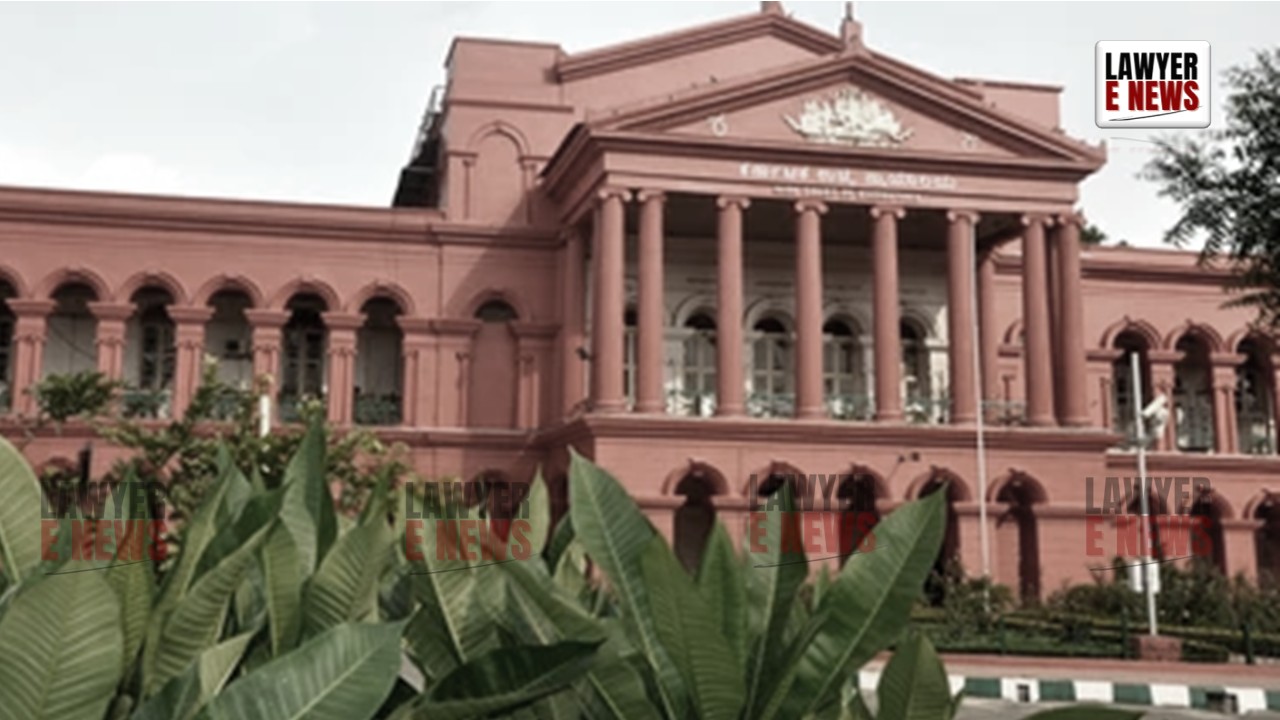
"Portal cannot be opened for one single candidate." Karnataka High Court, in a significant ruling dated April 23, 2026, held that the National Eligibility cum Entrance Test (NEET) portal cannot be reopened for a single candidate who failed to complete the fee payment within the prescribed timeline.
A division bench comprising Justice Jayant Banerji and Justice Rajesh Rai K observed that where a candidate has had ample time to complete the registration process, a last-minute failure to pay—unsupported by evidence of technical glitches—does not warrant judicial interference.
The bench emphasized that the sanctity of the examination schedule must be maintained. The court noted that the petitioner failed to demonstrate any genuine inability to log in, especially as server logs indicated successful access during the period when the payment was allegedly blocked.
The petitioner, a NEET (UG) 2026 aspirant, approached the High Court seeking a writ of mandamus to direct the National Testing Agency (NTA) to accept her examination fee. She claimed that while she had successfully uploaded her registration form and documents, technical "buffering" on the NTA portal on the last extended date (March 11, 2026) prevented the final payment. The petitioner argued that she was a victim of a technical failure beyond her control.
The primary question before the court was whether a candidate could be permitted to submit examination fees beyond the deadline on the grounds of alleged technical glitches in the payment portal. The court was also called upon to determine if the NTA's server logs contradicted the petitioner's claim of being unable to access the portal for payment.
Discrepancy Between Oral Submissions And Record
The court expressed strong displeasure regarding the manner in which arguments were presented by the petitioner’s counsel. It noted that while it was orally argued that the petitioner could only upload documents on the last date due to a delay in obtaining a caste certificate, the NTA’s login logs told a different story.
The records produced by the NTA demonstrated that the registration form and documents had been successfully uploaded as early as February 9, 2026. The bench remarked that the oral arguments were "quite contrary" to the actual portal records and were not even averred in the written petition.
Failure To Exercise Diligence For Over A Month
The bench highlighted a significant lack of diligence on the part of the candidate. It observed that despite having uploaded the necessary documents in early February, the petitioner took no steps to complete the fee payment for over a month.
"For over a month the petitioner did not submit the requisite fee. It was only on the last date... that successful logins were made by the petitioner without making the payment. The stated inability of the petitioner to successfully log in for making payments has not been demonstrated."
Portal Cannot Be Reopened For Individual Candidates
Relying on coordinate bench precedents and the Supreme Court’s ruling in Vanshika Yadav v. Union of India, the High Court reaffirmed that the examination portal is a high-stakes infrastructure that cannot be modified for isolated cases. The court noted that the portal operations are time-bound and essential for the orderly conduct of national-level examinations.
The bench observed that the URL reflected in the petitioner’s own evidence pertained to the registration index and not specifically the fee payment portal. This further weakened the claim that the payment gateway itself was malfunctioning or buffering.
Distinction From Supreme Court’s Exercise Of Article 142 Powers
The petitioner had relied on the Supreme Court judgment in Atul Kumar v. Chairman (2024), where a candidate was granted relief despite missing a deadline. However, the High Court clarified that such indulgence is typically granted under the apex court's unique powers under Article 142 of the Constitution of India, based on "peculiar facts."
The bench noted that in the Atul Kumar case, the petitioner had demonstrated "earnest and repeated attempts" to log in, which was not the case here. The court held that the facts of the current petition did not meet the high threshold required for such exceptional relief.
Delay In Approaching The Court
Finally, the court pointed out that the petitioner had waited for nearly a month after the alleged technical failure on March 11 before filing the writ petition in April. This delay was viewed as a factor weighing against the grant of discretionary relief under Article 226.
"The petitioner has waited for nearly one month before approaching this Court after the alleged failure by her to make the payment online."
The High Court concluded that no interference was called for in the matter. Finding no merit in the allegations of a portal glitch and citing the need for administrative finality in national exams, the bench dismissed the writ petition.
Date of Decision: 23 April 2026