-
by sayum
29 August 2026 7:20 AM







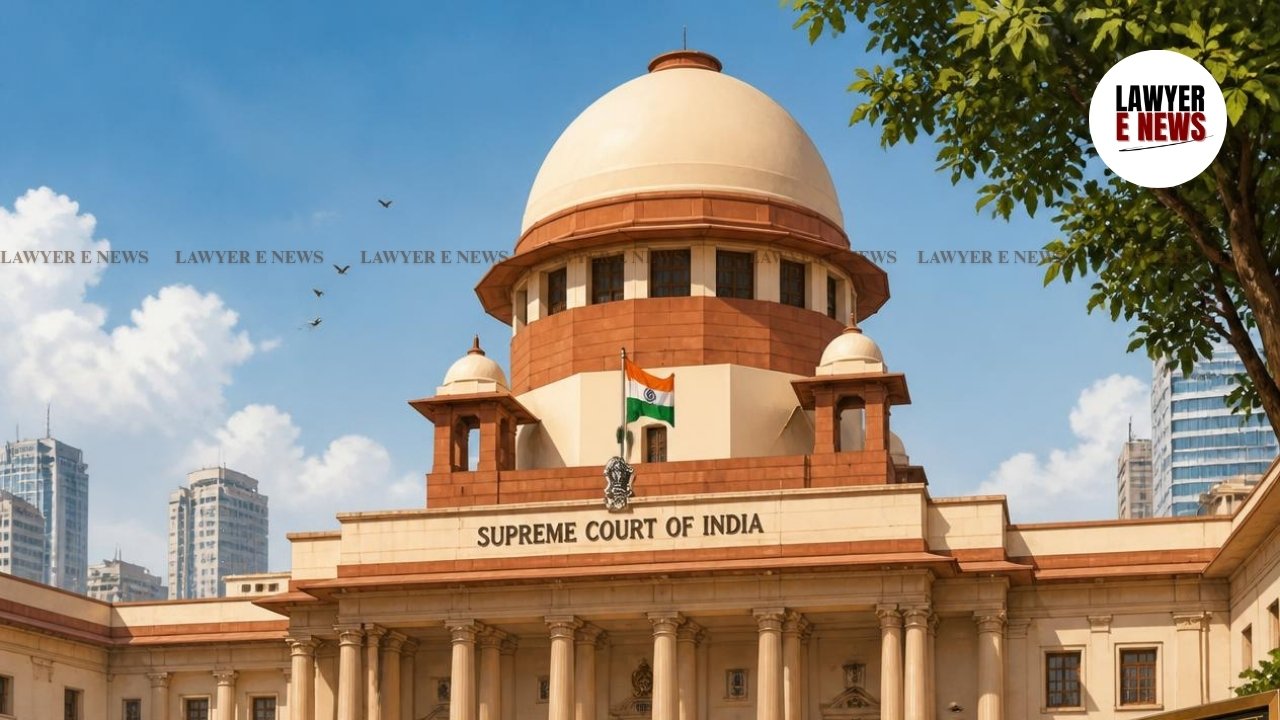
"Rules of natural justice are to be followed for doing substantial justice and not for completing a mere ritual of hearing without possibility of any change in the decision of the case on merits." Supreme Court, in a significant ruling, held that the principles of natural justice cannot be invoked as a "judicial cure-all" to invalidate a termination order when the underlying facts—such as the possession of an invalid degree—are undisputed.
A bench of Justice Dipankar Datta and Justice Sheel Nagu observed that courts should not pass "futile orders" of remand or reinstatement when no real prejudice has been caused to the employee due to the absence of a formal enquiry.
The case originated from a dispute between M/s Bharatiya Vidya Bhavan’s Public School and a primary teacher, M. Vimala, who was discharged from service after the school discovered her B.Ed. degree was obtained from the Bharatiya Shiksha Parishad, Lucknow—an institution not recognized by the National Council for Teacher Education (NCTE). The High Court for the State of Telangana had previously set aside the termination on the ground that the school failed to comply with the mandatory enquiry and approval requirements under Sections 79 and 83 of the A.P. Education Act, 1982.
The primary legal issue before the Supreme Court was whether the termination of a probationer for lacking essential educational qualifications is hit by the procedural mandates of the A.P. Education Act, 1982, and if the absence of a formal domestic enquiry constitutes a fatal violation of natural justice, even when the lack of qualification is an admitted fact.
Court Distinguishes Motive from Foundation
The bench clarified that the respondent was a probationer, and the order of discharge was non-stigmatic. Citing the principle laid down in Dipti Prakash Banerjee v. Satyendra Nath Bose National Centre for Basic Sciences, the Court noted that while a formal enquiry is necessary if the termination is "founded" on misconduct, the current case was a matter of "motive." Because the teacher lacked a valid degree, the management’s decision not to retain her was based on a clear objective deficiency, not a hidden disciplinary agenda.
The 'Useless Formality' Doctrine
The Court held that even if the statutory provisions of the 1982 Act were applicable, the failure to hold an enquiry did not invalidate the termination. Emphasizing that the B.Ed. degree from an unrecognized institution was "not worth the paper on which it is printed," the bench noted that an enquiry would have been an "empty formality." The teacher could not have produced any evidence to negate the fact that her degree lacked statutory recognition at the time of her appointment.
"If fairness is shown by the decision-maker to the man proceeded against... no breach of natural justice can be complained of. Unnatural expansion of natural justice, without reference to the administrative realities and other factors of a given case, can be exasperating."
Prejudice as a Precondition for Relief
Relying on the three-judge bench ruling in State of Uttar Pradesh v. Sudhir Kumar Singh, the Court reiterated that the breach of the audi alteram partem rule does not, by itself, lead to the invalidity of an order. The litigant must demonstrate that the breach caused actual prejudice. In this case, since the teacher did not dispute the non-recognition of the institution, no prejudice was caused. The Court underscored that natural justice is a "flexible tool" and courts must refrain from being "finical or fanatical" in its application.
Rejection of Post-Facto Recognition
The bench summarily dismissed the contention that the Shiksha Parishad had obtained recognition in 2022. The Court observed that such subsequent recognition could not retrospectively validate a degree obtained decades earlier. Consequently, the Court found the High Court's reliance on the 1982 Act to be misplaced, as the teacher had no legal right to continue in a post requiring a qualification she did not possess.
The Supreme Court allowed the appeal, set aside the High Court's judgment, and dismissed the writ petition filed by the respondent. This decision reinforces the judicial trend against "futile" litigation, emphasizing that procedural requirements under education acts cannot be used to shield candidates who fail to meet essential legal qualifications for public-facing roles.
Date of Decision: 06 August 2026